
Uncategorized
The Quiet Restoration of the Attorney General of Federation’s Office

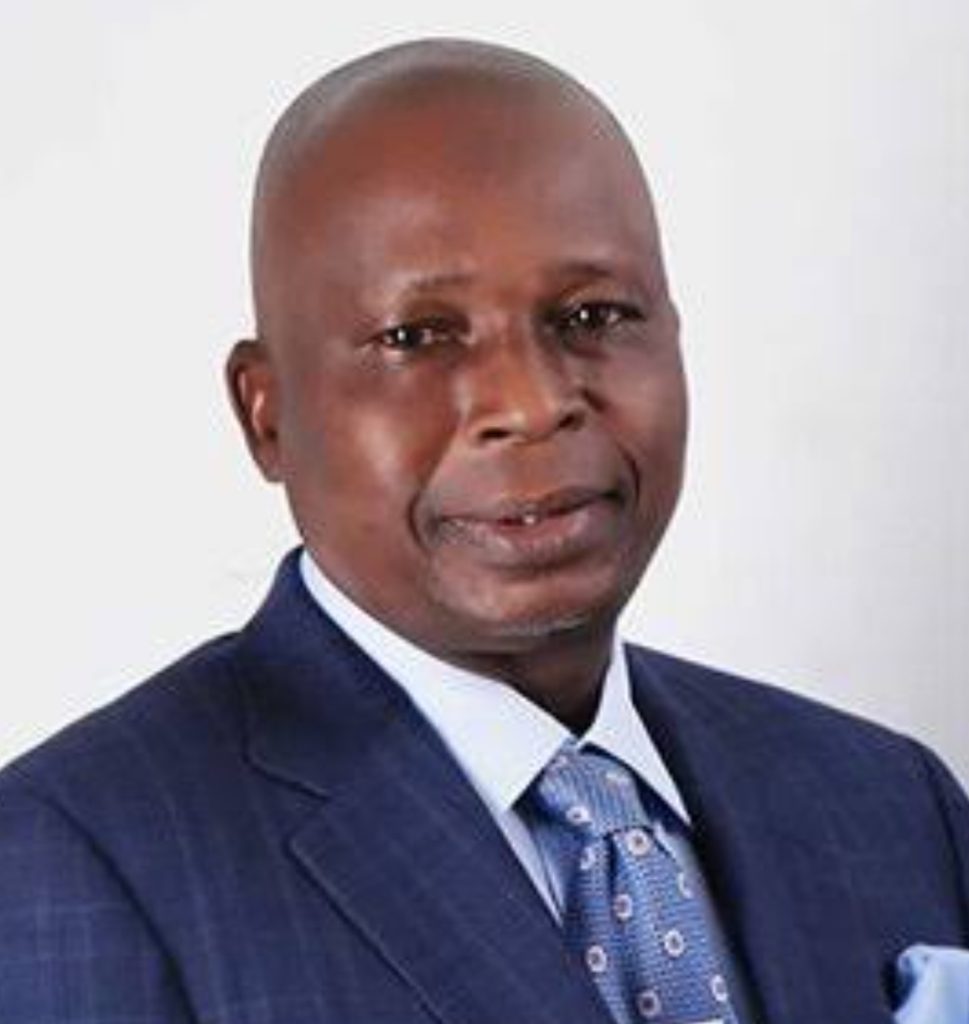
By Lemmy Ughegbe, Ph.D
For years, the office of the Attorney General of the Federation (AGF) found itself at the centre of controversies that often overshadowed its constitutional importance. Debates raged over whether the office should be separated from that of the Minister of Justice. Critics lamented what they perceived as creeping politicisation, while public confidence in the office steadily eroded.
Today, however, something remarkable appears to be happening. Quietly and without fanfare, the dignity and prestige of that office are being restored. Much of the credit for this belongs to Prince Lateef Olasunkanmi Fagbemi (SAN) whose stewardship as Attorney General of the Federation and Minister of Justice has been marked not by noise, but by professionalism, restraint and a profound respect for the institution he leads.
Against this backdrop, the relative calm that has characterised Fagbemi’s tenure should not be mistaken for inactivity. Far from it. Perhaps his most consequential intervention has been the legal battle for local government autonomy.
For decades, local governments existed largely at the mercy of state governments, with allocations often subjected to varying degrees of control and interference.
Under Fagbemi’s watch, the Federal Government took the politically risky decision of approaching the Supreme Court to challenge the practice.
The resulting judgment, which affirmed the financial autonomy of local governments, may eventually rank among the most important constitutional decisions of the Fourth Republic.
Whatever difficulties may arise in implementation, the case represented a bold attempt to deepen grassroots democracy and strengthen constitutional governance.
In fairness, the AGF has done his bit.The law has spoken. The Supreme Court has pronounced itself in clear and unambiguous terms. The responsibility now shifts from the courtroom to politics and governance.
It is now up to President Bola Ahmed Tinubu to demonstrate the political will required to ensure obedience to the judgment and guarantee that local governments receive their allocations directly from the Federation Account.
History may ultimately judge the case not by the brilliance of the legal arguments that secured victory, but by the fidelity with which the judgment is implemented.
After all, court judgments derive their true value not from the eloquence of their pronouncements, but from the willingness of governments to obey them.
Equally significant has been the increasing emphasis on terrorism prosecutions. For years, Nigerians demanded not merely arrests but convictions. After all, the true test of criminal justice is not simply the apprehension of suspects. It is securing convictions through due process.
The successful prosecution of those responsible for the horrific Owo Catholic Church massacre demonstrated that counterterrorism does not end on the battlefield. It ends in the courtroom.
Security victories are ultimately consolidated through convictions. In this regard, the Ministry of Justice under Fagbemi has played an indispensable role.
Another example of measured leadership emerged during the controversy surrounding the prosecution of minors arrested in connection with the EndBadGovernance protests. Public outrage followed the arraignment of visibly malnourished children on treason charges.
Rather than dig in, the AGF intervened, demanded the case file and subsequently directed that the charges be discontinued. It was a reminder that prosecutorial powers are not merely instruments of punishment. They are also instruments of justice. At a time when emotions were high, the AGF chose restraint over vengeance and compassion over rigidity.
Perhaps equally noteworthy is what has not happened. Unlike previous eras when Attorneys-General frequently found themselves at the centre of public controversies and institutional confrontations, Fagbemi has largely allowed the courts and the law to speak.
He has conducted himself with the restraint, dignity and professionalism expected of the nation’s chief law officer.
Indeed, one of the most striking features of his stewardship has been his evident determination to distance both himself and his office from the temptations of partisan politics.
He has neither sought political relevance nor attempted to transform the office into a platform for political grandstanding.
That distinction matters.
Because the office of the AGF is too important to become merely another political office.
Indeed, for years, legal scholars and public affairs commentators vigorously debated whether the office of the AGF should be separated from that of the Minister of Justice.
The argument was driven largely by concerns that the fusion of both offices often created tensions between professional legal responsibilities and partisan political considerations.
Successive controversies involving some occupants of the office only strengthened calls for such constitutional surgery.
Curiously, the intensity of that debate has diminished considerably under the stewardship of Prince Lateef Olasunkanmi Fagbemi.
Perhaps this is because public confidence has gradually been restored through the conduct of a quintessential gentleman who has approached the office with restraint, professionalism and dignity.
His tenure serves as a reminder that institutions do not always fail because of their design.
Sometimes, they fail because of the character of those entrusted with them.
And sometimes, what appears to require constitutional amendment merely requires the right occupant.
That, perhaps, is one of the quiet but profound lessons of the present stewardship.
No AGF can satisfy everyone.
Nor should any public official be insulated from criticism.
But criticism should not prevent recognition where recognition is deserved.
Perhaps the greatest achievement of the current AGF lies not in any single case.
It lies in restoring dignity and prestige to an office whose credibility had, at different times, come under strain.
Politics rewards noise. History rewards results.
And while it may still be too early to deliver a definitive verdict on his tenure, there are sufficient indicators to suggest that Prince Lateef Olasunkanmi Fagbemi is attempting something increasingly rare in Nigerian public life.
He is placing institution above personality.
Process above spectacle.
Law above politics.
That, in itself, is worthy of notice.
Because in a country often distracted by noise, quiet reforms can sometimes become the most enduring legacy of all.
And perhaps that is the quiet restoration of the AGF’s Office.
Dr Lemmy Ughegbe, FIMC, CMC
lemmyughegbeofficial@gmail.com
WhatsApp ONLY: +2348069716645
By Sampson Ikemitang
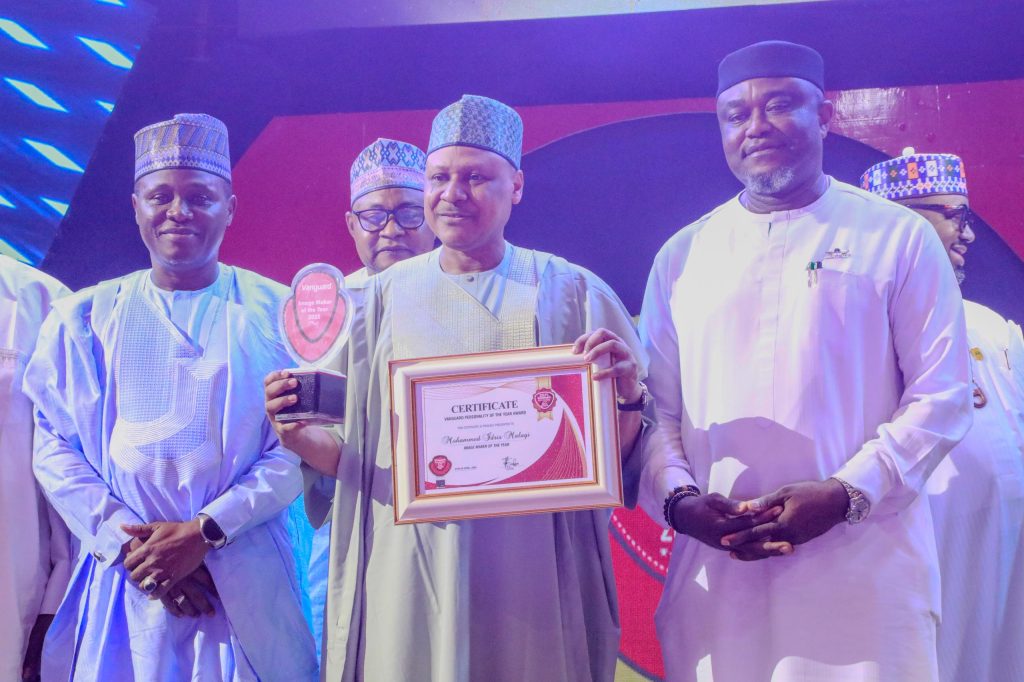
In a political climate where public trust in government communication is constantly tested, Mohammed Idris has emerged as one of the most visible voices defending transparency, accountability, and strategic public messaging in Nigeria. His recent recognition as recipient of the Image Maker Award 2026 by the Vanguard Media Limited underscores not only his growing influence in national communication apparatus but also the evolving role of image management in governance.
The award, presented during the prestigious Vanguard Media Award held at the Eko Hotel & Suites in Lagos, celebrated Idris’ efforts in strengthening communication between government and the citizenry during a period of sweeping economic reforms by the Bola Ahmed Tinubu led administration. It is needless to say that these reforms have come under serious public scrutiny.
For Mohammed Idris, however, the recognition appears to symbolise more than personal achievement. It represents a philosophy of governance anchored on clarity, credibility and trust. “Communication must not only inform but also build trust,” Idris declared while receiving the award.
From Media Entrepreneur to Government Communicator
Before assuming office as Nigeria’s Minister of Information and National Orientation, Mohammed Idris built a formidable career in media and public relations. He is the founder and publisher of Blueprint Newspaper, Chairman of Bifocal Group, and owner of Abuja-based WE 106.5 FM. His extensive background in Journalism and strategic communication, undeniably, positioned him for the demanding task of managing government Information machinery in a rapidly changing media environment.
His transition from a media proprietor to chief government spokesperson reflects a broader trend in Nigerian governance, where communication expertise has become increasingly vital in shaping public discourse and engendering public confidence.
Observers are of the opinion that Idris assumed office during one of Nigeria’s most turbulent reform periods, in the nation’s history. These reforms range from fuel subsidy removal, foreign exchange restructuring, and fiscal policy adjustments. There is no denying the fact that the reforms have triggered widespread debates, economic pressure, and heightened expectations from the citizenry. In that atmosphere, communication became as important as policy itself.
The Burden of Explaining Reform
Since assumption of office as the Information and National Orientation’s Minister, Idris has consistently emphasised openness and continuous engagement with Nigerians. According to him, government cannot succeed in silence. As such, his ministry has sought to bridge the gap between government’s policy and public understanding through regular media briefings, town hall engagements and coordinated messaging across multiple platforms.
While supporters have argued that Idris communication strategy has brought greater structure and consistency to federal messaging, critics however, have maintained that effective communication must also be matched by visible improvements in citizens’ living conditions. Yet, even critics acknowledge that Minister Idris has remained one of the administration’s most accessible public voices.
At the Vanguard ceremony recently, it will be recalled that Idris described the award as “a testament to the trust we strive to build with every Nigerian”. In fact, that statement highlights the central challenge of his office, thus, persuading Nigerians to trust difficult reforms in uncertain times.
Rebranding Governance through Transparency
Perhaps, one of the defining characteristics of Idris’ tenure has been his repeated emphasis on transparency and accountability. He has maintained that accurate and timely information dissemination is sine qua non not only for governance but also for national security and social stability.
This approach, no doubt, reflects a growing realization within government circles that communication failures can quickly escalate into public distrust. To this end, Minister Idris has championed collaboration between government agencies, security institutions and media organisations to ensure timely, well-coordinated and credible public information dissemination.
The Information Minister’s communication strategy also appears deeply rooted in empathy. For instance, during discussions on economic reforms, he has consistently stressed the need to explain policy decision in ways and manners citizens can understand, while acknowledging the temporary hardships being experienced by some Nigerians.
Why the “Image Maker Award” Matters
In Nigerian political culture, image management is often viewed with scepticism, sometimes, dismissed with a wave of the hand as mere propaganda. But the Image Maker Award signals a more nuanced recognition, the ability to shape national perception responsibly during periods of socio-economic transformation.
For Mohammed Idris, the award came at a defining moment. Nigeria’s reform agenda will remain a subject of debate even as public confidence in government owned institutions continues to fluctuate. In such scenarios, the role of communication extends far beyond publicity –it becomes a tool for national cohesion and development.
The Vanguard honour therefore acknowledges Idris’ role in navigating one of the country’s most sensitive assignments –managing public understanding in a reform-driven administration.
Beyond the AwardDespite the recognition, Minister Idris has insisted that the honour is “not an endpoint, but a call to do more for the Nigerian people”. That statement may ultimately determine how posterity will judge his tenure as the Information’s Minister.
While it is instructive to note that Awards celebrate moments, public trust, on the other hand, is built over time. For Mohammed Idris, the real test lies ahead, sustaining credibility in a political landscape where narratives shift quickly and the citizenry increasingly demand authenticity over rhetoric.
In a nation where communication can influence stability, shape policy acceptance, and define leadership perception, Mohammed Idris has positioned himself as more than just a government’s spokesperson. He has undoubtedly, become one of the pivots of Nigeria’s public narrative in an era driven by reforms.
Ikemitang writes from the Federal Ministry of Information and National Orientation, Abuja.

The Plateau Initiative for Growth and Development, PIGD, has called on political actors in Plateau State, especially the factional governorship candidate of the Peoples Democratic Party, PDP, Sunday Biggs, to rise above what it described as unnecessary semantics, huff and puff, and focus on the realities on ground.
In a statement issued by its National Coordinator, Nengak David, the group said Plateau’s political space should not be turned into an arena for tension, distraction or needless verbal confrontation, but should instead become a platform for serious engagement on ideas, vision and practical alternatives for the people of the state.
According to PIGD, Plateau people deserve a contest driven by substance, not noise, adding that any politician seeking to challenge Governor Caleb Mutfwang must be ready to tell citizens what he can do better than the present administration.
“Rather than stir unnecessary tension or engage in political shadowboxing, Sunday Biggs and other political actors should tell Plateau people what they can do better. The issue is not who can shout the loudest, but who can present a clear, realistic and people-centred vision for the state,” David said.
The group commended the Mutfwang administration for what it described as visible and measurable achievements across key sectors, particularly security, health, education, agriculture, transportation, water, energy, tourism and road infrastructure.
PIGD noted that in the area of security, the administration has revamped Operation Rainbow, recruited and trained over 1,500 personnel across communities, commenced the recruitment of 1,000 Forest Guards, launched the State Security and Information Centre with a toll-free line, and invested in security technology, operational vehicles and gadgets to support security agencies.
The group also pointed to major interventions in the health sector, including the recruitment of 22 medical consultants at the Plateau Specialist Hospital, construction of a modern laboratory complex, procurement of laboratory equipment worth over ₦2 billion, introduction of Electronic Medical Records, expansion of residency training and growth in PLASCHEMA enrolment from 93,605 beneficiaries in May 2023 to 319,429 by May 2026.
In education, PIGD said the Mutfwang administration has approved a 50 percent reduction in tuition fees for Plateau indigenes in state-owned tertiary institutions, increased scholarship funding by 300 percent, sponsored students abroad, constructed 397 classrooms, renovated 557 classrooms, drilled boreholes in schools and provided furniture and learning facilities through SUBEB and the AGILE Programme.
David said these achievements were too significant to be dismissed through political rhetoric, stressing that those seeking power must respond with stronger ideas rather than attempts to diminish progress already being recorded.
“It is not enough for anyone to play politics with words. Plateau people are seeing roads, health interventions, school projects, agricultural support, security reforms and efforts to restore the dignity of the state. Anyone seeking to challenge this administration must come with a better plan, not empty rhetoric,” the statement added.
PIGD further praised the administration’s agricultural interventions, including procurement of fertilisers and farming inputs worth over ₦20 billion, support for farmers with improved seedlings and equipment, youth training in modern agriculture, and the establishment of agro-processing zones in Shendam, Mangu and Heipang.
The group also highlighted ongoing road and urban renewal projects across the state, including the Utonkon–Nunku–Keana Road and flyover, Haske Gwafan road links, Jos urban road networks, zonal road projects, rural access roads under RAAMP and NG-CARES, as well as water schemes, solar-powered boreholes, mini-grids and renewable energy initiatives.
PIGD urged Biggs and other PDP actors to avoid statements capable of heating up the polity, warning that Plateau cannot afford political tension at a time citizens are looking for stability, development and responsible leadership.
“Plateau belongs to all of us. The contest for power must not become a contest for bitterness. Let those who want to govern tell the people how they will improve security, create jobs, support farmers, fix roads, strengthen education and expand healthcare. That is the kind of politics Plateau needs now,” David said.
The group reaffirmed its support for issue-based politics and responsible democratic engagement, urging Plateau citizens to demand vision, competence and realistic alternatives from all political actors instead of being distracted by semantics and political noise.

Maryam M. Sanusi, fnipr.
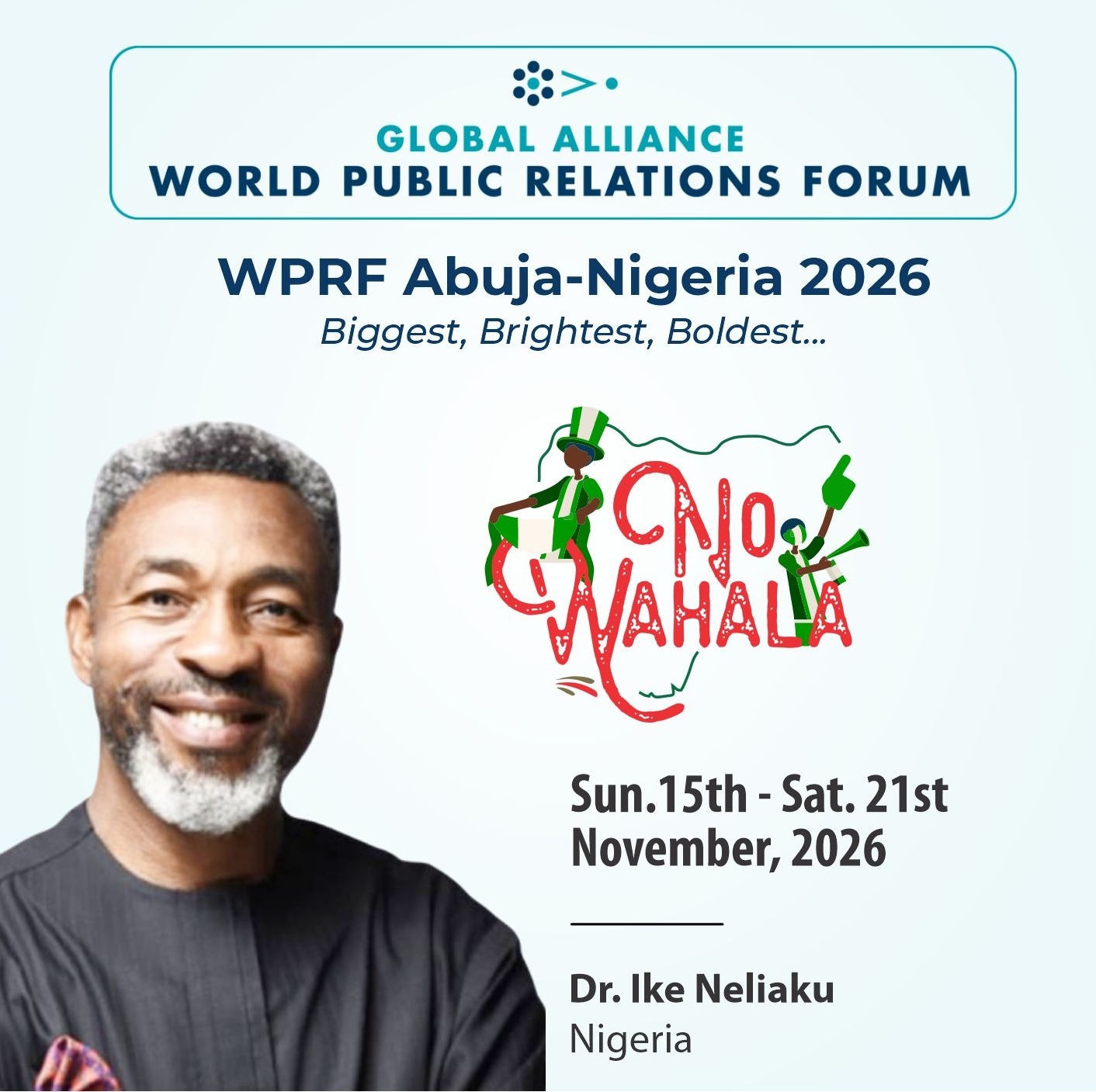
On behalf of the members of the Nigerian Institute of Public Relations, I extend our warmest congratulations on your reappointment as Director on the Board of the Global Alliance for Public Relations and Communication Management.
Your reappointment at the Annual General Meeting of the Global Alliance, held in Prague, Czech Republic, affirms your outstanding leadership, professionalism, and the high regard you command within the global PR and communications community. It is also a moment of pride for Nigeria and for NIPR, reflecting the growing influence of Nigerian public relations professionals on the world stage.
We are confident you will continue to represent our Institute and our country with distinction, advancing global standards and fostering collaboration in public relations and communication management.
Please accept our heartfelt congratulations and best wishes for continued success in this important role. Warm regards, Maryam M. Sanusi, fnipr, Member of Council Chairman, Membership Services Committee Nigerian Institute of Public Relations.

Bandits Kill NSCDC Officer, Abduct Daughter in Fresh Attack on Kogi Community
Security Operatives Foil Bandit Attack on Kogi Community
The Quiet Restoration of the Attorney General of Federation’s Office
-
 News18 hours ago
Diaspora Group Hails Nigerians’ Resilience in Good Governance Pursuit, Applauds Wike For Supporting Tinubu’s Govt
-

 News12 hours ago
NCC Appoints Princess Oforitsenere Emiko as Interim Chairman of the Digital Bridge Institute Governing Board
-
 News12 hours ago
Defence Minister Launches MUSAWAH Initiative to Support Tinubu, Uba Sani Re-election Campaigns
-

 China18 hours ago
Nigeria, China Strengthen Cultural Relations Through Panda Art Experience
-

 News4 hours ago
Oyo Kidnap: Abducted Principal Denies Bandits Demanded Sharia Law
-
News19 hours ago
Security Operatives Foil Bandit Attack on Kogi Community
-
 News12 hours ago
Akwa Ibom Aide Rejects Claims of Extra-Budgetary Spending, Defends Fiscal Transparency
-
 News5 hours ago
Hon. Ja’afaru Yakubu Applauds China Harbour on Mararaba-Keffi Road Project
You must be logged in to post a comment Login