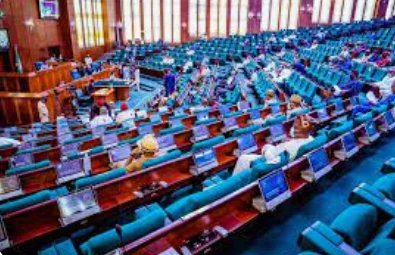

The House of Representatives has set up an ad hoc committee to investigate alleged discrepancies between the tax reform bills passed by the National Assembly and the version subsequently gazetted by the Federal Government.
The move came as the Peoples Democratic Party (PDP) called on the Federal Government to postpone the January 1, 2026 commencement date of the new tax regime by an additional six months, citing claims of unauthorised alterations to the laws.
President Bola Tinubu recently signed four landmark tax reform bills into law — the Nigeria Tax Act, Nigeria Tax Administration Act, Nigeria Revenue Service (Establishment) Act, and the Joint Revenue Board (Establishment) Act — consolidating Nigeria’s tax system under the Nigeria Revenue Service. The reforms aim to simplify compliance, broaden the tax base, eliminate multiple taxation and modernise revenue collection across all tiers of government.
Although the laws are scheduled to take effect on January 1, 2026 after a six-month transition period, they have generated mixed reactions nationwide.
The controversy intensified on Wednesday when a PDP lawmaker from Sokoto State, Abdussamad Dasuki, alerted the House to alleged differences between the versions of the tax laws approved by parliament and the copies gazetted by the executive. He warned that any unapproved alterations could expose the laws to legal challenges.
At plenary on Thursday, Speaker Tajudeen Abbas described the allegations as serious and announced the constitution of a seven-member ad hoc committee to probe the matter. The committee is chaired by Mukhtar Betara, with Idris Wase, James Faleke, Sada Soli, Igariwey Iduma, Fredrick Agbedi and Babajimi Benson as members.
“The House leadership has agreed that a committee should be set up immediately to look into the issues raised and any related concerns,” Abbas said, adding that the panel would submit its findings for further legislative action.
Earlier, Dasuki had urged lawmakers to compare the gazetted version of the law with what was passed by the National Assembly, describing the alleged alterations as a constitutional breach that should not be ignored.
Reacting to the development, the PDP praised Dasuki for what it described as diligence and courage, while demanding that the take-off date of the Tax Act be shifted by at least six months to allow for a thorough investigation and adequate public enlightenment.
The party warned that inserting provisions not approved by lawmakers could erode public trust in the legislative process, insisting that Nigerians must be assured that the laws they obey are those duly enacted by their representatives.
The PDP’s position echoed concerns raised a day earlier by the National Opposition Movement (NOM), which called for the immediate suspension of the tax reforms. Addressing a press conference in Abuja, NOM spokesperson Chille Igbawua said Nigerians were already burdened by poverty, unemployment and rising living costs, arguing that the new tax regime would worsen economic hardship.
“This is not tax reform; it is punitive. You cannot tax hunger or poverty,” Igbawua said, accusing the administration of prioritising elite interests over the welfare of ordinary Nigerians.
However, the Federal Government has rejected the criticisms, insisting that the reforms are pro-poor and designed to strengthen national revenue without overburdening citizens. Speaking in Abuja on Thursday, the President’s Special Adviser on Economic Affairs, Tope Fasua, said some individuals were deliberately attempting to undermine the reforms.
“This is a pro-poor policy aimed at recalibrating national revenue in a way that benefits even the poorest Nigerians,” Fasua said, stressing that the reforms were not intended to increase taxes on small businesses or ordinary citizens.
He cited infrastructure development, including the partial opening of the Brass–Nembe Road, as evidence of the positive impact of improved revenue mobilisation.
Similarly, the Chairman of the Presidential Committee on Fiscal Policy and Tax Reforms, Taiwo Oyedele, said the reforms were designed to ease the burden on Nigerians, blaming misinformation for public anxiety.
The Director-General of the National Orientation Agency, Lanre Issa-Onilu, represented by Nura Kobi, said the agency would intensify public education using its communication platforms across the 774 local government areas to address misconceptions about the new tax laws.
Despite the controversy, the Federal Government maintains that implementation of the reforms will begin on January 1, 2026, with provisions including tax exemptions for small businesses, reduced burdens for workers and the middle class, lower corporate tax rates, harmonisation of multiple taxes, and the elimination of nuisance levies to boost investment.