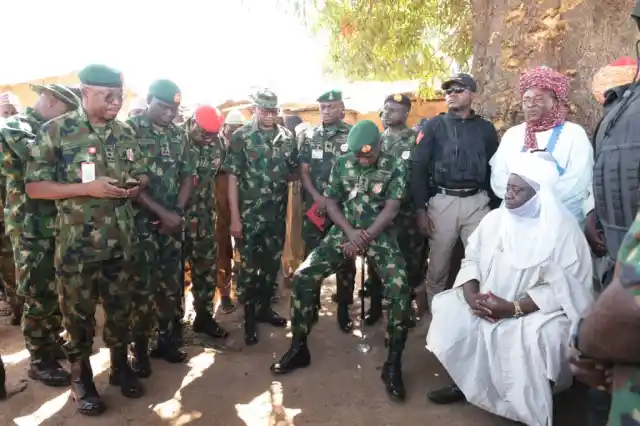
*Donates N10m to survivors
*Say’s drones observe suspected bandits movement
You can add some category description here.

*Donates N10m to survivors
*Say’s drones observe suspected bandits movement

Jabiru Hassan, Kano.
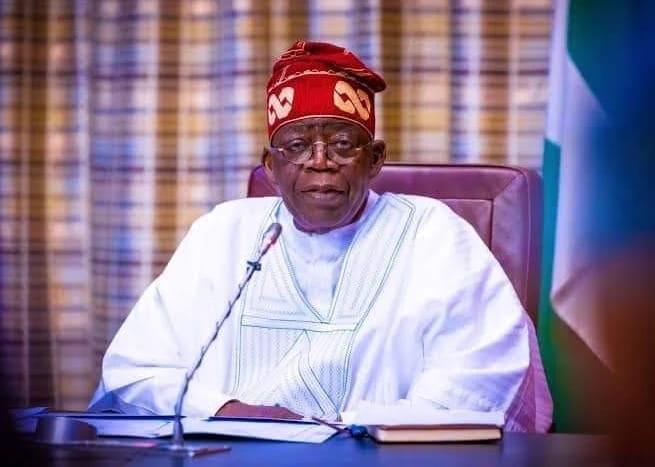
Prior to the ongoing reactions about the sponsorship of the Nigeria’s delegation to attend the climate summit known as COP 28, the APC Initiative For Good Governance (APC-IGG) have canvassed it’s support to wider representation for better climate change knowledge spread.
In a press statement issued to newsmen by the initiative’s national president, Ambassador Musa Mohammed Tsoken disclosed that the number of participants did not exceed the national representation especially nowadays when the globe is advancing in climate change and other related programmes.
” APC Initiative For Good Governance supports the wider representation in order to ensure that the vital information tends to be widely ciculated for the knowledge of the citizens and other stakeholders especially at present when the issue of climate change is becoming a global warming, we therefore commended the federal government under president Tinubu for considering the issue of climate change in Nigeria”
The statement called on all well meaning citizens to understand that the total delegates sponsored by the Nigerian government is 422 while other were sponsored by different means of opportunities all in order to brings success to the Nigerians in the issue of climate change.


— As FG flags off Grants transfer for vulnerable.
By Noah Ocheni, Lokoja
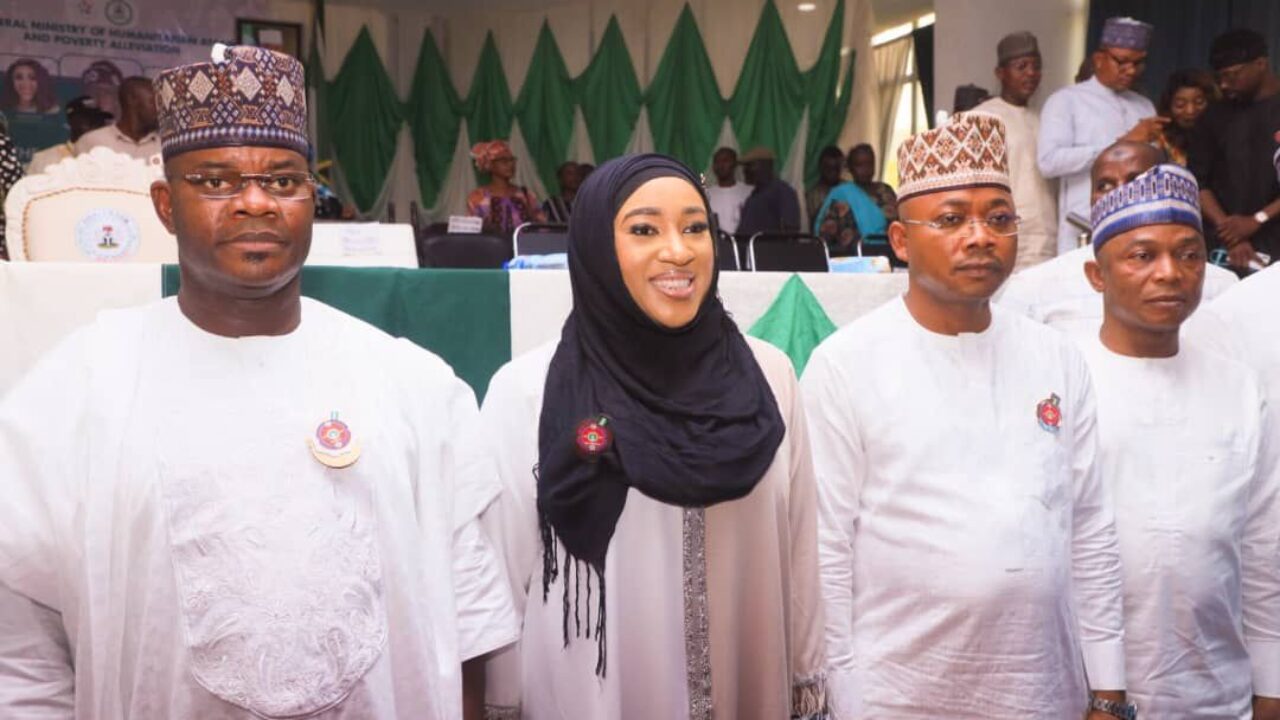
Kogi State Governor, Alhaji Yahaya Bello, has announced the establishment of the State’s Ministry of Humanitarian Affairs and Poverty Alleviation.
The Governor made the announcement during the official kick-off of the Federal Government’s Grant for Vulnerable program under the Federal Ministry of Humanitarian Affairs and Poverty Alleviation at the Government House, in Lokoja.
He said this significant step aligned with the overarching vision of the administration of President Bola Ahmed Tinubu, encapsulated in the RenewedHope agenda, which aims to uplift 50 million Nigerians from poverty annually.
He emphasised that the necessary legal framework and legislative authority for the creation of this ministry had already been meticulously addressed.
The Grant for Vulnerable Groups, specifically targeted at the most economically disadvantaged members of the society, will provide beneficiaries with a cash sum of N20,000.
Governor Bello, while commending President Tinubu’s visionary approach and genuine commitment to combating poverty in Nigeria, asserted that the grant would effectively contribute to the administration’s goal of pulling millions of Nigerians out of the poverty bracket.
He highlighted the various initiatives undertaken by his administration to reduce and eliminate poverty in Kogi State which include free education in primary and secondary schools, quarterly distribution of food palliatives, and free healthcare program for pregnant women and children.
Bello pointed out that his administration has also undertaken the responsibility of covering examination fees for public school students, releasing funds such as the N497 million disbursed for the 2024 WAEC fees in October.
The Governor attributed these policies to the administration’s Zero-out-School-Children initiative, which has yielded substantial results. He expressed confidence that the Governor-elect, Ahmed Usman Ododo, would build upon these achievements and strengthen ties with the federal and local governments for the overall welfare of the people.
In her speech, the Honourable Minister for Humanitarian Affairs and Poverty Alleviation, Dr. Betta Edu, congratulated the beneficiaries and commended Kogi women for their unwavering support for the APC-led administration at both the federal and state levels.
She noted that, beyond the Grant for Vulnerable Groups, the Federal Government had implemented over 20 social programs targeting poverty alleviation, food security, and human capital development.
The minister revealed that, as part of the inaugural phase in Kogi State, a total of 3,000 individuals benefited from the program.
The State Commissioner for Finance, Budget, and Economic Planning, Asiwaju Idris Asiru, lauded the Federal Government’s initiative, and commended Governor Yahaya Bello for rolling out numerous initiatives to combat poverty, Socio-economic inequality, and enhance security in the state.


By Milcah Tanimu
As part of the 2024 Appropriation Bill, the Federal Government, through the Federal Ministry of Information and National Orientation, has earmarked N138,066,187 to tackle fake news and print calendars. The initiative, originally introduced by former Minister of Information and Culture, Lai Mohammed, aims to address the challenge of “deep” fake news used to undermine the government. The budget details indicate that funds will be utilized for media appearances by ministers, engagement with social media influencers, external publicity, and media interactions. A sum of N40 million is allocated for calendar production, N30 million for external publicity, N20.7 million for media interactions by ministers and influencers, and N21.7 million for the development of social media platforms and networking. The advocacy against fake news includes addressing issues such as hate speech, farmers-herders clashes, banditry, and rape.

Proposes N414.3bn capital expenditure, N107.2bn recurrent expenditure
Education gets 33 per cent, as healthcare, infrastructure, water, agriculture, also top budget
Speaker assures on thorough scrutiny, speedy passage
By Tony Fejokwu
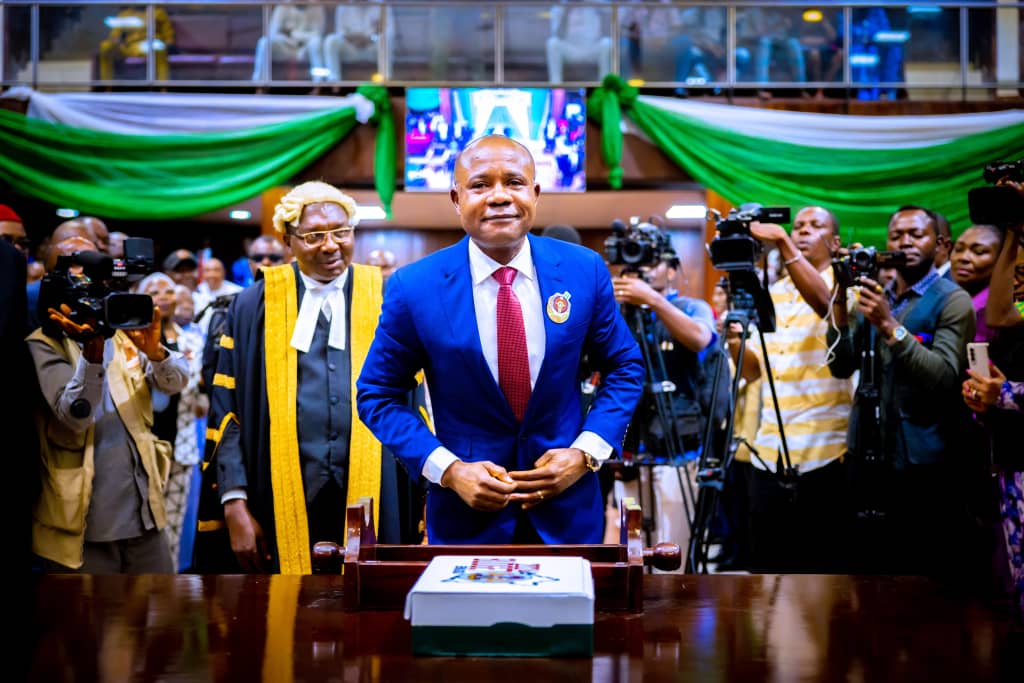
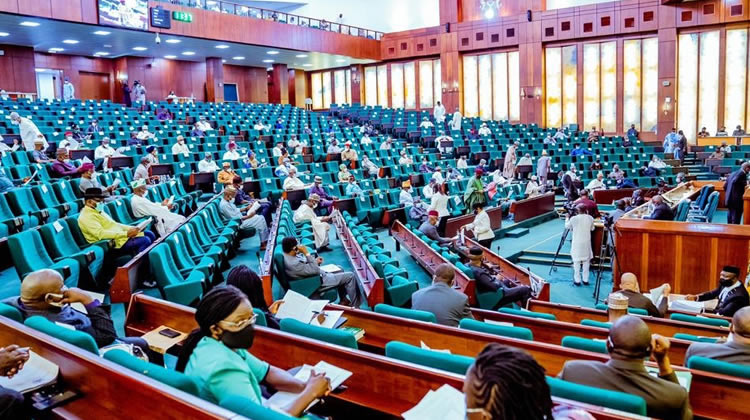
Governor of Enugu State, Dr. Peter Mbah, has presented a N521.5 billion (N521,561,386,000) budget for the 2024 fiscal year before the Enugu State House of Assembly.
The budget proposal, which he entitled “Budget of Disruptive Economic Growth” is the highest in the state’s history, comprising N414.3 billion capital expenditure and N107.2 billion recurrent expenditure.
Presenting the budget on Tuesday, Governor Mbah said: “The 2024-2026 Multi-Year Budget is named Budget of Disruptive Economic Growth. This is on account of the fact that it is structured to drive growth in a markedly different pattern than we have attempted to do hitherto.
“We are proposing a total budget of size of ₦521,561,386,000.00 for the 2024 fiscal year as against the approved revised provision of ₦224,697,899,063.00 for 2023. This represents a 132% increase from the 2023 revised budget.
“In the area of our revenues, we estimated that total recurrent revenues during 2024 will amount to ₦383,789,000,000.00 as against the approved revised provision for 2023 of ₦143,571,592,917”
Giving a breakdown of government’s expected sources of revenue, the governor said, whereas the state had an opening balance of N11 billion, it expects to rake in N252.7 billion from internally generated revenue (IGR), N60 billion from statutory revenue, N16 billion from excess crude oil revenues and others, while N44 billion would come from Value Added Tax (VAT).
On the Recurrent Expenditure and Capital Expenditure, Mbah explained: “For 2024 Fiscal Year, Recurrent Expenditure which is proposed at ₦107,227,266,000.00 is made up of N47,583,677,000 Personnel Costs, N41,804,698.000 Overhead Costs, and N17,838.891,000 Consolidated Revenue Charges.
“With the total recurrent Expenditure at ₦107,227,266,000.00, this translates to a Net Recurrent Revenue of ₦276,561,734,000.00, which is thus transferred to the Capital Development Fund.
“The total Capital Expenditure for the year 2024 is projected at ₦414,334,120,000.00 as against ₦135,715,099,693.00 for 2023 Revised Budget. The current capital expenditure estimate will be funded from the sum of ₦276,561,734,000.00 to be transferred from the Consolidated Revenue Fund, and the capital receipts of ₦137,772,386,000.00 to be realised as follows: External and Internal Aids and Grants, N27.922,386,000; Public Private Partnership, N6,100,000,000; Domestic Loans/Borrowings, N71,000,000,000; and International Loans/Borrowing Receipts, N32,750.000.000”.
On sectorial basis, the economic sector got the highest in the Capital Expenditure Distribution, which is N207.8 billion, followed by the social sector, which got N182.9 billion.
However, education got 73.6 per cent of the social sector allocation, and 33 per cent of the total budget, representing the highest in both instances.
“As I mentioned earlier, Education is a key plank in our strategy to eradicate poverty in our State. Consequently, ₦134,587,982,647.78 representing 73.6% of the social sector has been earmarked to help reinvent education in our state by developing the new smart schools, which I mentioned earlier, as well as repositioning our senior secondary and tertiary institutions by training and retraining teachers and updating our curricula across all levels of education to infuse technology and technology appreciation and skills.
“This capital expenditure on education combined with the planned recurrent expenditure in the sector will bring our total spending on education to 33% of the total budget”, the governor stated.
Other top allocations include infrastructural development and maintenance, particularly roads and public buildings, with N82.5 billion to, according to the governor, “smoothen connectivity, bolster trade, and enhance overall accessibility and attract investments that create jobs”; agriculture, which got N25.1 billion in pursuit for the self-sufficiency and economic diversification agenda; water, which got N28.9 billion to ensure safe and quality water supply in the state and boost reticulation across the Enugu metropolis; and health, which got N21.7 billion, as the administration ramps up construction of 260 Type-2 Primary Healthcare Centres across the 260 electoral wards. Other priority areas include job creation, and security.
Mbah, while appreciating Members of the House of Assembly for their support across party lines, urged all stakeholders to join hands “in this journey towards a better future for all residents”.
Responding, the Speaker, Rt. Hon. Uchenna Ugwu, while commending the governor for the remarkable impacts he had made in six months, including the restoration of water to Enugu city, pledged a thorough and expedited work on the 2024 budget estimates.

By Milcah Tanimu
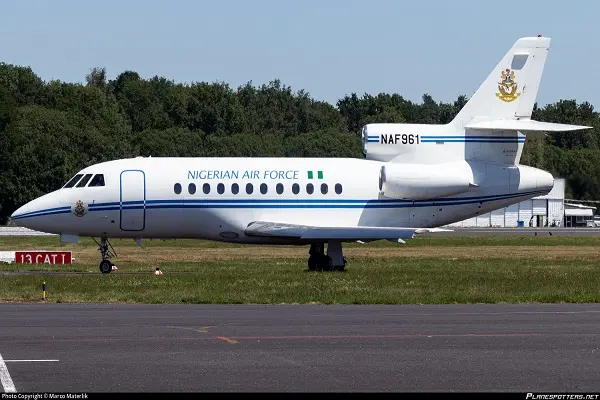
The Nigerian Air Force (NAF) has officially put the Falcon 900B aircraft, a component of the presidential air fleet, up for sale and is inviting interested buyers to submit their bids. The announcement was disseminated through a flyer posted on the NAF’s official page on Monday.
According to the provided information, the Federal Government of Nigeria has granted approval for the sale of the Falcon 900B aircraft owned by the NAF. In accordance with the provisions of the Public Procurement Act 2007, the NAF is calling on all interested parties to submit bids for the purchase of the aircraft. Bids can be submitted either electronically or physically.
For electronic submissions, bids are required to be password protected and sent to dproc@airforce.mil.ng, with the password sent separately to dproc2@airforce.mil.ng. In the case of physical submissions, quotations must be enclosed in a sealed envelope, bearing the name and address of the interested company/entity, along with a clear description and reference to the request. The envelope should be prominently marked with the statement “DO NOT OPEN BEFORE 24 DECEMBER 2023.”
It is emphasized that bids will be processed immediately after the deadline for submission expires.

The House of Representatives Committee on Public Assets, led by Chairman Ademorin Kuye, has pledged to initiate efforts to retrieve national assets procured through fraudulent means. This declaration came during a one-day retreat in Abuja organized by the committee, focusing on the theme “Guardian of Public Trust: Transforming Public Assets Oversight and Legislation.”
In response to queries during the retreat, Chairman Kuye affirmed their determination, stating, “As the chairman of this committee, I am ready to step on toes. We are determined to recover any national asset in the hands of powerful forces acquired fraudulently. Even the ones that were concessioned, we will make sure that they are properly managed in line with the provisions of the law. We have the backing of Mr. President and the National Assembly to do this.”
Further details will be provided as the situation unfolds.

*Blames their leaders
*We try talk to Governor but.- Clergy
*Church continues to pray for her
*It confirms persecution of xians – CAN chairman
By Achadu Gabriel, Kaduna
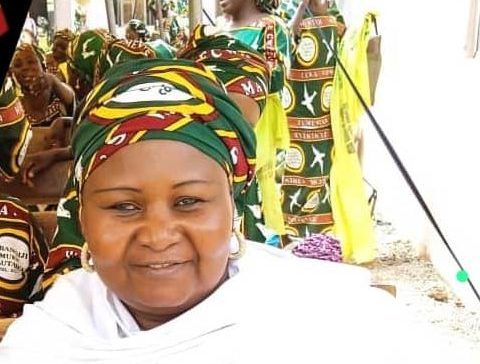
Christian women nationwide and northern Nigeria in particular are poised for showdown over the continues incarceration of their member, Mrs. Rhoda Ya’u Jatau for alleged blasphemy.
Mrs. Jatau, a mother of five, was sent to jail for reportedly sharing a message among her Co-workers criticising a mob attacked and killing of a University girl, Deborah Yakubu, who was accused of alleged blasphemy.
Mrs. Jatau has been in detention since May 2022 when she shared a WhatsApp video condemning mob action on another woman, Deborah Yakubu, who was killed after been framed of alleged blasphemy.
Christian women, in a widely circulated mobilization statement in social media, expressed serious fear on the fate of Mrs. Jatau, saying history may repeat it self if nothing is done to released her from been tried in Sharia Court.
“Dear Women of ICCGIN! We were pained at Deborah’s killing. It is about to happen again. Are we going to just lament and do nothing?
“What is Rhoda’s crime? She spoke up against Deborah’s killing. They held her in custody since last year May and now she was tried in a sharia court.
“Why? Why should a Christian be tried in the sharia court? And none of our leaders are saying anything. Does it mean that any Christian can be lynched at any time for no just cause? This is unacceptable. We have to do something about it.
“We should stand up for our sister in faith. We can do the following:
*Share the above in all Christian and civil society groups you belong to.
*Trend on all your social media platforms: #FreeRhodaJatauNOW
*Protest at Christian Association of Nigeria (CAN) & PFN Offices so that they stand up to their responsibilities’, the ICCGIN women stated.
Contacted, a highly placed Christian leader in Northern Nigeria who’s permission to identify him was not sought, however stated that “Northern CAN officers are afraid to speak to the Government that is why I only speak”, he Stated.
The Christian leader was responding to question, on whether he “Would you like to say a word or two on the continues incarceration and trial of Mrs. Rhoda Jatau in Sharia court, for criticizing mob attack and killing of Deborah on alleged blasphemy, on behalf of northern CAN.
However, speaking to our correspondent, CAN Chairman Kaduna State Rev. Joseph John Hayab stated that “Mrs. Rhoda Jatau’s continual incarceration has further confirmed that persecution of Christians in some states of northern Nigeria is real and not propaganda.
“The pattern of Mrs. Rhoda trial and constant adjournment to keep her long in prison has also exposed how Nigeria courts are used by those who flaunt their connection with the powers that be to victimize fellow citizens whose rights are being abused by others instead of protecting them with dignity.
“Mrs Rhoda is just one out of many who are suffering this neglect and the country is silence about them.
“Nigeria Christians and every citizens must be protected by the law and should not be treated this way.
“The inhuman treatment many Nigerians are getting from institutions of Government that should be seen, protecting them is the reasons why many are not patriotic.
“CAN Kaduna State wishes to appeal to the Governor of Bauchi State and the President of the federal Republic of Nigeria through the office of the Attorney General to correct this wrong to give country hope for a united Nigeria”, he stated.
Al Jazeera news report, published on 30th November 2023, had reported extensively that Mrs. Jatau was arrested few after forwarding a video condemning the burning to death of Deborah Yakubu, a university student in Sokoto, northwest Nigeria.
Titled “Nigerian woman jailed for ‘blasphemy’ for 18 months over WhatsApp message”, the report stated that Mrs. Jatau has been in detention since May 2022 when she shared a WhatsApp video condemning mob action on another woman.
“For sharing a message among her co-workers that criticised a mob action last May, Rhoda Ya’u Jatau has spent the last year in police detention on charges of blasphemy towards Islam.
“The healthcare administrator with the Warji local government in Bauchi, northeastern Nigeria was arrested a few days after forwarding the video condemning the burning to death of Deborah Yakubu, a university student in Sokoto, another state, over alleged blasphemy.
“Prosecutors allege that by sharing the video, Jatau, then 45, committed multiple offences of inciting disturbance, contempt” for religious creed, and cyberstalking.
“Last Monday, a Bauchi state high court rejected her “no-case submission”. Kola Alapinni, lead counsel at Abuja-based nonprofit Foundation for Religious Freedom who is familiar with the case, told Al Jazeera that the defence team is expected to make a case when the court sits again in December.
“If found guilty, Jatau, a mother of five and Christian, could be sentenced to a few years in prison, he said.
“The court’s decision has sparked public outrage in parts of Nigeria, a country with a history of religious extremism.
“This really shows how far extremism has permeated deeply into our institutions,” said Ndi Kato, politician and executive director of Dinidari, an advocacy group for women’s rights in the Middle Belt region, as central Nigeria is often referred to.
“You will lock a person for just forwarding a message because you don’t think that it favours what you believe in? I don’t think that has any place in our society today.”
“Half of Nigerians are Muslims and a slightly smaller proportion – 45 percent – of their compatriots are Christians but Nigeria is officially a secular country whose constitution allows for freedom of speech and religious association.
“For decades, religious tensions have found their way into many facets of life in what is also an ethnically diverse country. This is most pronounced in northern Nigeria where many states have adopted variations of the conservative Islamic law since the country’s return to democracy in 1999.
“Before and after the law, dissenting beliefs and opinions or actions deemed to be blasphemy have routinely sparked riots, mob action, or jail sentences in the region. Across the north, judgements critics of Islamic law consider harsh, including death by stoning, have been handed out repeatedly.
“This has also been the case in Bauchi, one of Nigeria’s 36 states, which is wedged between the predominantly Christian Middle Belt and the mostly Muslim northeast. The state adopted Islamic law in 2001.
“Nigeria is one of the 12 countries in the world that still criminalises blasphemy and one of the seven where it is punishable by death, according to Alapinni.
“Isa Sanusi, country director for Amnesty International in Nigeria, said blasphemy or accusations of blasphemy are now a tool for gross human rights violations or even for “settling personal scores”.
“Repeatedly, Nigerian authorities failed to uphold and protect human rights by making sure that people are not either killed or attacked for expressing their opinions,” he told Al Jazeera.
“Wakili Mathew Laslimbo, the General secretary of the Christian Association of Nigeria in Bauchi, said the minority Christian community in the state is unhappy about Jatau’s arrest.
He told Al Jazeera that the association had tried everything possible to help, including trying to meet the state Governor, to no avail.
“The arrest proves to us that the freedom of speech and religion is highly restricted, the church continues to pray for her during gatherings,” her pastor Rev Ishaku Dano Ayuba told Al Jazeera.
“The Bauchi state government did not respond to a request for comments. Temitope Ajayi, a presidential spokesperson, told Al Jazeera that the federal government had no knowledge of the case”, it stated.
Rhoda Jatau had reportedly appeared in court in Bauchi alongside prison officials previously.
Similarly, “Mubarak Bala, an atheist and president of the Humanist Association of Nigeria who was arrested on the allegation of a blasphemous post on his Facebook account, has been in detention since 2020.
Similarly, Yahaya Sharif-Aminu, a Sufi (Islamic) gospel artist, was sentenced to death on the charge of sharing blasphemous song lyrics on WhatsApp. The case is still in court.
Amnesty International has called for their immediate and unconditional release, as well as protection of their rights afterwards.
“Nigerian authorities must wake up to their national and international legal obligations to protect and promote human rights, including the right to freedom of religion,” Amnesty director Sanusi said.
In August, the United Nations special rapporteur on freedom of religion or belief released a statement on the issue.
“We express concern over the criminalisation of blasphemy in Nigeria contrary to international human rights law and standards and the rising episodes of violence relating to accusations of blasphemy targeting religious minorities in Nigeria,” it said.
According to Sanusi, the latest case underscores the need for justice through a fair trial of all people suspected of responsibility for mob violence to deter would-be perpetrators.
After Yakubu’s lynching in Sokoto, the arrested perpetrators were let off the hook due to the negligence of the prosecution who refused to show up at the court hearing. In contrast, since Jatau was arrested by the police, she has been denied bail and her family has been in hiding for fear of violence against them.
Jatau’s ongoing ordeal, Dindari’s Kato said, is part of a pattern that signals that women in the north and Nigeria as a country are not safe.
“A person who was complaining about this injustice is the person that is going to jail,” she said. “Extremism takes out women and it is just disheartening. This means that women are not safe and we need to speak.”
Last August, the sultan of Sokoto, considered the leader of all Muslims in Nigeria, told new recruits in the one-year mandatory national youth service programme that Islamic law would not apply to non-Muslims among them.
Alapinni agrees, pointing out that Nigeria’s Court of Appeal had indeed ruled in two earlier cases that Islamic law is limited to Islamic personal law which includes succession, inheritance, and marriage.
“There is no room under the constitution for Sharia criminal law,” he said. “The sultan [of Sokoto] is right when he says the Sharia law is not supposed to affect non-Muslims. In fact, the Sharia criminal law should not have been promulgated in the first place [it] has no place in a country multicultural, diverse and multireligious like Nigeria,” he said.