
By Okechukwu Keshi Ukegbu
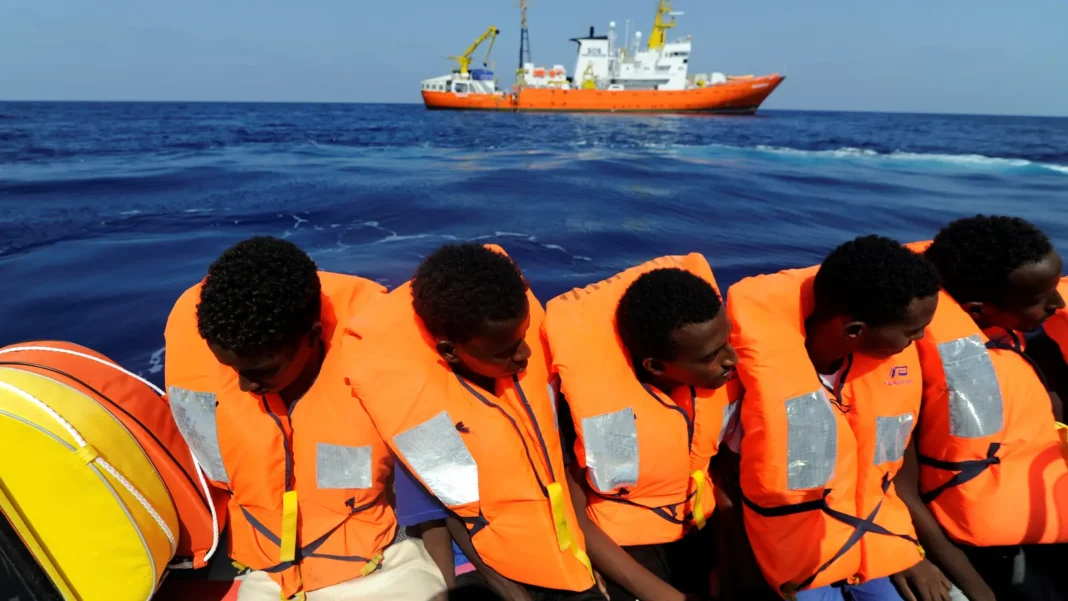
Despite grave dangers associated with travelling to Europe by crossing the Mediterranean sea, youths, especially from the Sub-Saharan region of Africa- Nigeria, Senegal, Ghana, Gambia and Sudan are not deterred in that suicide mission, thereby escalating the death toll. It will be recalled that migration through the Sub- Saharan routes blossomed in the early 1990s and was triggered by some pressures occasioned by famines, wars, ethnic strife, economic hardship, corruption, civil unrest, among others in some parts of the world. Migrants from these countries saw this is an opportunity to escape difficult situations in their home countries.
It was a rude shock to the entire humanity in 2017 when the news of the deaths of 26 Nigerian women was broken. The women, in their teens, were reportedly murdered in their attempt to cross the Mediterranean. The reports further suggested that the women, whose bodies were recovered at the sea, may have been sexually abused. The bodies of the women, aged between 14-18, were reportedly kept in a refrigerated section of a Spanish warship, Cantabria, which was also carrying other 375 migrants among whom were Sub-Saharan Africans from Nigeria, Senegal, Ghana, Gambia and Sudan. Among them were 90 women – eight of them pregnant – and 52 children. The incident is a microcosm of the ordeals Sub- Saharan Africans undergo in their quest to migrate to Italy and other European countries from the Trans- Saharan route in search of greener pasture. The ugly stories of the migrants are laced with violence, including torture and sexual abuse, by the gangs.
According to reports by International Organisation for Migrants (IOM) reveal that from the beginning of the the same year under review to November, 1,150,982 migrants arrived in southern Europe by boat from North Africa. The report further revealed that 111,552 of the migrants came via the Central Mediterranean route to Italy, and that the number who died on that route was 2,639. It also indicated that arrived in Greece, Cyprus or Spain. The total is less than half the 335,158 who arrived in the same period in 2016.It was estimated that more than 5,070 people died on migratory routes around the world with the Mediterranean alone recording 3,870 casualties. Also, the gangs that smuggle people charge each migrant about $6,000 (£4,578) to get to Italy, $4,000 of which is for Libya.
This figure did not include 40 West Africans mainly from Ghana and Nigeria who were buried along the Sahara. Sadly, every now and then, hundreds of Nigerians are brought back into this country after failed attempts to cross the Mediterranean Sea. Unfortunately, Nigeria is reported as one of the countries that are hardly hit by this phenomenon. The International Organisation for Migrants made Nigeria and Iraq a case study in one of their researches, the result of which was mind-boggling in addition to the tragic losses of life. The Nigerian situation is made complex by the activities of callous-minded human traffickers who deceive unsuspecting Nigerians with promises of leading them to greener pastures only to sell them as sex slaves. And it is on this note that the National Agency for the Prohibition of Trafficking in Persons (NAPTIP) and the Nigerian Immigration Services should be strengthened and urgently respond to the distress calls from Nigerians to take measures to prevent trafficking in persons.
There is also an urgent need to address some of the factors that have been identified to trigger this mass migration such as lack of enabling environment for the youth to grow; lack of job opportunities for the teeming Nigerian youths; among other factors. To address these factors, an enabling environment and job opportunities should be provided for our youths. There is also the need to lay emphasis on ICT to discourage them from taking this risk to migrate to Europe. On this note, one pertinent question that borders the mind is, “Why would one spend between $4,000 to $6,000 in order to migrate to Europe by a very difficult means when such money, if exchanged to naira, can afford the person a visible means of livelihood?
On the other hand, the African Union and Economic Community of West African States should not be mere observers in this issue. They should toe the path of their counterpart, the European Union (EU), took in checking irregular migration. The EU has adopted four pillars to address this issue. They include reducing the incentives for irregular migration, 2) improving border control, 3) developing a common EU asylum policy and 4) strengthening legal migration. The ‘irregular migration’ pillar comprises a diverse set of measures and projects, such as more traditional development measures that aim to address the root causes behind irregular migration, security measures that focus on the dismantling of smuggling and trafficking actions, and migration management measures that seek to improve return policies and shelter in the region of origin.
The EU’s approach has also reflected on its migration policies targeting the African region. For instance, the EU is building on the 2015 Valletta Agreement to implement its Agenda on Migration in Africa. The Agreement’s key areas are: 1) addressing the root causes of migration; 2) enhancing the protection of migrants and asylum seekers through maritime operations; 3) tackling the exploitation and trafficking of migrants; 4) improving cooperation on return and readmission; and 5) establishing and organising legal migration channels. In June 2016, the EU launched a Partnership Framework to further mobilise and focus EU actions in these areas. Under the Framework, the EU agrees on tailored ‘compacts’ with third countries that outline ‘financial support and development and neighbourhood policy tools that will reinforce local capacity-building, including for border control, asylum procedures, counter-smuggling and reintegration efforts. In addition, the EU Action Plan against migrant smuggling (2015-2020) implements the ‘fight against migrant smuggling as an
Furthermore, the EU Emergency Trust Fund for Africa funds a substantial part of the EU Partnership Framework. This Trust fund, set up to address the root causes of migration, finances projects that create employment opportunities, support basic services for local populations and support improvements in overall governance, as well as projects that improve migration management. In addition, the EU created the European External Investment Plan ‘to promote sustainable investment in Africa and the Neighbourhood and tackle some of the root causes of migration.