
By Rachel Ndakotsu, Senior Researcher, Institute for Peace and Conflict Resolution
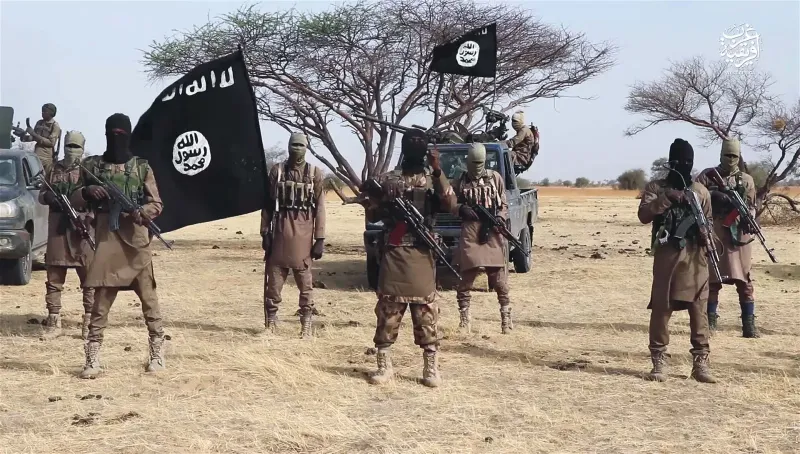
The escalating jihadist crisis in the Sahel region is increasingly spilling into Nigeria, intensifying insecurity and posing a broader threat to stability across West Africa. Armed groups operating across porous borders are exploiting weak governance structures to expand their influence and violence.Stretching from Mauritania to Sudan, the Sahel has become a hub for extremist groups such as Jama’at Nasr al-Islam wal-Muslimin (JNIM), the Islamic State Sahel Province (ISSP), and the emerging Lakurawa faction. Their activities, marked by cross-border movement of fighters, weapons, and ideology, are exacerbating Nigeria’s long-running battle with Boko Haram and the Islamic State West Africa Province (ISWAP).According to data from the Armed Conflict Location & Event Data Project (ACLED), Nigeria recorded a 40 percent increase in cross-border attacks in its northeast and northwest in 2024. Analysts link the surge to instability following military coups in Niger in 2023 and Burkina Faso in 2022, which weakened regional security coordination.Security reports indicate that more than 150 fighters from Mali and Niger joined ISWAP camps last year, while Lakurawa has established footholds in Sokoto and Kebbi states. These groups reportedly use long-standing smuggling routes to transport arms, including AK-47 rifles sourced from Libya, through Niger’s Tillabéri region into Nigeria.
Lakurawa’s recruitment strategy reportedly targets Fulani herders, leveraging grievances tied to farmer-herder conflicts. Its messaging mirrors Sahelian extremist narratives that call for the establishment of a caliphate. Tactical knowledge is also crossing borders, with investigators linking advanced explosives used in the 2024 Maiduguri bombings—where at least 15 people were killed—to training associated with JNIM.The humanitarian and economic consequences are severe. United Nations figures estimate that 3.3 million people are displaced in Nigeria’s northeast, while an additional 300,000 refugees from the Sahel are straining host communities. In the northwest, Lakurawa-linked violence reportedly killed at least 59 civilians between January and June 2025.
The World Bank estimates Nigeria has lost over $10 billion to conflict-related economic damage. Meanwhile, corruption and limited capacity among border patrol agencies continue to hamper efforts to curb the flow of arms and fighters across borders.Security experts warn that jihadist groups are capitalizing on ungoverned spaces, ethnic tensions, and weak institutions. ACLED projections suggest that, if unchecked, extremist groups could control up to 20 percent of northern Nigeria by 2030.Recent incidents underscore the growing threat. JNIM reportedly carried out its first known attack on Nigerian soil on October 30, raiding a military post in Kwara State. In the northwest, Lakurawa-linked fighters have launched multiple attacks in Sokoto and Kebbi, imposing illegal taxes and briefly controlling rural communities. In the northeast, ISWAP ambushes in September reportedly killed more than 250 people, aided by supply lines from the Sahel.Analysts argue that Nigeria’s response must be regional. Strengthening the Multinational Joint Task Force (MNJTF), improving intelligence sharing, deploying drone surveillance, and investing in border security technology are seen as critical steps. Addressing root causes—such as poverty, youth unemployment, and climate-driven resource conflicts—remains equally important.
With over 60 percent of Nigeria’s population under the age of 25, experts stress the need for large-scale skills acquisition and reintegration programmes. Calls have also grown for renewed diplomatic engagement between ECOWAS and Sahelian states to forge a coordinated front against jihadist expansion.Observers warn that the Sahel jihadist crisis is no longer confined to one region. Without collective and sustained action, West Africa risks deeper instability, with Nigeria increasingly positioned on the frontline.