
A coalition of Civil Society Organizations (CSOs), maritime experts and policy advocates has raised serious concerns over Nigeria’s maritime boundary management and the allocation of offshore oil wells, calling for urgent intervention by the Federal Government.
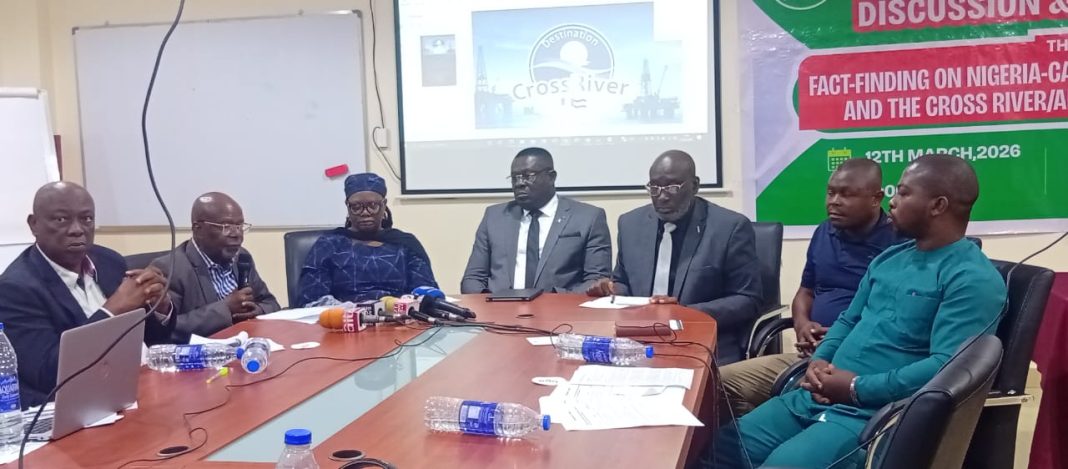
The concerns were presented on Thursday in Abuja during a civil society roundtable where the coalition leader, Dr. Gabriel Nwambu, addressed stakeholders and unveiled the communiqué issued after a recent verification mission to Nigeria’s offshore maritime corridor bordering Cameroon and Equatorial Guinea.
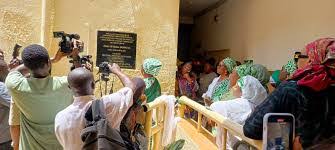
The communiqué followed a technical fact-finding and verification exercise conducted at sea on February 28, 2026, focusing on Nigeria’s offshore hydrocarbon blocks OML 114, OML 115 and OML 123 as well as the maritime boundary areas involving Nigeria, Cameroon and Equatorial Guinea.
Dr. Nwambu explained that the mission involved maritime governance stakeholders, mapping professionals and public policy experts who undertook physical observation of the maritime corridor, technical mapping verification and consultations with relevant authorities.
According to the coalition, the mission sought to independently verify the status of Nigeria’s maritime boundaries, offshore hydrocarbon entitlements and the implications of administrative and regulatory decisions affecting the Cross River maritime corridor.
ICJ Judgment Clarified
Presenting the findings, the coalition noted that the 2002 judgment of the International Court of Justice (ICJ) between Nigeria and Cameroon ceded only specific settlements in the southern Bakassi Peninsula — Atabong, Akwabana and Archibong Town — to Cameroon.
The coalition stressed that several areas often assumed to have been ceded were not included in the ruling.
“The Cross River Estuary and the western Bakassi peninsular islands of Dayspring I and II, Abana and Kwa Island were not ceded under the ICJ judgment,” the communiqué stated.
The group further emphasized that Nigeria still maintains maritime boundary continuity between the Cross River Estuary and the Akwayefe River Estuary based on the ICJ cartographic evidence and the physical geography of the region.
Dr. Nwambu also clarified that the Cross River Estuary remains Nigeria’s natural maritime gateway to the Atlantic Ocean and provides Cross River State with direct offshore access.
Questions Over Boundary Management
A major concern raised by the coalition relates to the actions of the National Boundary Commission (NBC) in implementing the Offshore/Onshore Dichotomy Abrogation Act using what it described as a temporary implementation map.
According to the communiqué, the baseline drawn from Tom Shot into the Cross River Estuary effectively closed the estuary’s mouth to the sea, thereby rendering Cross River State non-littoral.
The coalition warned that this development raises serious constitutional, economic and national security concerns.
It further criticized the NBC for failing to demarcate the Nigeria–Cameroon maritime boundary more than two decades after the ICJ ruling, stating that continued reliance on the temporary map could jeopardize Nigeria’s territorial integrity.
The report also alleged that the situation has effectively resulted in the ceding of about 780 hectares of maritime waters within the Cross River Estuary toward the Akwayefe River Estuary to Cameroon.
Oil Wells and Revenue Concerns
Beyond boundary issues, the civil society coalition raised alarm over oil revenue allocation and the management of transboundary oil fields.
According to the findings, the failure of relevant institutions to brief the President on key inter-agency reports could prevent Nigeria from exploiting 49 identified transboundary oil wells located within OML 114 in the Cross River Estuary.
The coalition also raised concerns over alleged financial irregularities relating to the Ekanga and Zafiro transboundary oil fields jointly developed by Nigeria and Equatorial Guinea.
It alleged that more than ₦33 billion may have been approved from the Federation Account in favour of Akwa Ibom State without clear presidential authorization.
The group further questioned whether revenues from the Ekanga and Zafiro fields — estimated at over $8 billion — had been properly remitted into the Federation Account.
Call for Presidential Intervention
To address the concerns, the coalition recommended several urgent measures, including a presidential review of the 2024 and 2025 inter-agency oil verification reports affecting Cross River and Akwa Ibom states.
It also called for the proper demarcation of the Nigeria–Cameroon maritime boundary in line with the ICJ judgment and the establishment of a Presidential Special Investigation Panel to probe the alleged loss of Nigerian maritime waters.
Other recommendations include a forensic audit of revenues from the Ekanga and Zafiro oil fields, investigation into the alleged ₦33 billion payment approvals, and diplomatic engagement with Cameroon to develop transboundary reservoir agreements.
The coalition also urged the Federal Government to restore and recognize Cross River State’s littoral status based on the geographic and legal status of the Cross River Estuary.
National Security Implications
In its concluding remarks, the coalition warned that the issues uncovered during the verification mission have far-reaching implications for Nigeria’s territorial integrity, maritime sovereignty, national security and oil revenue accountability.
Dr. Nwambu called on the President to treat the matter with urgency, stressing that transparent management of maritime boundaries and offshore resources remains critical to Nigeria’s economic stability and geopolitical standing.
The communiqué was jointly signed by representatives of the coalition of civil society organizations, maritime policy experts, technical observers and economic governance accountability groups.