
Politics
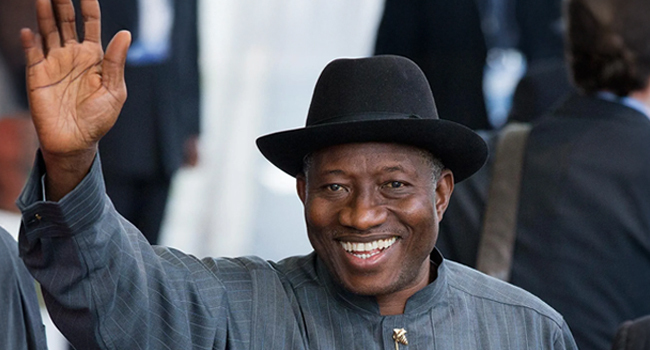
Turaki-Led PDP Faction Says It Submitted Jonathan’s 2027 Nomination to INEC

By Abigail David
A faction of the Peoples Democratic Party (PDP) led by former Minister of Special Duties, Kabiru Turaki (SAN), says it has submitted the names of former President Goodluck Jonathan and other candidates for the 2027 general election to the Independent National Electoral Commission (INEC).
The faction also announced that it had filed an appeal against a recent judgment of the Federal High Court in Abuja concerning the party’s leadership dispute.
Speaking at a press conference in Abuja on Friday, the National Publicity Secretary of the faction’s Interim National Working Committee (INWC), Comrade Ini Ememobong, said the interim leadership emerged following the Supreme Court’s judgment on the PDP leadership crisis, which the group claims left the party without a legally recognised national leadership.
According to Ememobong, the faction maintains that it validly nominated Jonathan as its presidential candidate, along with governorship, National Assembly and state assembly candidates for the 2027 elections.
He added that the party’s Board of Trustees and a National Executive Committee meeting convened by members subsequently established the Interim National Working Committee to oversee the party’s affairs and formally communicated its decisions to INEC.
The development comes amid the ongoing leadership dispute within the PDP, with rival groups continuing to lay claim to the party’s leadership and decision-making authority.


The political contest ahead of Nigeria’s 2027 general election appears to be taking shape, with President Bola Tinubu and the African Democratic Congress (ADC) offering contrasting visions of what should dominate public discourse ahead of the polls.
Within 24 hours, remarks by President Tinubu and a swift response from the ADC shifted attention beyond electoral politics to broader questions of governance, security and leadership.
Speaking during a meeting with members of the Catholic Bishops’ Conference of Nigeria (CBCN) at the State House, President Tinubu stressed his determination to seek re-election and defend his administration’s record.
“I asked for this job. I’m in it. Those who will take it from me will try, I won’t give them a red carpet. We wrestle each other to the finishing point,” the President said.
Tinubu also defended the neutrality of the Independent National Electoral Commission (INEC), dismissing concerns over the electoral process and expressing confidence in the commission’s ability to conduct credible elections.
The President highlighted what he described as improvements in governance, including greater stability in Nigeria’s university system with fewer disruptions from prolonged strikes. While acknowledging ongoing security challenges, he maintained that many of the country’s difficulties were inherited from previous administrations.
During the meeting, the Catholic bishops raised issues including insecurity, poverty, electoral credibility, higher education and the return of mission schools. Tinubu responded by reaffirming his administration’s commitment to national unity, education and ongoing reforms.
However, the ADC criticised the President’s remarks, arguing that national security should remain the government’s foremost priority.
In a statement issued by its National Publicity Secretary, Bolaji Abdullahi, the opposition party urged the President to focus on addressing insecurity rather than political competition.
“The fight Nigerians elected you to lead is not against the opposition. It is against terrorists, kidnappers and armed criminals,” Abdullahi said.
The party linked its criticism to reports of a deadly attack on Naridon village in Kaduna State, where several people were reportedly killed by gunmen, arguing that such incidents underscore the need for greater attention to security.
ADC further contended that the 2027 election should be viewed as an opportunity for Nigerians to assess the government’s performance in protecting lives and addressing insecurity.
The exchange reflects an emerging political divide over the issues likely to shape the next presidential election.
While President Tinubu has framed the election around continuity, institutional stability and resilience in the face of inherited challenges, the ADC is seeking to place security and public safety at the centre of national political debate.
Political observers say the differing approaches suggest that governance, security and economic performance are likely to feature prominently as parties position themselves ahead of the 2027 general election.
The ruling All Progressives Congress (APC) is fighting a two-front war of its own making. Having conducted primaries across the federation, the party’s National Working Committee (NWC) moved to replace a swath of candidates before final submission to the Independent National Electoral Commission (INEC) and in doing so, triggered litigation from its own governors, aggrieved aspirants, and rival parties. All of it converges on one question: does the APC have the legal room to rewrite its primary outcomes?
What began as internal party grumbling has hardened into a full-blown constitutional and statutory contest, now before the Federal High Court, with INEC itself effectively siding against the party it is meant to regulate.
Mapping the Fallout: Nine States, Dozens of Casualties
INEC records show a significant number of Senatorial and House of Representatives candidates who won APC primaries in May were substituted before the final list reached the commission. Aggrieved aspirants allege the changes favoured influential party leaders and senior political office holders, with some claiming officials exploited the window between the conclusion of primaries and submission of names to alter the original list.
The affected senatorial districts and constituencies span nine states: Abia, Benue, Ebonyi, Kaduna, Kogi, Kwara, Niger, Ondo and Taraba. Among the casualties: former Governor and Senator Gabriel Suswam, who had earlier emerged as APC’s Benue North-East (Zone A) senatorial candidate, and House member Gbenga Elegbeleye, previously the party’s Ondo North senatorial candidate.
The internal alarm reached the presidency early. Fourteen prominent APC stakeholders — including sitting senators and former lawmakers appealed to President Tinubu and the NWC to intervene in what they described as a deepening internal crisis.
The Party’s Defence
APC spokesman Felix Morka has mounted a public rebuttal. He says the NWC received more than 720 petitions from aspirants after the primaries, which were reviewed by appeal committees before recommendations went to the National Working Committee — which then re-evaluated the cases itself before approving changes.
Morka rejects claims that tickets went to non-participants, saying he is unaware of any case where someone who never bought forms or was never screened was suddenly handed a ticket while conceding that losing aspirants naturally have reason to be dissatisfied. His central argument is procedural: that a primary election “is a process, not an event,” and that the appeal mechanism is an integral part of that process rather than an invention to cause mischief.
Beyond individual states, the party told INEC the National Assembly changes stemmed from recommendations of its Primary Election Appeal Committee following resolution of petitions. The NWC’s transmittal letter framed the changes as the party’s “final position,” citing compliance with “the Electoral Act 2022 (as amended).”
That citation may itself be a problem the process is now governed by the Electoral Act 2026, not 2022, and the mismatch could become a legal vulnerability in its own right.
The Legal Fault Line
Critics counter that the appeal-committee route is itself the problem. Legal practitioners and affected aspirants argue the substitutions contravene Section 33 of the Electoral Act, which permits candidate changes only in cases of death or voluntary withdrawal and that the process may separately breach the right to fair hearing under Section 36 of the 1999 Constitution.
Roughly 26 National Assembly candidates are said to be affected by this dispute alone, prompting development partners to caution INEC chairman Amupitan against letting internal party appeal committees become a backdoor to rewrite primary outcomes.
That caution has since become litigation. APC state governors have gone to the Federal High Court, dragging both the NWC and INEC into court over the substitution of 26 legislative candidates nationwide, securing an interim injunction from Justice Ekwo in mid-July. In Benue and Ondo, aggrieved candidates are separately seeking court orders restraining APC from substituting candidates they say were validly nominated through the party’s June 29 correspondence to INEC — with insiders warning the suit could force fresh primaries or candidate-list changes ahead of 2027.
A Widening Judicial Backdrop
The substitution fight is unfolding against a broader battle over INEC’s own election timetable. In May, Justice Umar voided INEC’s compressed deadlines, ruling the commission cannot abridge the 120-day statutory window for submitting candidate particulars under Section 29(1), and — citing Section 31 — lacks power to shorten the 90-day period parties have to withdraw and substitute candidates. Justice Omotosho separately ordered INEC to amend its timetable to conform with the Electoral Act on membership registers and candidate substitution.
However, the Court of Appeal, ruling on INEC’s appeal, vacated the judgment that had nullified the electoral body’s 2027 timelines — adding another layer of procedural uncertainty to an already tangled picture.
Case Study: FHC/ABJ/CS/1429/2026 The Benue and Ondo Suit
In a suit marked FHC/ABJ/CS/1429/2026, Engr. Sesugh Kaaba and other aggrieved APC candidates from Benue State (loyalists of Governor Hyacinth Alia), commenced action against the APC and INEC. Ondo plaintiffs joined the same fight, naming Gbenga Elegbeleye, Dr. Taiwo Fasoranti, and several House aspirants replaced in the NWC’s revised list.
The plaintiffs asked the court to determine whether, under Sections 6(1) and 36(1) of the 1999 Constitution and Sections 29(1), 33(1), 84(1)–(2), 86, 87 and 88(2) of the Electoral Act 2026, the APC could — through its June 29, 2026 correspondence or any other — substitute validly nominated candidates absent voluntary withdrawal, death, or disqualification.
They sought a declaration that any such substitution is null and void, and an order compelling APC and INEC to recognise the original primary winners — among them Rev. Fr. Dr. Hyacinth Alia (Governorship), Senator Gabriel Suswam, Benjamin Terseer Aber, and Francis Otta Agbo, alongside a full slate of House of Representatives including Engr. David Terhemba Nongo and 32 House of Assembly candidates.
Interim relief: Before the substantive hearing, Justice Inyang Ekwo issued a preservative order directing the parties to maintain the status quo ante, holding that once issues were joined — particularly with INEC before the court — the defendants were bound by law to preserve the subject matter. It was, he told counsel, “not a matter of advice but of law.” APC and INEC were restrained from any action capable of altering the disputed candidate list pending determination of the substantive suit.
The Core Statutory Provision
Section 33 of the Electoral Act 2026 states plainly that a party may not change or substitute a submitted candidate except in the case of death or withdrawal by the candidate. A legal commentator summarised the practical effect: once a party submits its list to INEC, substitution is strictly limited to death or voluntary written withdrawal, and a fresh primary must follow within 14 days of a valid withdrawal.
On its face, this is the plaintiffs’ whole case – the NWC’s “appeal committee” mechanism is not one of the two statutory grounds.
The Plaintiffs’ Dual-Track Argument
Beyond the bare statutory point, the plaintiffs are stacking a due-process claim on top of it: that overturning a delegate-certified, INEC-monitored primary through an internal appeal panel could violate the fair-hearing guarantee under Section 36, since the original winners were displaced without an adversarial hearing. In Benue, plaintiffs went further, framing the NWC’s move as “an unconstitutional subversion of the Electoral Act.”
This combination of statutory violation plus constitutional fair-hearing violation gives the court two independent grounds to rule against APC, even should one theory falter.
INEC’s Position: An Unusual Alignment
In its affidavit filed July 5 in reply to the originating summons, INEC threw its weight behind the plaintiffs, telling the court that those listed in the suit had emerged winners at APC’s Benue primaries which it monitored but were illegally substituted.
The affidavit, deposed by Ayuba Mohammed of INEC’s litigation and prosecution department, argued that granting the plaintiffs’ application would serve the interest of justice and spare the commission “needless litigation arising from unjustified substitution of candidates.” INEC counsel Oluwole Olukunle told the court the commission is constitutionally bound to defend the integrity of the Constitution and the Electoral Act, and that parties, while free to nominate candidates of their choice, must do so within their own constitutions, INEC guidelines, and the law.
Olukunle’s submission distilled the commission’s broader philosophy: “The law now has long moved away from the era where political parties exercised unquestionable discretion in the selection and random/arbitrary substitution of candidates. Aspirants who emerge victorious at party primaries monitored by INEC automatically become candidates of the party at such elections.”
The Weight of Precedent
The plaintiffs’ position draws support from two Supreme Court authorities:
Abdulazeez v. Shittu (2023) 14 NWLR (Pt. 1904) 293 (SC) where it held that a claimant to a party’s candidacy must show he was an aspirant in an INEC-monitored primary in which he scored the highest votes.
Nongo v. Achado & Ors (2023) LPELR-60110(SC) wherein the court held that under Section 84(5)(c)(ii) of the Electoral Act 2022, a party is bound to forward the name of the aspirant with the highest votes to INEC, a duty that admits no discretion.
The Precedent That Cuts Both Ways: Machina v. Lawan (2023)
This is the case every lawyer in the dispute is watching, and it does not sit neatly on either side.
Bashir Machina won an INEC-monitored APC primary in Yobe North in 2022. The party nonetheless submitted Senate President Ahmad Lawan’s name instead, after Lawan lost the presidential primary and a second, uncancelled Senate primary was hastily organised to produce him. The Federal High Court and Court of Appeal both sided with Machina, but the Supreme Court reversed in a split decision of 3–2, not on the merits of who actually won, but on a procedural technicality: the majority held that Machina’s fraud allegations should have been filed by writ of summons rather than originating summons, since fraud requires oral evidence and cross-examination.
The two dissenting justices, Adamu Jauro and Emmanuel Agim, held that Machina was lawfully nominated, reasoning that the party’s second primary was an unlawful, uncancelled duplicate in breach of Section 285 of the Constitution.
For APC, the majority decision shows the Supreme Court has previously let a substitution stand over the will of a certified primary — on procedural grounds. If the current plaintiffs’ pleadings touch on “fraud” or bad faith by the NWC, APC’s lawyers will likely move to strike on the same originating-summons technicality that defeated Machina.
For the plaintiffs, the substantive reasoning in the Machina dissent — that a party cannot informally re-run or override a lawfully conducted, INEC-monitored primary was never rejected on the merits, only sidestepped procedurally. That reasoning, they argue, remains good law to build on.
What’s at Stake
Three threads converge here, and all three will shape how the litigation plays out:
The statutory question is whether an internal appeal-committee mechanism can lawfully stand in for the narrow death-or-withdrawal grounds Section 33 provides.
The procedural question is whether Machina-style technicalities over originating summons versus writ of summons will again decide a case on form rather than substance.
The institutional question is INEC’s unusually open alignment with the plaintiffs against a party it is meant to regulate neutrally, and what that signals for how the commission intends to police future substitutions ahead of 2027.
With an interim injunction in place and the substantive suit still to be heard, the APC’s candidate list for several National Assembly seats and possibly the broader question of how much discretion parties retain over their own primaries now rests with the Federal High Court.

By Abigail David
The North-West chapter of the All Progressives Congress (APC) has commenced preparations for the 2027 general elections, unveiling plans to intensify voter mobilisation across the region in support of President Bola Tinubu’s re-election bid.
The decision was reached during a meeting of the party’s zonal leadership at its headquarters in Kaduna, where officials reviewed the political landscape and discussed strategies for the next election cycle.
In a statement issued by the APC North-West Zonal Publicity Secretary, Musa Mada, the party described the region as a major political base, noting that it played a significant role in the party’s performance during the 2023 presidential election. The APC expressed confidence that it could strengthen its support ahead of the 2027 polls.
As part of its plans, the party said it would embark on a tour of the seven North-West states to engage stakeholders, reinforce grassroots structures and identify measures to consolidate support across the region.
The APC also noted that all seven North-West states are currently governed by the party, describing the development as a reflection of the region’s strategic importance.
The zonal leadership commended Kaduna State Governor Uba Sani for donating a utility vehicle to support the party’s activities and acknowledged the continued contributions of APC governors in the region toward sustaining the operations of the zonal headquarters.
The party also recognised the support of senior APC leaders from the North-West, including Deputy Senate President Barau Jibrin, Speaker of the House of Representatives Tajudeen Abbas, ministers and other political officeholders, for their contributions to the party and the Tinubu administration.


2027: Tinubu, ADC Exchange Signals Early Battle Over Election Narrative

APC’s Substitution Storm: Anatomy of a Legal Minefield

Turaki-Led PDP Faction Says It Submitted Jonathan’s 2027 Nomination to INEC
-

 News23 hours ago
Group Lists Tinubu’s Achievements, Reaffirms Support For Renewed Hope Agenda
-

 News23 hours ago
Group Rallies Support for Tinubu’s Renewed Hope Agenda, Lauds Gbajabiamila
-
 Politics2 hours ago
APC’s Substitution Storm: Anatomy of a Legal Minefield
-

 Sports4 hours ago
Commonwealth Games 2026: Australia Extend Medal Lead as Nigeria Remains Fifth
-
 Politics1 hour ago
2027: Tinubu, ADC Exchange Signals Early Battle Over Election Narrative
You must be logged in to post a comment Login