

By Joyce Remi-Babayeju
The World Health Organization, WHO, today has recorded a historic milestone as it launched the Global Strategy to Accelerate the Elimination of Cervical Cancer and it’s related deaths by 2050. WHO says the strategy outlines three key steps which includes vaccination, screening and treatment, adding that successful implementation of all three could reduce more than 40% of new cases of the disease and 5 million related deaths by 2050.
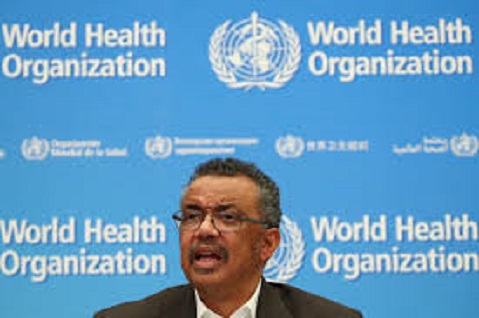
WHO Director General, Dr Tedros Adhanom Gbebreyeyus during the launch said, “Eliminating Cervical Cancer would have once seemed impossible dream, but we now have the cost- effective, evidence based tools to make that dream a reality.”
But we can only eliminate cervical cancer as a public health problem if we match the power of the tools we have with unrelenting determination to scale up their use globally, Gbebreyeyus emphazied.
WHO Director General, Dr. Princesses Nothemba Simelela said, ” The huge rate of mortality related to cervical cancer is a consequence of decades of neglect by global health community. According to her” Critical development s include availability of prophylactic vaccines, low cost approaches to screening and treating cervical cancer precursors and novel approaches to surgical training.
Through a shared global commitment to the Sustainable Development Goals, SDG, and leaving no one behind the countries of the world are forging a new oath to ending cervical cancer.
In a statement WHO said,” today’s development represents a historic milestone because it marks the first time that 194 countries commit to eliminating cancer – following adoption of a resolution at this year’s World Health Assembly.”
According to the health body meeting the targets by 2030 will place all countries on the path toward elimination
of 90% of girls fully vaccinated with the HPV vaccine by 15 years of age. 70% of women screened using a high-performance test by age 35 and again by 45 and 90% of women identified with cervical disease receive treatment (90% of women with pre-cancer treated and 90% of women with invasive cancer managed).
WHO noted that the strategy also stresses that investing in the interventions to meet these targets can generate substantial economic and societal returns. An estimated US$ 3.20 will be returned to the economy for every dollar invested through 2050 and beyond, owing to increases in women’s workforce participation. The figure rises to US$ 26.00 when the benefits of women’s improved health on families, communities and societies are considered.
WHO says that Cervical cancer is a preventable disease. It is also curable if detected early and adequately treated. Yet it is the fourth most common cancer among women globally.Adding that without taking additional action, the annual number of new cases of cervical cancer is expected to increase from 570 000 to 700 000 between 2018 and 2030, while the annual number of deaths is projected to rise from 311 000 to 400 000. In low- and middle-income countries, its incidence is nearly twice as high and its death rates three times as high as those in high-income countries.
The COVID-19 pandemic has posed challenges to preventing deaths due to cancer, including the interruption of vaccination, screening and treatment services; border closures that reduced the availability of supplies and that prevent the transit of skilled biomedical engineers to maintain equipment; new barriers preventing women in rural areas from travelling to referral centres for treatment; and school closures that interrupt school vaccine programmes. To the extent possible, however, WHO urges all countries to ensure that vaccination, screening and treatment can continue safely, with all necessary precautions.
Further Dr Simelela stressed, “The fight against cervical cancer is also a fight for women’s rights: the unnecessary suffering caused by this preventable disease reflects the injustices that uniquely affect women’s health around the world”, adding “Together, we can make history to ensure a cervical cancer-free future.”
The launch is being celebrated with a day of action across the globe, as ministries of health, partners, and cancer advocates engage in activities to improve access to cancer prevention and treatment for girls and women.
Around the world, monuments are being illuminated in the cervical teal, from Niagara Falls in North America to The Dubai Frame, to city skylines across Australia.