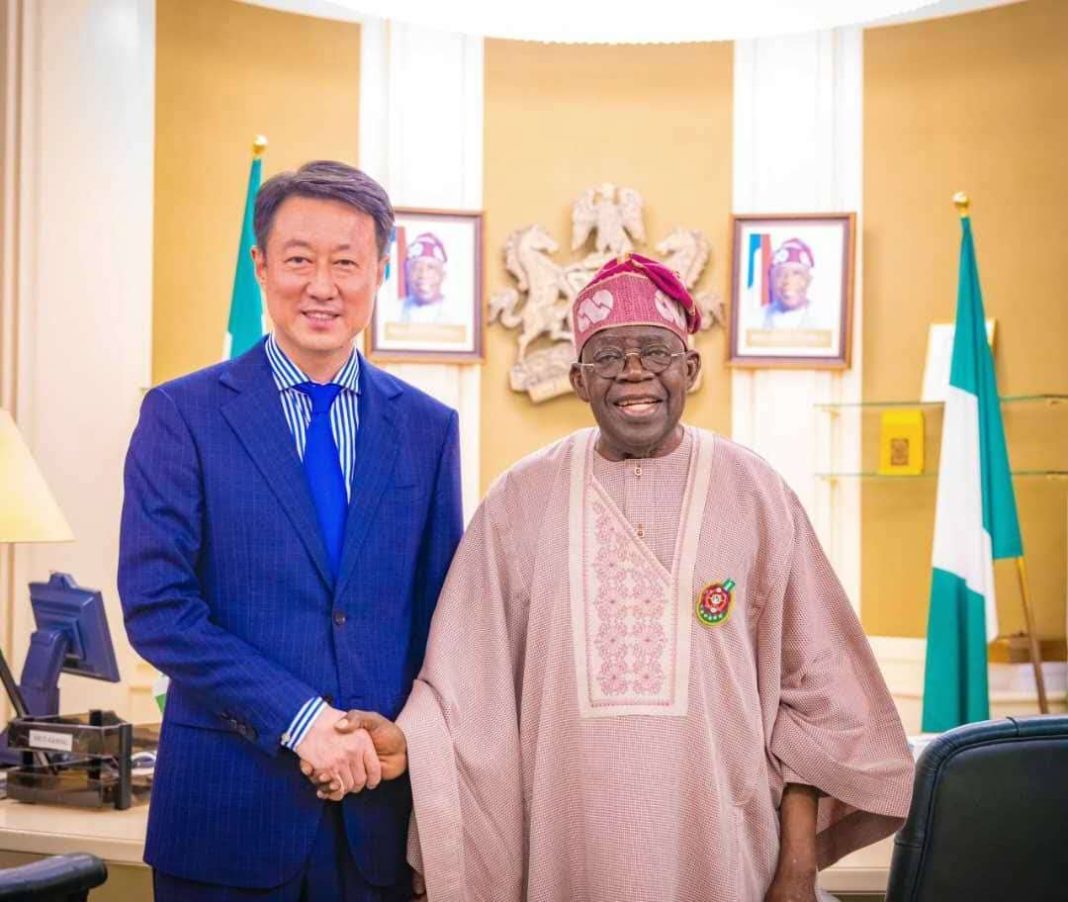

China’s direct investment in Nigeria increased by 130 percent, and bilateral trade has crossed the $22 billion mark this year, according to the Chinese Ambassador to Nigeria, Yu Dunhai.
He disclosed this at the maiden China–Nigeria Government Exchange Programme Alumni Reunion Gala, held on Thursday at the Abuja Continental Hotel. The event, hosted by the Chinese Embassy in Nigeria, brought together beneficiaries of the exchange programme, senior government officials and key stakeholders.
Ambassador revealed that more than 10,000 Nigerians have benefited from Chinese government-sponsored training programmes over the years. He said the initiatives span critical sectors such as governance, agriculture, manufacturing, public health, trade, investment, science and technology, as well as emerging areas including the digital and blue economies.
According to him, the programmes are designed to strengthen individual skills while also supporting Nigeria’s broader development objectives. He noted that alumni of the exchange programme are drawn from across the country, with participants based in Abuja, Lagos, Maiduguri, Ibadan, Benin City and other cities.
The envoy attributed China’s sustained investment in human capacity development to the deep-rooted relationship between both countries, which has lasted for more than five decades. He described Nigeria and China as strategic partners that have consistently demonstrated mutual support on key national and international issues.
He highlighted China’s support for Nigeria’s role in global affairs, including its recent recognition as a BRICS partner country, its return to the International Maritime Organisation and its aspiration to join the G20. The ambassador also acknowledged Nigeria’s firm support for China’s One-China policy as a reflection of mutual trust.
On the economic front, the ambassador noted that trade between China and Nigeria has already exceeded $22 billion this year, surpassing the total recorded in 2024. He added that Chinese direct investment in Nigeria has risen by 130 percent, while Nigeria’s exports to China have grown by over 200 percent.
He further disclosed that China has begun implementing a zero-tariff policy for all products from African countries, including Nigeria, describing the move as a major boost for Nigerian exporters and a step toward strengthening Africa’s position in global trade.
Reflecting on China’s development experience, Yu said the country’s per-capita income has risen from about $200 in the early years of its economic reforms to $13,000, while its manufacturing sector now accounts for roughly 35 percent of global output. He noted that these achievements demonstrate China’s capacity to serve as a reliable development partner.
The ambassador reaffirmed China’s readiness to deepen cooperation with Nigeria, stressing that the country’s 15th Five-Year Plan will focus on high-quality growth, reform and openness.