
By Charles Onunaiju
The tradition of choosing Africa first in China’s diplomatic work in which the foreign minister visits the region at the start of every year, in the past 36 years is neither a hollow ritual nor a safari. Facts have proven over the years that the consistent pattern of the diplomatic outreach which is rooted in the history of China-Africa cooperation has enabled one of the world’s most pragmatic and productive partnerships, in contemporary international relations.
The tradition did not jump out of the magic box but is rooted in the shared history of anti-colonial struggles and the solidarity built from it. From the 14th of December 1964 to the 4th of February 1964, China’s affable Premier Zhou Enlai made the famous visit to ten African countries –Egypt, then (United Arab Republic), Algeria, Morocco, Tunisia, Ghana, Mali, Guinea, Sudan, Ethiopia and Somalia, spending a total of 55 days in Africa, the longest of any visiting foreign leader to the region in all her post-colonial history.
Significantly, before his scheduled arrival to Accra in Ghana, an assassination attempt on the then, Ghanaian leader, Dr. Kwame Nkrumah, nearly marred the visit but the legendary Premier insisted on the visit to demonstrate the unbreakable bond of friendship between China and Africa, for which even an unforeseen circumstance cannot vitiate.
Premier Zhou Enlai, went on, in Ghana to announce the historic Eight Principles of assistance to Arab and African countries which among them is the iconic “self-reliance”, in which it was explicitly stated that “the purpose is to help recipient countries embark on the road to self-reliance and independent development, not to make them dependent on China”. The spirit of the Eight principles has traversed the historic trajectories of China –Africa cooperation up to now with adaptations and modifications to the changing times. Beijing’s Africa first diplomatic outreach at the start of every year in the past 36 years is a bold affirmation and testament that no matter how China grows in influence, wealth and power or even however, the world changes, China would remain trustworthy and reliable friend of Africa and true to her essential historic features.
This important bit of history is necessary to disclaim any notion that contemporary China-Africa cooperation is transactional or opportunistic. While the course of the partnership as evident in the tradition of Chinese foreign Minister first visit to Africa at the start of the year, drew from history, it is not a mere tribute to historical memory. It is practical and aligns with strategic contributions to the core concerns of Africa including, support to narrow or even close the historical deficit in infrastructure connectivity, that for long hobbled the vision of the region’s integration and Pan-Africa unity. The Belt and Road Initiative, a framework for International cooperation has delivered and still delivering on the critical requirements of Africa that not only enables connectivity within Africa but with the rest of the world.
The significance of the BRI is best illustrated that Africa is the region of the world with the largest number of partner countries. From Nigeria’s first ever deep seaport; Lekki Deep sea port to Mombasa –Nairobi to standard gauge railway , Ethiopia- Djibouti’s first electrified railway and many others, the state of infrastructure connectivity is nearing the bold vision for African industrial and infrastructure integration outlined in the historic Lagos plan of Action, decided in 1980 by African leaders meeting under auspicious of the special session of the organization of Africa Unity (OAU) held in Lagos, Nigeria with prior consultations with organized labour movement and other popular non-groups, including the intelligentsia and women. The pragmatism and tangible outcomes embedded in the follow-up process of the Forum on China-Africa Cooperation (FOCAC) which are further reinforced in the Africa first tradition of Chinese Foreign Minister’s visit to the region has help established a predictable frame work of long term engagement.
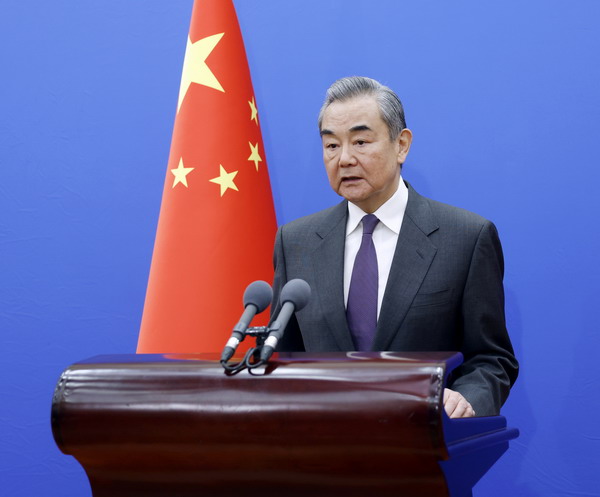
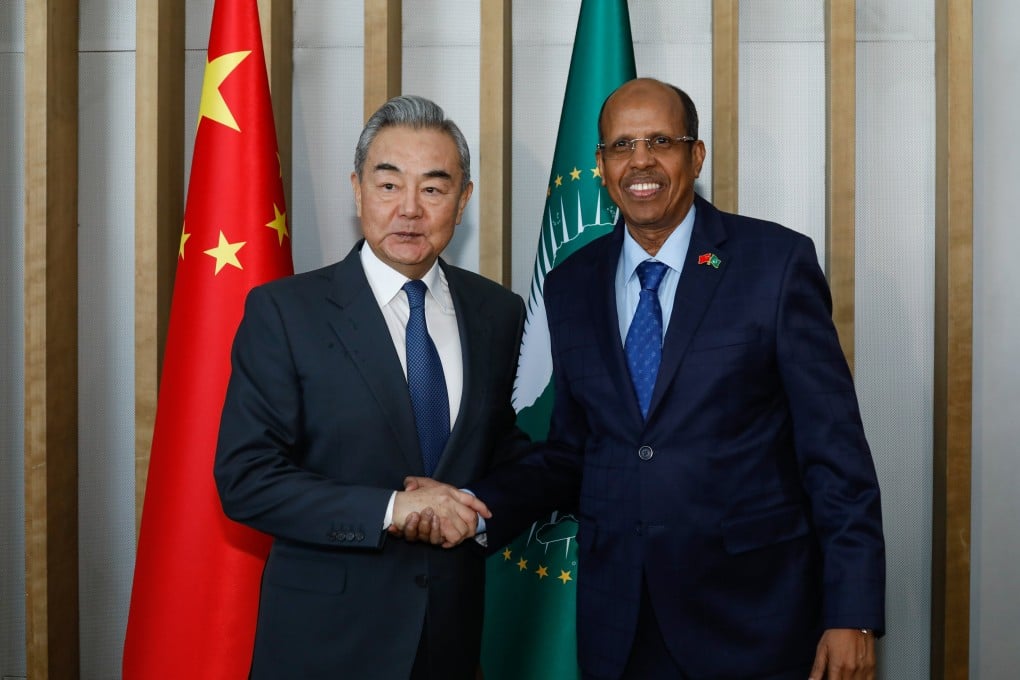
On the 70th anniversary of China’s diplomatic relation with Africa starting Egypt’s Abdel Nasser outreach to the then, young People’s Republic of China in 1956; Foreign Minister Wang Yi’s visit to Ethiopia, Somalia, Tanzania and Lesotho is significant, not only because it conforms to the continuity of a tradition already well known to the world but more importantly for the year under review. In the spirit of the traditional format of consultations and consensus, the Chinese and African leaders declared the 2026 as “China-Africa Year of People-to-People Exchanges”, a deliberate calibration to people-centric engagement because a historic partnership of China-Africa proportion is not only more secure in the intimate bosom of the people but should better flourish at the people’s conscious ownership of its process.
At Ethiopia during the visit of Foreign Minister Wang Yi and other high officials including the African Union chairperson, Mr. Mahmoud Ali Youssouf, Co-Chair of FOCAC, Mr. Jean-Claude Gakosso who is also the Foreign Minister of the Republic of Congo, Ethiopian President, Taye Atske Salassie the “China-Africa Year of People-to People Exchange” was launched with clarion calls for the two civilizations to deepen dialogue and play pivotal roles in the global dialogue among civilizations.
President Xi Jinping in his congratulatory letter to the occasion expounded on the significance of mutual learning among civilizations in adding momentum to China-Africa modernization. He further outlined the direction and principles of people-to-people and cultural cooperation, which demonstrated deep reflections on human history and civilization and provided important guidance for building an all-weather China-Africa community with a sacred future for the Era. He added that facts have buttressed that people-to-people exchanges form the most solid foundation of China-Africa friendship; even as mutual learnings stand as solid platform on which the cooperation would continue its upward trend.
The “iron clad” nature of China-Africa cooperation is not built on a shared historical memory of solidarity in the anti-colonial and anti-imperialist struggles alone but in the vision of building resilient economies and political stability with the social dividends of peace and improved living conditions for their respective peoples. In their respective national construction, China and African countries have outlined critical sphere of engagement; mutual learnings and experience sharing in governance, thereby expanding the value-chain of engagement, in addition to a solid and credible track record of cooperation in critical areas as trade and investment, industrial and production capacity cooperation, infrastructure cooperation which have already endeared a revolutionary landmark with impacts in across Africa.
Furthermore, the international consensus on “One-China Principle”, an irreducible minimum of China’s international outlook underlining her sovereignty and territorial integrity have enjoyed its most high profile affirmations in Africa, where the occasional tantrums of the “Taiwan independence” trouble markers and its few foreign collaborators are staunchly rebuked and reprimanded. At Addis Ababa, the AU headquarters, during Foreign Minister Wang Yi’s Visit, the regional body reaffirmed the “One-China Principle”; stressing unequivocally that there is but one China in the world, Taiwan is an inalienable part of China’s territory and that the government of the People’s Republic of China is the sole legal government representing the whole of China and that the AU firmly supports all efforts by the Chinese government to achieve national unification.
The Belt and Road Initiative despite been the world’s biggest public goods, represent for Africa a major turning point because it objectively aligns with the region’s historic requirement to open the path to sustainable and inclusive development. Throughout its nearly 13-year history, Africa has not only closely associated with it, but many countries in Africa has deliberately tailored their respective policy to engage with the Belt and Road Initiative. And in the current stage of high quality development, its reputation for sustainability and quality delivery on schedule, continues align the urgency of clising the infrastructure connectivity gaps in Africa.
In the context of Foreign Minister Wang Yi’s visit to the countries in Africa, each were addressed to their specific needs with ramifications for regional economies of scale. Whether it is the revitalization of Tanzania-Zambia railway for which China offered her support during the meeting between the Tanzanian leader and foreign Minister Wang Yi, the protocol for enhanced trade through the zero-tariff treatment for African products entering Chinese market, the engagements between Africa and China continues in the trajectories of tangible outcomes and mutually respectful dialogues.
In the world in which the U.S President Mr. Donald Trump has boasted that he is not restrained or constrained by international law or rules but by what he called his private morality, China and Africa should step up in more strategic engagement, accumulating more strategic aggregates for both resilience and credible deterrence, while playing constructive roles in building an international governance architecture that is both broad and inclusive, an effective antidote to any bully. Inherent in the roaring and grandstanding of a bully is the mortal fear of the unity of its so-called perceived adversaries and despite the arrogance of the sole hegemon, it is far weaker that it can imagine, especially when standing alone. Despite that geo-political landscape is fraught with uncertainties and even prospective disruptions, China and Africa and the greater South-South should consolidate itself as a stable pole of international rule of law, certainty and stability.
With the Belt and Road framework on international cooperation delivering tangibles to the respective partnership countries, including in Africa, it enhances their capacities and contributes to their strategic resilience. The honorings of the 36-year tradition of visiting Africa first at the start of every year injected more certainty and assurances that no matter, how the world might change, some practices would endure.
The zero tariff treatment extended to almost all the African countries by China also guarantees measure of certainty in a rapidly changing world, where major developed capitalist countries in the West are retreating from the trends of globalization. The zero-tariff treatment would not only enhance and guarantee a stable international market for African countries but would support the structural transformation of most Africa national economies from their mono-structural orientation of dominant single commodity, (a legacy of colonial domination) but would also enhance the long desired diversification in their respective economies with a stable export market for varieties of their products.
The visit of Foreign Minister Wang Yi in honor of a 36-year-old tradition, where Africa is the first destination for any Chinese Foreign Minister, is not much a renewal but a vital new historic starting point, when Africa-China cooperation is no longer at a luxury that both sides can conveniently afford but an imperative and clarion call to duty, because an increasingly desperate would surely need the certainty and sure-footedness in cooperation model that both sides exemplifies.
Mr. Charles Onunaiju, Director, Centre for China Studies, (CCS) Abuja, Nigeria.