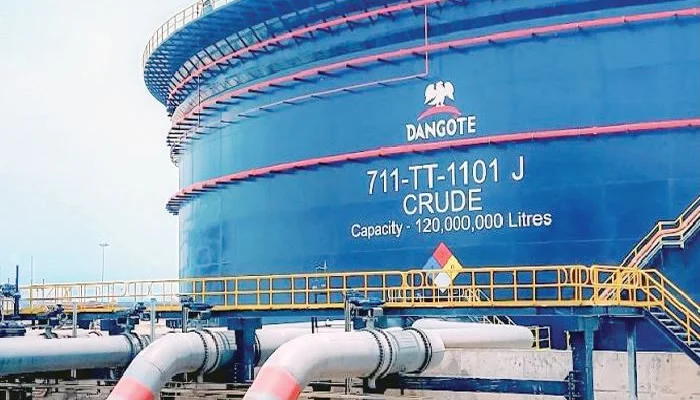

The Nigerian Midstream and Downstream Petroleum Regulatory Authority says domestic refining supplied about 92 per cent of Nigeria’s petrol demand in February 2026, following the Federal Government’s pause on the importation of Premium Motor Spirit (PMS).
Industry sources confirmed that no import licences had been issued this year, as local production is currently meeting national demand. Data from the regulator’s February fact sheet showed domestic refineries supplied 36.5 million litres of petrol per day, while imports accounted for only three million litres daily, bringing total supply to 39.5 million litres.
The shift marks a major change in Nigeria’s fuel supply structure, which has historically relied heavily on imports. Currently, the Dangote Refinery is the only facility producing petrol in the country, while other modular refineries focus mainly on diesel production.
In January 2026, petrol imports averaged 24.8 million litres per day alongside 40.1 million litres from domestic refineries, pushing total supply to 64.9 million litres. However, the sharp drop in imports in February reduced overall supply by about 25.4 million litres per day.
The development has significantly reduced Nigeria’s dependence on imported petrol, although some industry stakeholders warn it could create monopolistic pressures in the downstream sector.
Meanwhile, despite the refinery cutting its gantry price of petrol by N100 to N1,075 per litre, pump prices at filling stations remained above N1,200 per litre in Lagos, Ogun and the Federal Capital Territory.
The refinery said the price adjustment reflects declining global crude oil prices and reaffirmed its commitment to maintaining adequate fuel supply across the country.