
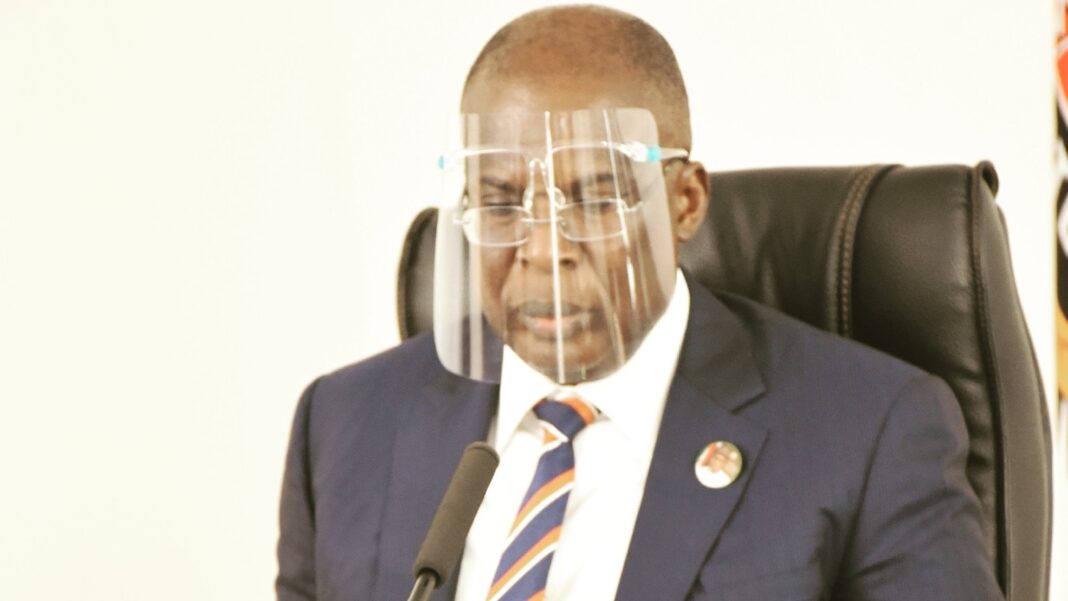

Nigeria has now officially written the Organisation of Petroleum Exporting Countries (OPEC), requesting a higher production quota under the OPEC+ accord.
The Minister of State, Petroleum Resources, Chief Timipre Sylva, while speaking on the sidelines of the Gastech 2021 conference in Dubai, yesterday, said the technical problems that had hampered the country’s output would soon be resolved.
Nigeria’s quota, which covers only crude oil and not condensate, is 1.614 million bpd for September and was scheduled to rise by roughly 17,000 bpd each month, in line with the OPEC+ alliance’s plans to gradually ease back on production cuts implemented in the pandemic.
Sylva said the country’s full production capacity was closer to 2.2 million bpd, which should be reflected in a revised quota, even though Nigeria has struggled to produce at its current allocation.
According to S&P Global Platts, Nigeria self-reported crude output of 1.27 million bpd in August, down from 1.44 million b/d in July, one of the lowest in the last few years.
But the minister insisted that the country deserves a higher quota, noting that aside its efforts to fix the technical difficulties, the basis for the current production quota, which was mainly because of the problems in the Niger Delta at the time, no longer exists.
“We’ve just put a request on the table, and we expect that to be looked at. We have capacity for more production than we are producing right now. Unfortunately, we are constrained by the quota,” the minister said.
OPEC and its allies are scheduled to meet October 4, with the current OPEC+ agreement calling for the group to collectively raise output by 400,000 bpd each month through the end of 2022 and a review of the pact scheduled in December 2021.
At the group’s July meeting, Saudi Arabia, Russia, the UAE, Iraq and Kuwait were issued higher production baselines from which quotas are determined, that go into effect in May 2022.
The move, agreed after more than two weeks of acrimonious negotiations, was spurred by a complaint from the UAE that its substantial investments in its production capacity over the past several years should be taken into account. Production baselines had been largely based on October 2018 production levels.
Sylva attributed Nigeria’s production struggles to technical problems from re-tapping reservoirs that had been shuttered to comply with the stringent OPEC+ cuts of the past 17 months and said output could rebound to around 1.7 million bpd by November and two million barrels per day by the end of the year.
“We had some issues from shutting down the reservoirs,” he said. “When you shut down a reservoir, to restart it, sometimes there are challenges,” he added.
Key Nigerian grade Forcados had been disrupted for almost a month until Shell lifted force majeure on loadings September 10. Quoting industry sources, S&P said the suspension of exports was due to an oil spill near the Forcados terminal.
Other Nigerian crudes such as Bonny Light, Escravos, and Qua Iboe have also faced production issues in recent months due to operational and technical reasons.
Sabotage and oil theft by militants in 2018 caused great volatility in Nigeria’s crude production that year, which Sylva said penalised the country when OPEC+ production baselines were set. The country reported pumping 1.77 million bpd in October 2018, jumping up to 1.94 million bpd in November 2018.
“The basis for giving us this quota was (that Nigeria was in) a crisis. Right now, we don’t have any crisis anymore, and we believe we can produce more,” Sylva said.
Meanwhile, oil prices rose modestly on Tuesday, as concerns about the global consumption outlook counterbalanced the struggle by big OPEC producers to pump enough supply to meet growing demand.
Both benchmarks were at one point up by $1 per barrel, but Brent crude pared gains and was up just 32 cents to $74.24 a barrel after falling by almost two per cent on Monday.
The October West Texas Intermediate (WTI) contract, which expires on Tuesday, rose 16 cents to $70.45 a barrel, after dropping 2.3 per cent in the previous session. The more-active November contract rose 27 cents a barrel to $70.41. Brent and the more-active WTI contract earlier reached session highs of $75.18 a barrel and $71.48 per barrel, respectively.
However, OPEC and its allies struggled to pump enough oil in August to meet current consumption as the world recovers from the coronavirus pandemic. Several countries, including Nigeria, appeared to have produced less than expected as part of the OPEC+ agreement – suggesting a supply gap could grow.



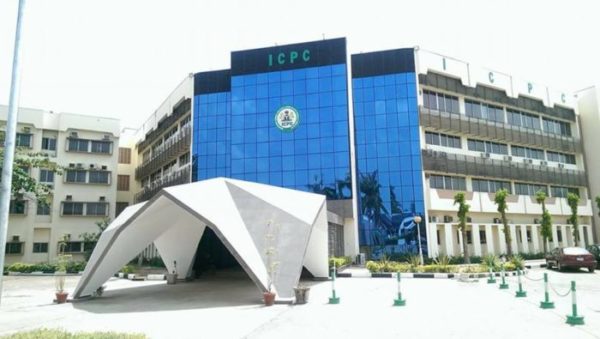
, requesting a higher production quota)