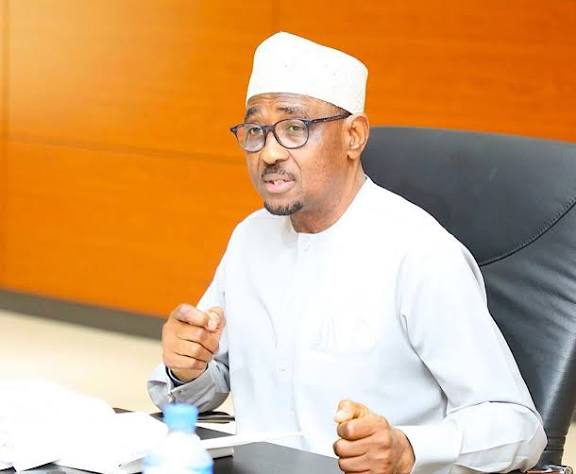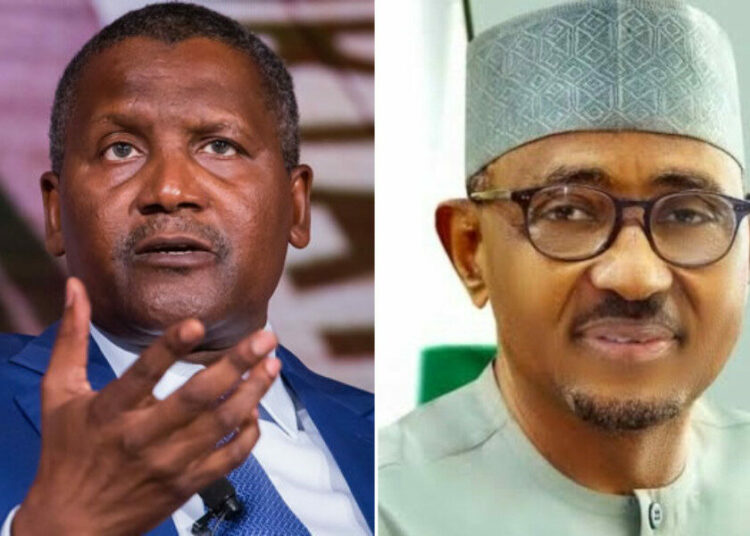

Civil society organisations have called on the Federal Government to investigate corruption allegations made by President of the Dangote Group, Alhaji Aliko Dangote, against the Chief Executive Officer of the Nigerian Midstream and Downstream Petroleum Regulatory Authority (NMDPRA), Farouk Ahmed.
Dangote had recently raised concerns over Nigeria’s continued dependence on fuel imports, warning that the practice was undermining local refining capacity and discouraging domestic investment. He disclosed that import licences covering about 7.5 billion litres of Premium Motor Spirit (PMS) were allegedly issued for the first quarter of 2026, despite the availability of local refining capacity.
According to Dangote, the policy environment has left modular refineries struggling to survive, while the persistent issuance of import permits continues to weaken the downstream sector.
Beyond the importation issue, Dangote accused Ahmed of living beyond his means and called on the Code of Conduct Bureau (CCB) to probe allegations that the NMDPRA chief paid as much as $5 million in tuition fees to send his children to secondary schools in Switzerland.
“The Code of Conduct Bureau or any appropriate body should investigate. If he denies it, I will publish what he paid and take legal steps to compel the schools to disclose the payments,” Dangote said, stressing that he was calling for accountability, not removal.
Describing the situation as economic sabotage, Dangote questioned how a public official could afford such expenses when many Nigerians struggle to pay basic school fees.
Reacting, the head of Transparency International (Nigeria), Auwal Musa Rafsanjani, said the allegations should be taken seriously and investigated thoroughly.
Dangote, he noted, had raised fundamental questions about public officials living beyond their legitimate income. Rafsanjani urged authorities to examine Ahmed’s asset declarations, adding that failure to do so would further erode public trust in governance.
“If proven true, it would be an indictment of the system at a time when Nigerians are grappling with poverty and economic hardship,” he said.
Meanwhile, investigations revealed that neither the Economic and Financial Crimes Commission (EFCC) nor the Independent Corrupt Practices and Other Related Crimes Commission (ICPC) has received a formal petition on the matter. However, sources within the anti-graft agencies confirmed that investigations can still be initiated based on allegations made in the public domain.
“We do not necessarily need a petition. Media reports are also valid sources of investigation,” a source said.
Energy expert and President of the Nigeria Consumer Protection Network, Kunle Olubiyo, described the alleged $5 million tuition payment as staggering, noting that such an amount could establish a functional modular refinery in Nigeria. He urged anti-corruption agencies to probe the claims in the interest of transparency.
Amid the growing controversy, the House of Representatives has moved to de-escalate tensions between the Dangote Refinery and the NMDPRA. The Joint Committee on Petroleum Resources (Midstream and Downstream) announced plans to mediate between both parties following what it described as rising tension in the sector.
The committee, chaired by Hon. Ikenga Ugochinyere and Hon. Henry Okogie, invited Dangote and NMDPRA leadership to appear before it and asked both sides to suspend media hostilities pending the outcome of its investigation.
Ugochinyere said the House acted swiftly to preserve stability in the downstream sector, especially in the post-subsidy era. He added that the committee had already received petitions on issues such as import licences and the capacity of local refineries to meet national demand.
“We can only find lasting solutions by fully understanding the issues behind these allegations and counter-allegations,” he said, assuring that the committee would examine all concerns and propose sustainable resolutions in the national interest.