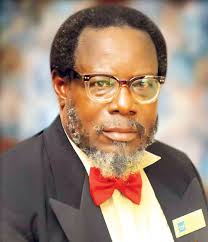

By Debo Adeniran
On this year’s International Human Rights Day, the global community reflects on the urgent need to reclaim and uphold the dignity that binds humanity together. The 2025 theme, “Human Rights: Our Everyday Essentials,” reinforces the idea that human rights begin with the daily choices of individuals and communities, all contributing to a more humane and peaceful world.The theme is not merely symbolic. It echoes the revolutionary spirit of the Universal Declaration of Human Rights (UDHR), adopted more than 75 years ago. Today, the Declaration’s principles remain a living blueprint for justice, equality, freedom, and dignity—values that continue to guide societies through emerging challenges.
The relevance of the UDHR is stronger than ever. It offers direction as nations confront complex issues such as digital surveillance, widening economic inequality, climate-related injustices, and persistent conflicts. At its core, the UDHR insists that human rights are not privileges but inherent entitlements that belong to every individual—regardless of ethnicity, gender, belief, socio-economic status, or political affiliation. From the market vendor and the student to the journalist, farmer, civil servant, and dissident, every person stands equal in dignity and rights. This year’s theme also underscores a vital truth: a society that protects its most vulnerable populations builds the strongest foundation for peace and progress. When justice is upheld for one individual, the rule of law is strengthened for all. When one voice is allowed to speak freely, national dialogue is enriched. And when dignity is defended, the collective humanity of a nation is elevated.
Yet, it is clear that governments must do more. The primary responsibility to promote, protect, and fulfil human rights rests with the state. Across all levels and branches of government, rhetoric must give way to meaningful reforms. This includes strengthening independent institutions, ensuring accountability for security agencies, enacting laws that safeguard liberties, and guaranteeing access to justice for all victims of rights violations.A government’s legitimacy is tied to its ability and willingness to protect its citizens. When the state repeatedly fails in this duty, or when violations occur with impunity, the social contract is broken. The people cannot be expected to offer unconditional trust, loyalty, or cooperation when their fundamental rights are not secured.
On this International Human Rights Day, the Committee for the Defence of Human Rights (CDHR) issues a unified call to action:
- – To the People: Know your rights. Uphold your dignity. Stand in solidarity with one another.
- – To Civil Society: Continue to document violations, advocate for justice, and hold power to account.
- – To the Government: Demonstrate commitment through decisive action. Investigate abuses, prosecute offenders, and prioritize citizens’ safety and welfare.
Furthermore, Chapters 2 and 4 of the Nigerian Constitution, which provide for fundamental rights, must be made justiciable, particularly those relating to social and economic rights. No society loses by constitutionally protecting the right to education, healthcare, food, shelter, and employment. Instead, it gains a stronger, more equitable foundation for development.The promise of the UDHR is the promise of a world where fear gives way to freedom and oppression yields to justice. Together, we can choose that world. The time to act is now.
Debo Adeniran is the President, Committee for the Defence of Human Rights (CDHR).