
By Agumanu Juilet Chiamaka
Democracy as a system or form of government is assuming a ‘universal value’ in itself and is widely considered a default government due largely to its intrinsic, instrumental and constructive values. While democratic form of government is increasingly being considered with global acceptance as a value, it has been popularised as a preferred form of rule due to what it means for citizens and what benefits it creates. Unfortunately, a number of issues have made it difficult for democratic norms to survive in Africa, including poverty, political unpredictability, corruption, and most recently the military’s resurgence into politics, which threatens the integrity of the continent’s true democracy.
For over three decades, military coups were largely seen as relics of Africa’s past, with democratic governance becoming the preferred system for addressing the continent’s complex socio-economic challenges. However, recent years have witnessed a resurgence of military takeovers in countries such as Guinea-Conakry, Burkina Faso, Mali, Chad, Sudan, Niger, Gabon and more currently Guinea-Bissau.
These coups, once thought to be a thing of the past, are resurfacing and posing a threat to the progress made in democratic governance. The implications of the resurgence of military coups in Africa for democratic governance are significant. They undermine the principles of democratic legitimacy and accountability as military coups often result in the overthrow of elected governments. Furthermore, military regimes are inherently authoritarian and suppress civil liberties, limiting the space for political participation and freedom of expression. The resurgence of military coups in Africa also erodes trust in democratic institutions and can lead to political instability and insecurity. In addition, the resurgence of military coups in Africa raises concerns about the effectiveness and sustainability of democratic institutions.
The current resurgence on military coups across West Africa and the Sahel is attributable to internal and external Influence:
Internal Influence such as governmental weaknesses within African countries have provided a necessary backdrop for these military coups internally. Such challenges include the protracted poverty, unemployment, corruption, weak democratic institutions, poor governance, insecurity and the entrenchment of armed terrorist groups. Often, incumbent leaders have sought to prolong their tenure past constitutional limits, triggering widespread demonstrations and political unrest, which the military uses as a pretext for taking power. Political factionalism adds to insecurity due to ethnic fragmentation and rivalry.
While ethnic domination has been misrepresented as a stabilizer in certain contexts, decades of unattended grievances stemming from inequalities have anticipated injustices and economic impoverishment which establish prerequisites for military occupation. The reliance on primary exports and weak economic diversification also made the states more exposed to economic shocks and, indirectly, promote political instability and military coups are more likely to recur in countries with a history of earlier coups, a foreign troop presence, and sprawling poverty.
Although the ambivalence shown by former French colonies towards total independence from France remains to date, rising economic hardships and a perception of unbridled exploitation by France has fueled deep resentments in several African countries. Perceived French meddling in local politics and selective support for/tolerance of undemocratic leadership, has also raised questions about Paris’ role as an impartial arbiter thus leading to lack of trust n the constitutional government.Some of the external influence culminating in coup includes the increased military and security involvement in Africa by major powers.
China, Russia and Turkey have also broadened arms sales, military cooperation, and training programmes throughout the continent. In particular, Russia has gained a reputation for backing authoritarian regimes through military aid and ex-soldiers from private security companies such as the Wagner Group. As in the case of Turkey, military presence in Africa has also been cast in broad terms of countering the influence of foreigners, sending troops and military equipment to countries like Somalia and Libya. The U.S. has also continued to be an important player by setting up the U.S. Africa Command (AFRICOM), which supports some African states in combating terrorism and fostering regional stability (Blanchard, 2021).
Via its CSDP, the European Union has deployed military in both Mali, the Central African Republic and Somalia. China has been accussed of leveraging and gaining access by offering help in exchange for military and political leverage, for instance, China’s Belt and Road Initiative (BRI) has been accused of exacerbating debt dependency and enhancing Chinese global power in politically vulnerable states. Even if such interventions are often thrilled under the banner of stabilising efforts, critics say they have on occasion propped authoritarian leaders and driven domestic power struggles.
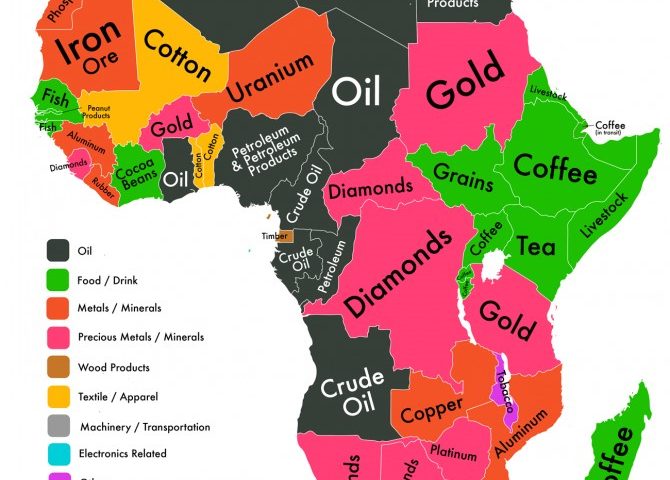
African countries are becoming a battleground for geostrategic competition, due to its wealth of natural resources and its advantageous positions on the world stage. The sudden wave of military rule in West Africa and the Sahel is an open attack against constitutional democracy.
Every coup shakes people´s belief on democratic institutions, weakens the rule of law, and makes violence as an acceptable path to power. This normally leads to erosion of democratic practices, political instability, and regional insecurity because military regimes normally suspend constitutions, dissolve parliaments, curtail civil liberties and stifle opposition. Also military dictators tighten their grip, imposing media censorship, making arbitrary arrests and committing human rights violations. In addition, military coups have a spill-over effect and can trigger similar developments in neighboring states.
The Sahel in particular has seen this ripple effect, whereby successive coups have turned the region into a strip of political instability.To advance democratic governance and curtail any future military involvement in Africa politics, this must be done:Africa needs to reinforce all democratic institutions including parliaments, judiciaries, electoral commissions by ensuring their operational capacity.
Also governments need to step up anti-corruptions endeavors and promote transparency, accountability and rule of law. Furthermore, stricter sanctions against unconstitutional changes of government and support for democratic transitions must be mandated and enforced by the African Union (AU), ECOWAS, and regional bodies. Also there should be institutionalize civilian oversight of the military through laws that delineate military boundaries and prohibit political interference.
Also african leaders must abide to constitutional term limits and resist all attempts at tenure elongation that mark the onset of instability. Therefore, although democracy’s survival cannot solely rest on renouncing military rule itself, there has to be a political system that is responsive, accountable and inclusive to the people, if democracy is to thrive on the African continent.
Agumanu Juilet Chiamaka, is a Graduate of History and Int’l studies from Imo state University and she’s currently serving as a corps member in Institute for Peace and Conflict Resolution (IPCR), Abuja. She can be reached via: Juiletchiamaka576@yahoo.com