

By Achadu Gabriel, Kaduna
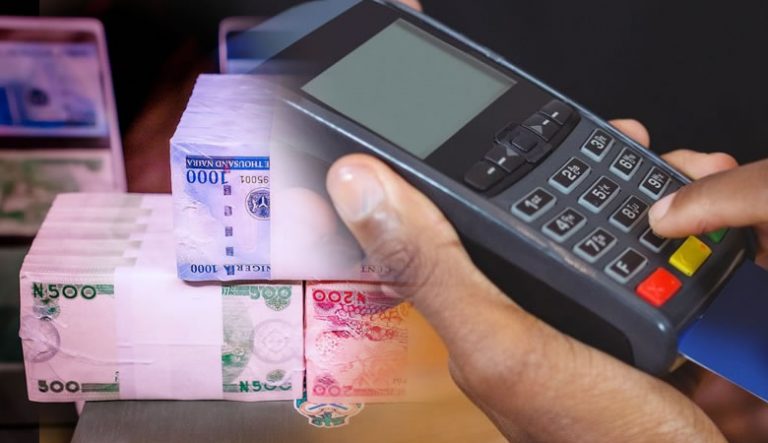
Nigerians are lamenting the sharp increase in Point of Sale (POS) withdrawal charges following the recent cash withdrawal limit policy implemented by commercial banks under the Bola Ahmed Tinubu administration.
Operators of POS services have progressively raised their withdrawal charges, with increments reportedly reaching as high as 70% to 100% in some cases. This surge disproportionately affects the less privileged, with variations depending on the operator, area, and state.
Investigations reveal that the policy has dealt a significant blow to poorer Nigerians, who are already grappling with widespread economic hardship. Many customers have expressed frustration over the new POS charges, which result in higher deductions, even for small transactions.
An eyewitness reported that just weeks after the cash withdrawal limit policy came into effect, disputes between POS operators and customers began to escalate over the increased charges.
“From the previous rates of N100 for withdrawals of N5,000 and N200 for N10,000, charges have risen to N100 for amounts below N6,000 and N200 for amounts starting from N7,000. This represents an increase of 70% to 100%,” an eyewitness said.
Recent data from POS operators in Kaduna show that withdrawals of N7,000 and above now attract N200 charges, while withdrawals between N10,000 and N15,000 incur N300 charges. Some operators, however, continue to maintain lower rates as a gesture of goodwill.
A shopkeeper and POS operator in the Sabon Tasha area of Kaduna explained to our correspondent that the increments began immediately after the policy’s implementation and were not influenced by the festive season.
Some POS operators, who spoke on condition of anonymity, warned that charges for N10,000 to N20,000 withdrawals might soon climb to N300 or even N400 if the government does not intervene to curb these excesses.
Additionally, many POS operators attributed the hike in charges to the N50 fee deducted from every transaction involving ATM cards, further compounding their operating costs.
The Federal Government introduced the cash withdrawal limit policy as part of efforts to promote a cashless economy, reduce the risks associated with carrying large amounts of cash, and curb money laundering. However, the policy has sparked widespread concerns about its impact on ordinary Nigerians, particularly those with limited financial means.