
By Okechukwu Keshi Ukegbu
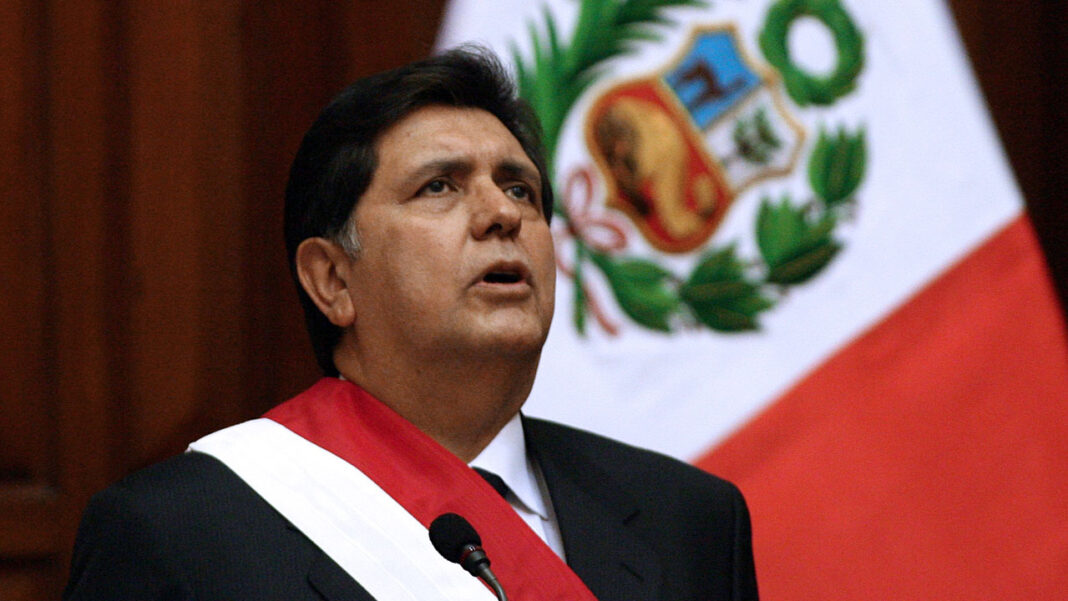
Few years back, Alan García, the former two-time president of Peru, journeyed home to meet to his ancestors, albeit ignobly. He committed a grave crime before humanity and God. Garcia died after shooting himself as police attempted to arrest him in the wide-ranging corruption scandal that has implicated scores of leaders in Peru and Latin America. The 69 year old was alleged to have taken bribes from the Brazilian construction giant Odebrecht in return for massive public works contracts. He denied receiving money from the company.
The corruption was alleged took place during his second term, from 2006 to 2011. When police arrived at García’s home in Lima, officials said, he told officers he was going to call his lawyer and went into his bedroom. But a few minutes later a gunshot was heard, and the police forced their way into the room and found Mr. García in a sitting position with a wound to the head.
If mortals have will to dictate where to be born, Garcia could have chosen Nigeria. The calamity that befell him could have been averted.After all receiving kick backs as gratifications for awarding contracts is now a norm rather than a vice in Nigeria. Even governors are allegedly caught on camera receiving kick backs. Kick backs are so glaring here that you do not need proxies to facilitate them. More worrisome is that cronies of governors and other political office holders are feeding fat on kick backs, and these are done with grave impunity. They own choice houses and cars that are not hidden from the public. That calls for the scramble to join the league.
If Garcia were to be a Nigerian he didn’t need to bother. What he ought to have done is to play the ball, at worst he joins the ruling party. After all, those who have corruption charges hanging on their necks like the sword of Damocles are majestically walking the streets of Nigeria free. Some of them are even current political office holders.
Poor Garcia, you were unlucky to have chosen Peru as your country .
Please don’t commit that mistake next time. Even if the worse comes to worst, pay your way through to become a Nigerian. After all it is alleged that you were good in taking bribes. Therefore, you were also good in giving bribes.
Though Garcia ended his life ingloriously in a show of remorse for the offence he committed, corrupt Nigerian officials should alihy remorse by, at least, resigning their positions when their corrupt practices are uncovered. The boldness is not only exhibited by the corrupt public officials but their kiths and kind, their communities, church and other institutions who sing their praises, organise home coming events, even when they have been let off the prison, award chieftaincy titles, and are ordained the highest titles in the church. This is why corruption has become an epidemic in the country.
Corruption in Nigeria context has been a nagging issue. The phenomenon has defied any known definition. It is as recalcitrant as the character abiku, the ogbanje girl – in Wole Soyinka’s popular Abiku – which keeps reincarnating. Corruption has also defied every effort by successive governments to put it at bay.
It is either that corruption is as old Nigeria or it predates the nation’s independence. Corruption has been cited by perpetrators of coups de’tat in the country for justification for ousting governments. A typical example is the reasons advanced by the leader of the 15th January 1966 coup, Major Chukwuma Kaduna Nzeogwu, thus: “Our enemies are the political profiteers, the swindlers, the men in high and low places that seek bribes and demand 10 per cent, those that have corrupted our society and put the Nigerian calendar back by words and deeds.”
It was also reported that the country’s total foreign assets at independence were $174.2 million, and by March 1964, less than four years after, the assets depleted to a deplorable £76.8 million: a figure grossly lower than that of 1948.
The war against corruption has been a continuous exercise. It will be recalled that the General Yakubu Gowon regime witnessed an unprecedented oil boom. Gowon boasted that “the problem of the country was not poverty, rather how to spend the abundant resources accrued to the country occasioned by the Arab-Israeli war of 1973, when the prices of oil rose to the high heavens; as high as 400 per cent, due to the boycott of western oil market by Arab nations that protested the alleged connivance between Israel and the West.