
By Francis Wilfred
The Executive Chairman of the (EFCC), Ola Olukoyede, has called for stronger inter-agency collaboration as a critical strategy in tackling corruption and financial crimes in Nigeria.
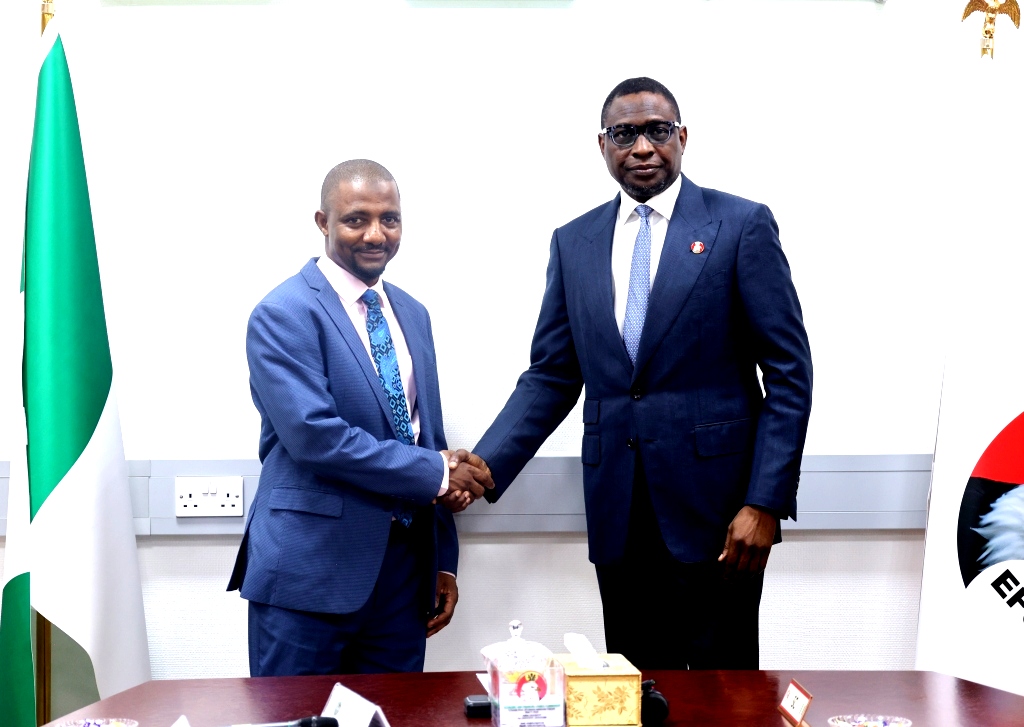
Olukoyede made the call on Wednesday in Abuja during the signing of a Memorandum of Understanding (MoU) between the EFCC and the (CCB). The CCB delegation was led by its Chairman, Dr. Abdullahi Usman Bello.
According to a statement issued by the EFCC’s Head of Media and Publicity, Dele Oyewale, Olukoyede described corruption as a major driver of poverty, hunger, malnutrition, poor infrastructure and underdevelopment in the country.
“All of us are key players in the anti-corruption fight. Everybody will agree with us that one of the major problems behind poverty, hunger, malnutrition, lack of infrastructure and generally lack of development in Nigeria is financial crimes and corruption,” he said.
He stressed that meaningful progress can only be achieved through synergy rather than rivalry among anti-corruption agencies.
“There is no doubting the fact that we need to collaborate and synergise. We must not compete. We must collaborate and work with sincerity of purpose,” he added, noting that President Bola Tinubu has encouraged heads of agencies to work collectively in serving the nation.
Olukoyede expressed satisfaction over the formalisation of cooperation through the MoU, noting that both agencies have historically shared intelligence, technical support and administrative collaboration. He urged that the agreement be operationalised to further strengthen institutional ties.
Addressing the CCB Chairman, Olukoyede emphasised the statutory powers vested in the bureau, including asset freezing, confiscation, investigation and prosecution. He encouraged Bello to remain resolute in the discharge of his duties.
“You can’t be doing this kind of work and expect everyone to fall in love with you, unless you are not doing it well. Be ready to be called names and criticised. What is important is that we make an impact,” he said.
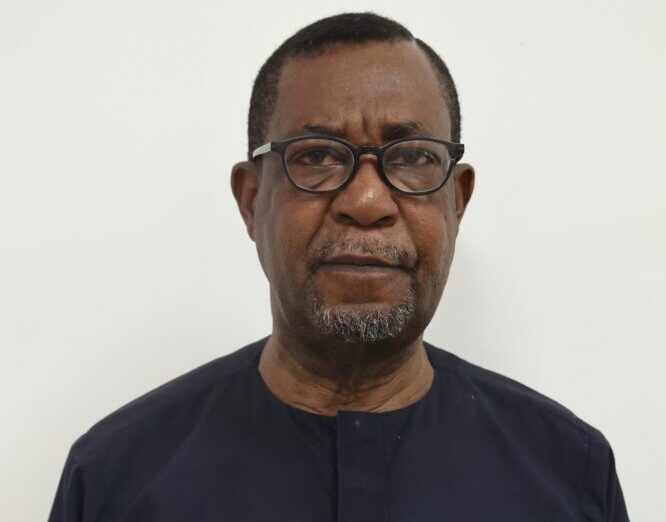
In his remarks, Bello described the MoU as a significant milestone in the CCB’s anti-corruption mandate, underscoring the importance of partnership and cooperation.
“The agreement formalises our resolve to strengthen integrity, transparency and accountability in public life. The CCB enforces ethical standards through asset declaration, verification and compliance monitoring, while the EFCC leads in the fight against economic and financial crimes,” he stated.
Bello noted that corruption cannot be effectively addressed in isolation and that the partnership would enhance intelligence and information sharing between both agencies.
He disclosed that the CCB maintains a comprehensive database of assets and liabilities declared by public servants, describing it as a valuable intelligence resource already utilised by the EFCC.
Areas of collaboration under the MoU include joint investigations, coordinated asset tracing and recovery, operational support, capacity building and training, technological cooperation, improved case management and unified public enlightenment campaigns.
“As we sign this MoU, let us signal a new era of united and effective action against corruption in Nigeria,” Bello said.
The agreement is expected to deepen institutional cooperation and reinforce Nigeria’s broader anti-corruption framework.