
From Abel Zwanke, Lafia
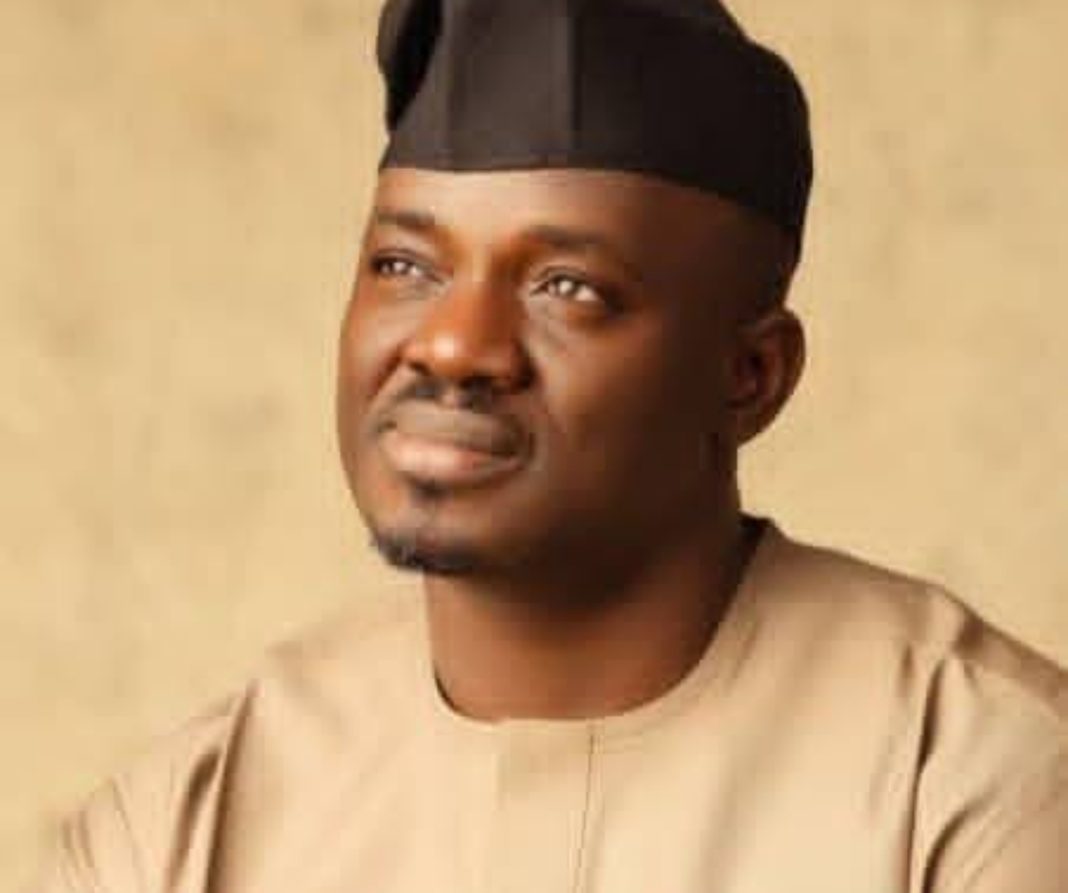
The resignation of Ombugadu Emmanuel from the Peoples Democratic Party (PDP) has triggered one of the most significant political conversations in Nasarawa State since the 2023 general elections. While defections are not unusual in Nigeria’s fluid political terrain, Ombugadu’s exit carries unusual weight.
He is not merely a party chieftain changing platforms; he is widely regarded as a political movement with deep grassroots structures, tested electoral strength and a loyal support base across zones.
Now, with reports indicating that he is positioning to contest the forthcoming senatorial bye-election in his zone, and with growing speculation about a possible governorship ambition in 2027, his resignation has moved beyond routine party politics into the realm of strategic realignment. It raises fundamental questions: Is this a tactical step toward immediate legislative relevance? Is it a long-term calculation for 2027? Or does it signal a broader consolidation of power around the ruling party in Nasarawa?
From Opposition Standard Bearer to Political Realignment
Ombugadu was the PDP’s governorship candidate in the 2023 election, where he emerged as one of the most formidable challengers to the incumbent political establishment. His campaign structure penetrated rural and urban communities alike, energising youths and mobilising grassroots voters in a manner that earned him recognition even beyond party lines.
That political pedigree is central to understanding why his resignation is consequential. Unlike many defections driven purely by elite bargaining, Ombugadu’s political base is organic and structured. His supporters view him less as a conventional politician and more as a symbol of opposition strength and alternative leadership.
Therefore, when such a figure exits the PDP, it inevitably weakens the opposition architecture while strengthening the receiving platform, if indeed he formalises his movement to the ruling party.
The APC Factor and Consolidation of Power
Speculation has been rife that Ombugadu is heading toward the All Progressives Congress (APC). Though official confirmation remains a matter of procedural timing, his own public remarks have intensified the belief.
At one point during a radio programme in Akwanga, he reportedly stated that his decision to resign from the PDP was motivated by a desire to support President Bola Ahmed Tinubu and Governor Abdullahi Sule in succeeding at delivering good governance to the people.
That statement is politically loaded. It frames his defection not as personal ambition but as alignment with governance objectives. In a state where political loyalty often intersects with access to development projects and federal leverage, such positioning could resonate with constituents who prioritise pragmatic collaboration over adversarial opposition.
For the APC, absorbing a politician of Ombugadu’s stature would represent strategic consolidation ahead of 2027. It would reduce the fragmentation of votes, diminish opposition competitiveness and project an image of inclusivity and dominance.
The Immediate Battle: The Senatorial Bye-Election
Perhaps the most immediate test of this realignment lies in the forthcoming senatorial bye-election in his zone. Sources within political circles indicate that Ombugadu is preparing to contest the seat.
If he secures the APC ticket and emerges victorious, the move would accomplish several objectives simultaneously: restore him to legislative relevance, expand his political reach at the national level, and reposition him as a bridge between federal and state power structures.
Winning the bye-election under the APC would also validate the strategic wisdom of his defection. It would signal that his support base is portable, that his followers are loyal to his leadership rather than to a party label. In Nigeria’s political environment, where personal structures often outweigh party ideology, such a demonstration would be significant.
However, the contest will not be without internal dynamics. The APC already has established aspirants and entrenched interests within the zone. Integrating a high-profile defector into an existing hierarchy can generate friction. The success of this transition will depend on how effectively party leadership manages competing ambitions.
A Calculated Step Toward 2027?
Beyond the senatorial contest lies the larger horizon of 2027. Even before his resignation, political observers had identified Ombugadu as one of the figures likely to shape the next governorship race. His performance in 2023, his organisational depth and his visibility across local government areas have kept him firmly within the conversation.
If he contests and wins the senatorial seat, it could serve as a strategic springboard. A Senate platform provides national exposure, legislative influence and greater access to federal networks, assets that are valuable in a governorship race.
The question then becomes whether this realignment represents an abandonment of opposition politics or a recalibration of ambition. By aligning with the ruling party, he may be seeking to avoid the structural disadvantages often faced by opposition candidates in Nigeria, particularly in resource mobilisation and federal backing.
The PDP at a Crossroads
For the PDP in Nasarawa, Ombugadu’s exit is more than symbolic. It exposes structural vulnerabilities and compels introspection. Can the party rebuild its momentum without its most recognisable recent candidate? Does it possess alternative figures with comparable grassroots appeal?
Political history in Nigeria suggests that parties can survive high-profile defections if they possess strong institutional foundations. However, in states where personalities drive electoral outcomes, the departure of a dominant figure can trigger cascading exits.
Ward executives, youth coordinators and local mobilisers may reassess their loyalty. Some may remain out of ideological commitment or long-standing ties. Others may calculate that political survival lies in alignment with power.
The coming months will reveal whether the PDP can reorganise or whether it will experience a gradual erosion of structure.
Defection Politics and Ideological Fluidity
Ombugadu’s move also reopens the broader debate about ideology in Nigerian politics. Party switching has become a recurring feature of the political landscape, often justified on grounds of development, national interest or constituency service.
Critics argue that such movements undermine ideological clarity and weaken democratic accountability. Supporters contend that governance effectiveness sometimes requires alignment with ruling authorities.
In his case, the justification offered, supporting President Tinubu and Governor Sule to succeed in delivering good governance, situates the move within a developmental narrative. Whether voters interpret this as principled pragmatism or strategic positioning will shape public perception.
The Movement Question: Personal Brand vs Party Identity
One of the most intriguing aspects of Ombugadu’s political journey is the perception that he commands a movement. His campaign rallies in 2023 were marked by strong youth participation and cross-community engagement. Supporters often identified with his persona and message rather than merely with party ideology.
If that movement transfers intact to a new platform, it will reinforce the argument that personal capital outweighs party structures in many parts of Nigeria. Conversely, if the movement fractures, it would suggest that party identity still matters more than assumed.
Political movements anchored in personality face a delicate balance. They thrive on loyalty but can be vulnerable to shifts in narrative. Maintaining coherence while navigating a platform change requires careful communication and consistent engagement with grassroots actors.
Governance Implications
Should he formally align with the APC and secure legislative office, the implications for governance could be substantial. An expanded coalition may smooth executive-legislative relations at both state and federal levels.
Governor Sule’s administration could benefit from broader political backing within the state, reducing adversarial tensions that sometimes slow policy implementation. At the federal level, alignment with President Tinubu’s agenda could attract additional development opportunities.
However, political consolidation also raises questions about competitive democracy. A weakened opposition may limit robust policy debate and oversight, elements that are essential in a healthy democratic system.
Strategic Timing
The timing of the resignation is itself noteworthy. Occurring ahead of a bye-election and years before the next general cycle, it suggests calculated planning rather than reactive decision-making.
Early realignment allows time to negotiate internal party accommodation, build alliances and stabilise new political relationships. It also provides room to manage potential backlash from supporters who may feel emotionally tied to the PDP.
The Road Ahead
Ultimately, Ombugadu’s resignation represents more than a personal career decision. It signals the beginning of a new chapter in Nasarawa’s political configuration. The senatorial bye-election will serve as the first litmus test. The 2027 governorship race will be the larger battleground.
If he succeeds in both consolidating his movement and integrating into the APC without significant resistance, he could emerge as a central figure in the state’s next political era. If the transition falters, it may redefine the limits of personality-driven politics.
What is certain is that Nasarawa’s political landscape is entering a period of recalibration. Alignments are shifting, ambitions are crystallising and calculations are being made quietly across party lines.
In a state where political dynamics often mirror national trends, Ombugadu’s move may prove emblematic of a broader pattern: the gradual convergence of influential opposition figures into ruling party structures ahead of decisive electoral cycles.
For voters, the ultimate question will not merely be which platform he chooses, but whether the promised alignment translates into tangible improvements in governance, representation and development.
As the bye-election approaches and whispers of 2027 grow louder, one thing is clear the reconfiguration of Nasarawa politics has begun, and Ombugadu Emmanuel stands at its centre.