

A retired United States Army captain, Bish Johnson, has warned that Nigeria’s security challenges cannot be resolved through a single military operation, describing the country’s insecurity as complex and multifaceted.
Johnson made the remarks during an interview on ARISE News on Friday night while reacting to recent United States airstrikes on terrorist camps in north-western Nigeria.
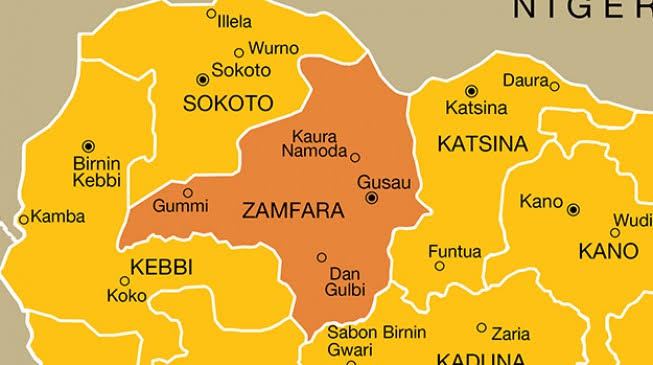
On Christmas Day, US President Donald Trump announced that American forces had carried out deadly strikes against Islamic State militants operating in the region, pledging further action if attacks on Christians persisted. Nigeria’s Ministry of Foreign Affairs later confirmed the strikes, describing them as part of structured security cooperation with international partners, including the United States, to combat terrorism and violent extremism.
However, Johnson cautioned against viewing the crisis solely through the lens of terrorism.
“If we don’t diagnose our problem correctly, we are going to come up with the wrong solution,” he said. “While there is an element of terrorism in the North-West, the problem is far more complicated than it is being simplified.”
He pointed to persistent herder-farmer clashes in the Middle Belt, noting that the conflict has claimed thousands of lives and remains unresolved.
“Nobody has really addressed the issue of herder-farmer clashes in the Middle Belt, which have taken so many lives and are still ongoing,” he said, adding that Nigeria’s security challenges also include issues surrounding the implementation of Sharia law in parts of the country.
The security analyst also referenced incidents of religious violence, including the killing of Deborah Samuel, a Christian student who was lynched by fellow students in Sokoto State in 2022 after being accused of blasphemy.
“Unfortunately, we saw what happened in Sokoto State, where a young lady, Deborah Samuel, was lynched and stoned to death in broad daylight by her schoolmates,” Johnson said.
He expressed concern that no one has been held accountable for the killing, describing it as one of several incidents shaping international perceptions of Nigeria.
“Up till now, none of the people responsible have been brought to justice,” he said. “These are some of the issues Americans are observing, which is why they describe the situation as religious persecution.”
Johnson added that such unresolved cases make it difficult for Nigeria to counter claims of religious intolerance, noting that similar incidents have occurred elsewhere without perpetrators being prosecuted.