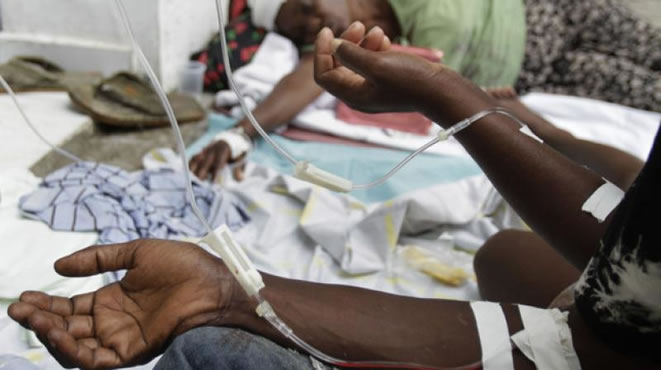

As students return to school following the mid-term break and Sallah holiday, there are growing concerns about the potential spread of cholera. This food and water-borne disease, caused by the ingestion of Vibrio cholerae bacteria, poses a significant risk, particularly in crowded environments like schools.
Health Experts Sound the Alarm
Public health experts warn that the recent cholera outbreak across the country could quickly spread in schools if preventive measures are not implemented. Celine Lafoucrier, Chief of UNICEF’s Lagos Field Office, emphasized the need for extensive measures to protect school children, stressing the importance of preventing disruptions to the academic calendar due to the disease.
The Nigeria Centre for Disease Control and Prevention (NCDC) has reported a worrying increase in cholera cases, with over 1,141 suspected cases, 65 confirmed cases, and more than 30 deaths recorded from January 1 to June 11, 2024. The outbreak has affected 96 local government areas across 30 states, with 10 states—Bayelsa, Zamfara, Abia, Cross River, Bauchi, Delta, Katsina, Imo, Nasarawa, and Lagos—contributing 90% of the cases.
Vulnerability of School Children
Lafoucrier highlighted that children, particularly those under five, are at high risk due to their vulnerability to severe dehydration and higher mortality rates. She noted that post-recovery issues such as malnutrition, stunted growth, and weakened immune systems further increase susceptibility to other diseases.
“Despite the state government’s efforts to provide water, the current outbreak underscores the urgent need for clean and risk-free water,” Lafoucrier stated. She also pointed out that cholera outbreaks disrupt education, as illness and caregiving responsibilities lead to school closures and reduced attendance.
Preventive Measures in Schools
Public health experts and officials have called for rigorous preventive measures in schools. Prof. Kayode Osagbemi from the University of Ilorin stressed that gatherings in schools could facilitate the spread of the infection, especially in boarding houses where contamination of water and food is more likely.
Osagbemi advised schools to ensure the availability of clean food, water, and hand-washing facilities. Students should bring their own water bottles and avoid sharing items to minimize the risk of spreading the infection.
Dr. Abdurrazzaq Alege, a Consultant Paediatrician, also warned of the heightened risk due to the rainy season and poor hygiene practices. He emphasized the importance of potable water and proper sanitation to protect students.
Dr. Lekan Adelakun, Team Leader at Q-Impact Medicare, called for campaigns to raise awareness among parents, school owners, and food vendors about the importance of food hygiene and preventing the consumption of contaminated water.
Government Response
The Lagos State Health Commissioner, Prof. Akin Abayomi, confirmed the presence of a highly aggressive and contagious cholera strain. He reported that out of 350 suspected cases, there were 17 confirmed cases and 15 deaths. The state government is intensifying public health campaigns and activating COVID-19 era guidelines to curb the spread.
Similarly, Ogun State has confirmed three cholera cases and mandated all houses without toilet facilities to construct one within three to six months. The government has also ordered public and private schools, markets, parks, petrol stations, and mechanic villages to ensure they have functional toilets and running water.
Osun State has activated rapid response centers across its 30 local government areas and is engaging in public sensitization to prevent any cholera outbreak.
In Ekiti State, the health commissioner has engaged the Ministry of Education to ensure preventive measures are in place in schools. Gombe State has identified 55 hotspots and is decontaminating water sources every two weeks to prevent outbreaks.
Delta State, which recently had a cholera outbreak, reported that the situation is now under control, with no current cases.
The return of students to school amid a cholera outbreak calls for heightened vigilance and proactive measures. Ensuring clean water, proper sanitation, and public awareness are crucial to preventing the spread of this potentially deadly disease.