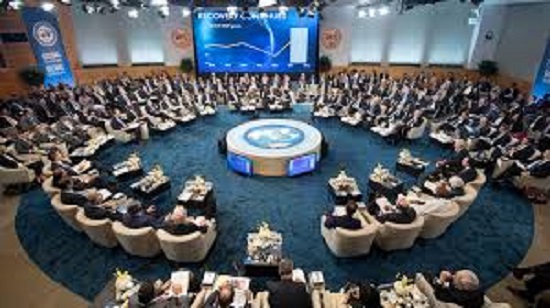

Nigeria has been allocated about $3.35 billion as part of a historic general allocation of Special Drawing Rights (SDRs) of the International Monetary Fund (IMF).
This is a result of the approval of a general allocation of about SDR456 billion – an equivalent of $650 billion – by the IMF Board of Governors on Monday.
The allocation which was approved on Monday aims to boost global liquidity at a time when the world is grappling with the coronavirus (COVID-19) pandemic.
“This is a historic decision – the largest SDR allocation in the history of the IMF and a shot in the arm for the global economy at a time of unprecedented crisis,” said IMF Managing Director, Kristalina Georgieva.
Although it is not a currency, the SDR is an international reserve asset created by the IMF to supplement the official reserves of its member countries.
It is a potential claim on the freely usable currencies of IMF members and can provide a country with liquidity. The SDR is defined by the US dollar, Euro, Chinese Yuan, Japanese Yen, and the British Pound.
Supporting Pandemic Recovery
The amount allocated to Nigeria is as a result of the exchange rate of reference which is 0.702283 SDR to a dollar as of July 1, 2021, and Nigeria has 2.4545 billion SDRs.
“The SDR allocation will benefit all members, address the long-term global need for reserves, build confidence, and foster the resilience and stability of the global economy,” the IMF managing director added.
“It will particularly help our most vulnerable countries struggling to cope with the impact of the COVID-19 crisis.”
According to the IMF, the general allocation of SDRs will become effective on August 23 and the newly created SDRs will be credited to IMF member countries in proportion to their existing quotas in the Fund.
It stated that about $275 billion (about SDR 193 billion) of the new allocation will go to emerging markets and developing countries, including low-income countries.
Georgieva promised that the fund would continue to engage actively with its membership to identify viable options for voluntary channelling of SDRs from wealthier to poorer, and more vulnerable member countries to support their pandemic recovery and achieve resilient and sustainable growth.
One key option is for members that have strong external positions to voluntarily channel part of their SDRs to scale up lending for low-income countries through the IMF’s Poverty Reduction and Growth Trust (PRGT).
The IMF said the concessional support through the PRGT was currently interest-free, adding that it was exploring other options to help poorer and more vulnerable countries in their recovery efforts.
A new Resilience and Sustainability Trust could be considered to facilitate more resilient and sustainable growth in the medium term, it stated.