
By Solomon Iliya Jeffrey
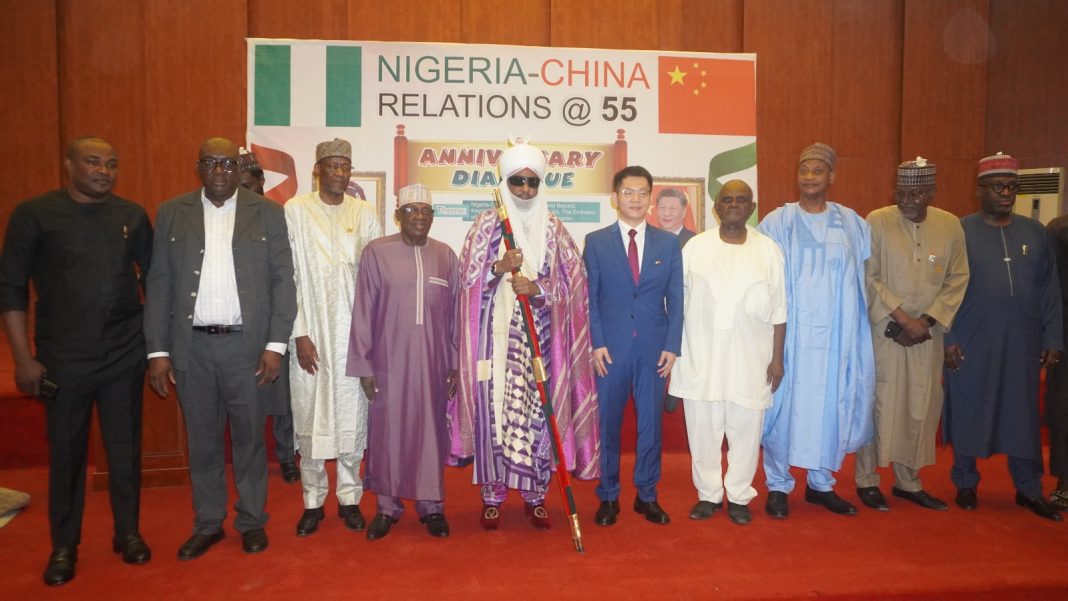
The relationship between Nigeria and China has evolved significantly over the past two decades, culminating in its elevation to a Comprehensive Strategic Partnership (CSP). This upgrade signals a deepening political, economic, and developmental cooperation between Africa’s largest economy and the world’s second‑largest economy. For Nigeria, the shift carries immense potential, if strategically managed. For China, it reinforces its long‑term interests in Africa, particularly in trade, investment, infrastructure, and geopolitical partnerships.
The CSP status means Nigeria and China now collaborate at higher diplomatic levels, enjoy broader policy coordination, and pursue long‑term, multi‑sector development plans. One clear benefit for Nigeria lies in infrastructure financing. Chinese loans and engineering firms, such as CCECC, have played central roles in major projects like the Abuja–Kaduna railway, Lagos–Ibadan railway, airport terminal expansions, and numerous road networks. These projects have improved mobility, reduced travel time, and boosted commerce across regions. The Abuja–Kaduna rail alone has transported millions of passengers since inception, easing pressure on road transport and stimulating local economies.
Another advantage is technology transfer. China’s advancement in telecommunications and digital infrastructure has supported Nigerian companies through partnerships with firms such as Huawei and ZTE. Nigeria’s 4G expansion and ongoing 5G rollout owe much to Chinese technology and investment. Through the CSP framework, these collaborations can be strengthened to enhance cybersecurity, local capacity building, and indigenous tech innovation.
An important but often overlooked area is people‑to‑people cooperation. Institutions such as the Institute for Peace and Conflict Resolution (IPCR) have enjoyed a productive relationship with the Chinese government. Through joint workshops, research programmes, and the Win‑Win philosophy exchange schemes, both sides have deepened understanding on conflict prevention, peaceful development, and international cooperation. The Win‑Win model, one of China’s foreign policy pillars, emphasizes mutual benefit rather than dominance. Nigeria has leveraged this through diplomatic training, peace studies collaborations, and staff exchanges that have strengthened institutional capacity.
Economic diversification is another area Nigeria stands to gain from. China remains one of Nigeria’s largest trading partners, but the trade balance heavily favors China. However, with the CSP upgrade, Nigeria can negotiate better market access for agricultural products, solid minerals, and manufactured goods. Success stories already exist. For example, Nigerian sesame seeds and cashew nuts have gained wider entry into the Chinese market. If properly coordinated, Nigeria’s leather, cocoa, and textile industries can also tap into China’s vast consumer markets.
Additionally, Chinese investments in free trade zones, such as the Lekki Free Trade Zone and Ogun‑Guangdong FTZ, have created jobs, supported manufacturing, and boosted exports. These zones show how Nigeria can benefit from industrialization partnerships rather than solely importing finished goods. Yet, despite these positives, challenges remain. Nigeria must address concerns about debt sustainability, terms of engagement, local content enforcement, and technology dependence. These issues do not diminish the value of the partnership, but they underscore the need for stronger negotiation frameworks. For example, ensuring more joint ventures rather than purely Chinese‑led projects would enhance skill transfer and long‑term economic benefits. Strengthening regulatory bodies will also ensure compliance with environmental and labor standards.Looking ahead, several strategies can sustain and strengthen the relationship.
First, Nigeria should prioritize sectors where China has comparative advantage, technology, manufacturing, transportation, and renewable energy, while also pushing for capacity‑building agreements. Second, academic and cultural exchanges should be expanded beyond diplomatic institutions to universities, think tanks, and youth innovation hubs. Third, Nigeria must take advantage of China’s willingness to support security and peacebuilding programmes. With IPCR already collaborating on peace research, expanding these efforts can help address internal conflicts and regional insecurity.
Ultimately, Nigeria–China relations do not have to be a story of dependency. With transparent agreements, strong local participation, and clearly defined national interests, the partnership can drive industrial growth, digital transformation, and long‑term development. The Comprehensive Strategic Partnership presents a chance for Nigeria to reposition itself globally, not as a passive recipient, but as an active partner shaping its own future.
Solomon Iliya Jeffrey, is a Corps member at the Institute for Peace and Conflict Resolution (IPCR). Abuja, and can be reached via: solomonjefferey24@gmail.com