
The United States government has faulted Nigeria for persistent trade barriers, citing delays in approving import permits for American agricultural products and systemic inefficiencies in port operations.
In its 2025 National Trade Estimate Report on Foreign Trade Barriers, the Office of the United States Trade Representative (USTR) stated that despite repeated efforts since 2019, Nigeria has failed to act on several requests to allow US food and agricultural imports. The report highlighted Nigeria’s slow approval processes, inconsistent enforcement of sanitary and phytosanitary measures, and weak inspection capacities as major hindrances.
The USTR noted that these delays have forced many traders to rely on informal channels, adding that Nigeria’s inconsistent application of technical regulations often causes confusion among exporters.
The report also pointed to Nigeria’s complex and restrictive import regime. While the country’s average Most-Favoured Nation (MFN) tariff rate was 12% in 2023, agricultural goods faced an average tariff of 15.9%, with several supplementary charges pushing effective rates to over 50% on 79 tariff lines — far exceeding the 70% limit set by ECOWAS on some items.
The US further criticised Nigeria’s ban on 25 product categories, including poultry, beef, fruit juice, and certain vehicles, calling these restrictions a barrier to trade. It also cited corruption, manual customs processing, and inconsistent application of trade rules as persistent challenges in Nigeria’s customs administration.
Despite Nigeria approving a $3.1 billion customs modernisation project in 2020, the USTR noted the initiative had stalled due to legal disputes.
On public procurement, the report stated that US companies face transparency issues and irregularities in the contract award process. It also flagged concerns over poor intellectual property enforcement and restrictions on digital trade, particularly the data localisation requirements mandated by the National Information Technology Development Agency (NITDA).
The USTR further highlighted challenges in foreign exchange repatriation, noting that while Nigeria cleared $4.6 billion of an estimated $7 billion forex backlog as of March 2024, $2.4 billion remains under review.
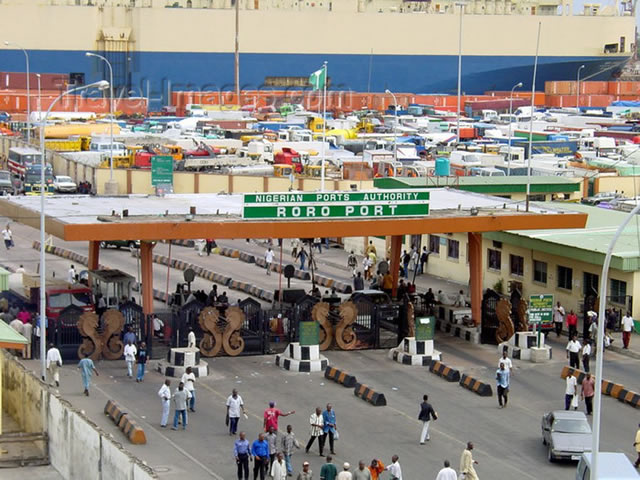
Nigeria’s ports, particularly Apapa in Lagos, were described as among the world’s most expensive, with an average clearance delay of 30 days. Despite recent government reforms, the report concluded that “barriers that restrict trade and limit investment in Nigeria remain widespread.”
Customs Service Rejects US Claims
Responding to the US report, the Nigeria Customs Service (NCS) described the allegations as “unfair” and “misinformed.”
Speaking to The PUNCH, NCS National Public Relations Officer, Abdullahi Maiwada, asserted that Customs had made significant progress in automation and trade facilitation. He emphasised that the NCS merely implements government fiscal policies and is not responsible for formulating import bans or levies.
Maiwada cited initiatives such as the Authorised Economic Operator programme, the Advanced Ruling System for cargo classification and valuation, and the indigenous B’Odogwu Unified Customs Management System — already deployed at PTML Command — as evidence of Customs’ automation progress.
He also referenced recent investments in non-intrusive inspection technology, including new scanners at Apapa port and the use of geospatial tools for border surveillance.
“It is an aberration and very unfair to claim that Nigeria Customs operates manually. We are one of the most automated Customs systems in Africa,” Maiwada said.
While stressing that Customs has no control over trade policy formulation, he reaffirmed the agency’s commitment to improving operations and aligning with global standards.
Ministry of Trade Responds
When contacted, Dr Adebayo Thomas, Director of Press and Public Relations at the Ministry of Industry, Trade, and Investment, declined to comment further, referencing earlier remarks by Minister Dr Jumoke Oduwole.
In a previous statement responding to US tariffs during the Trump administration, Oduwole acknowledged the potential negative impact on Nigeria’s exports and reaffirmed the government’s commitment to boosting non-oil exports through enhanced quality control and market competitiveness.