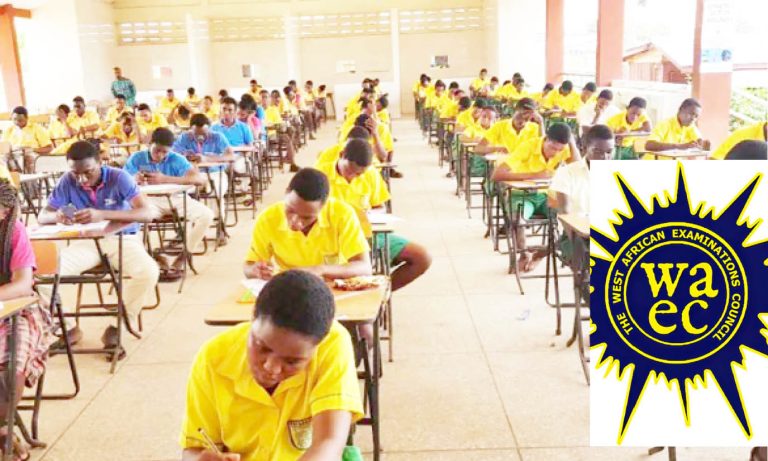

The West African Examinations Council (WAEC) has released the 2025 West African Senior School Certificate Examination (WASSCE) results, revealing the worst performance by Nigerian students in the last five years.
According to the results, only 38.32% of the 1,969,313 candidates who sat for the examination obtained credit passes in at least five subjects, including English Language and Mathematics — a sharp drop from the 72.12% recorded in 2024. This marks a 33.8% decrease in overall performance.
Announcing the results in Lagos, the Head of WAEC Nigeria Office, Amos Dangut, attributed the poor performance partly to innovations such as the Computer-Based Test (CBT) and serialisation of objective questions, which were introduced to curb examination malpractice.
Malpractice Cases and Result Status
WAEC disclosed that 192,089 results (9.75%) are being withheld due to various cases of exam malpractice — a slight drop from 11.92% in 2024. In total, 1,517,517 candidates (77.06%) had their results fully processed and released, while 451,796 (22.94%) had one or more subjects still being processed due to issues being resolved.
Out of the total candidates, 976,787 were male and 992,526 were female, representing 49.60% and 50.40%, respectively.
WAEC also revealed that 12,178 candidates with special needs registered for the exam, including the visually impaired, those with hearing impairment, and physically challenged candidates. Their needs were duly accommodated.
The exam was also conducted in schools using the Nigerian curriculum in Benin Republic, Côte d’Ivoire, and Equatorial Guinea.
Year-on-Year Decline
An analysis of past results shows a consistent drop in pass rates since 2021:
- 2021: 81.7%
- 2022: 76.36%
- 2023: 79.81%
- 2024: 72.12%
- 2025: 38.32%
This year’s figure is the lowest since 2020, when 65.24% of candidates passed.
WAEC Explains New Approach
Mr. Dangut explained that the serialisation of objective test questions made it difficult for candidates to copy from one another. Despite clear instructions to work independently, some students with different question types still copied each other, which led to poor scores in objective papers. Essay performance, however, remained consistent with previous years.
Experts and Stakeholders React
Academic Experts
Former UNILAG Dean of Education, Prof. Monday Ubamgha, blamed the dismal performance on:
- Poor study habits
- Lack of digital literacy, especially in rural areas
- Unmotivated and poorly trained teachers
“No educational system can rise above the quality of its teachers,” he said, adding that social media has also eroded students’ academic focus.
Educational consultant Dr. Nelson Ayodele echoed similar sentiments, attributing the fall in performance to:
- The unexpected switch to CBT
- Weakened parental control
- Inadequate teacher supervision and syllabus completion
He said, “Many private schools have relied on malpractice in the past, but WAEC’s innovations have exposed the reality.”
Ayodele emphasized the need for proper preparation, calling on schools to improve their computer literacy facilities and urging parents to invest in educational devices rather than distractions like gaming consoles.
Parents and Counsellors
Teen counsellor Nike Ogunjobi linked the results to a declining reading culture and unmotivated teachers.
“Many teachers joined the profession out of desperation, not passion. Students are not guided properly, and those who cannot read or understand resort to malpractice,” she said.
She called for a reset in both students’ attitudes and teachers’ training, stressing the importance of nurturing students with proper values and guidance.
Students
Some students acknowledged the CBT system caught them off guard.
- Kehinde Michael, a student from Ogun State, admitted that serialisation of questions during the English exam contributed to confusion.
- Abdullahi Umaru cited math phobia and weak foundational skills as major issues.
Looking Forward
Many stakeholders agree on the need for a strategic overhaul of the educational system. Recommendations include:
- Revisiting the CBT implementation, especially for students lacking digital skills.
- Training teachers to adapt to new examination methods.
- Launching orientation programs to help students prepare for exams.
- Improving parental involvement and discouraging overreliance on social media.
Dr. Ayodele concluded by saying, “This result reflects reality. If we want better outcomes next year, preparation must start in September.”
Let me know if you’d like this version formatted for print, radio, or social media summaries.