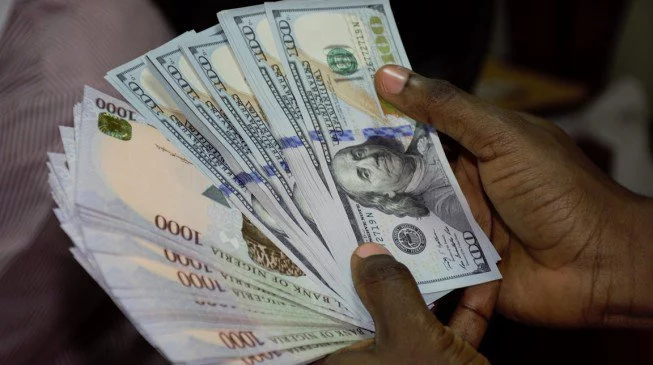

The Nigerian Naira continued its depreciation against the US Dollar, sliding further to N950/$1 in the parallel market. This comes after it had closed at N930/$1 just a day earlier on Tuesday, September 12. On Wednesday, it traded at rates between N935/$1 and N950/$1.
The Investor & Exporter forex window also reported a similar trend, with Bureau de Change operators quoting a rate of 758.12/$ on Wednesday, up from 742.10/$ on Tuesday. These rates were sourced from the FMDQ, the official trading platform.
Yusuf Kareem, a BDC operator, commented, “We commenced trading at 930/$ in the morning and it closed at 950/$ in the evening. The naira has been scarce; we don’t know what is happening.”
Sanusi Ibrahim, another BDC operator, echoed concerns about the uncertainty surrounding the currency’s value, stating that the Naira was bought and sold at rates between N935/$1 and N950/$1. He added, “We don’t know what will happen tomorrow.”
The Association of Bureaux De Change Operators of Nigeria (ABCON) has urged the Central Bank of Nigeria (CBN) to grant digital autonomy to BDC operators to help achieve exchange rate convergence. ABCON’s President, Dr. Aminu Gwadabe, emphasized that this move would promote rate convergence, reduce market volatility, and support economic growth.
Dr. Gwadabe pointed out that ABCON had successfully led its members to achieve rate convergence in the past, and granting digital autonomy would contribute to a more accurate market rate discovery, align with the Federal Government’s foreign exchange rate policies, and enhance monitoring of BDCs’ transactions to meet statutory and regulatory requirements.
Additionally, recent Foreign Trade Statistics indicated that Nigeria faced a trade deficit of N5.7 trillion in the second quarter of 2023. Total trade amounted to N12.7 trillion, with exports at N7 trillion and imports at N5.7 trillion. The report also highlighted a 17% YoY increase in revenue from Value Added Tax (VAT) and Company Income Tax (CIT) in the first half of 2023. VAT revenue reached N1.49 trillion, while CIT increased to N1.99 trillion during this period. Manufacturing, information and communication, and financial and insurance activities were the top three sectors contributing to the economy during Q2’23.