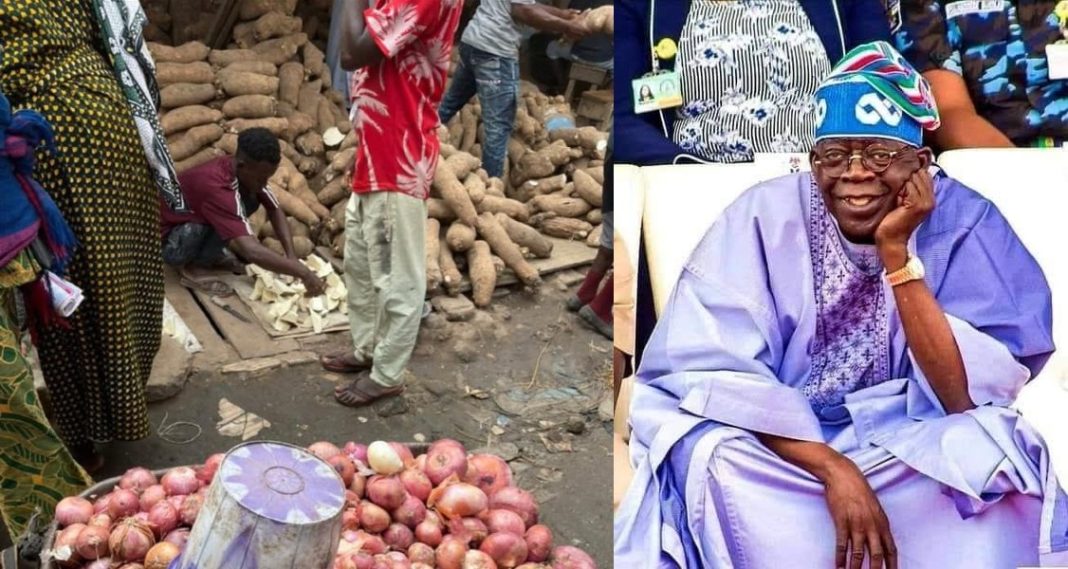

Nigerians are indeed groaning under the weight of unprecedented hardships, hoping for policies that address their daily struggles. President Tinubu faces the challenge of balancing economic reforms with citizens’ well-being—a delicate task that requires empathy and effective solutions, even as many are afraid of the future given his potential seven-year tenure.
Economic Challenges and Initial Reforms
When President Bola Tinubu assumed office, he inherited a nation in disarray with depleted foreign reserves and poorly managed sectors. Tinubu’s administration wasted no time implementing reforms, including the controversial fuel subsidy removal. While this decision is difficult for many to accept, it is essential to understand the reasoning behind it.
To cushion the impact of these reforms, Tinubu’s government introduced several measures: a 35,000 naira wage award for workers, 100 billion naira for CNG fuel buses to reduce transportation costs, and financial support for small enterprises. Additionally, 150 billion naira in palliative loans to states aimed to mitigate the effects of fuel subsidy removal, and substantial funding was allocated for the cultivation of hectares of land. However, questions remain about the distribution and efficacy of these palliatives.
Recent Disruptions and Public Sentiment
Recent events, such as the national grid shutdown, have raised further concerns. Senator George Akume, Secretary to the Government of the Federation, labeled this act as treasonable, suggesting that labor’s actions could undermine the administration’s efforts to rebuild the economy. However, these disruptions highlight the ongoing struggles of Nigerians, many of whom face daily hardships and food insecurity.
Setting a minimum wage is another critical issue. In 2019, the federal government, in collaboration with organized private sectors and labor, legislated a 30,000 naira minimum wage. This issue is on the exclusive legislative list, emphasizing the federal government’s role in recommending it to the national assembly.
Economic Hardship Under Tinubu’s Leadership
Since Tinubu’s inauguration on May 29, 2023, Nigerians have experienced significant economic challenges. The removal of petrol subsidies on his first day in office sent shockwaves through the economy, and the floating of the naira added to the pressure. These policies, though aimed at long-term economic stability, have led to immediate hardship.
Headline inflation surged from 22.41% to 33.7% within a year, and the prices of essential goods skyrocketed. A can of sardines now costs N1,200, up from N300 a year ago. Peak milk, once N250, now sells for N700. Prices for spaghetti, beans, and frozen fish have similarly tripled. Although the GDP growth rate climbed from 2.51% to 2.98%, this statistical uptick does not reflect the reality faced by ordinary Nigerians, whose purchasing power has significantly dwindled.
In a July 31 address, Tinubu acknowledged the hardships and pleaded for patience, arguing that his reforms were unavoidable. However, the lack of alternative policies exacerbated the pain, and the floating naira further strained the economy. The absence of robust safety nets for vulnerable populations has left many struggling to meet basic needs.
Nigeria stands at a crossroads as Tinubu’s administration attempts to balance economic revival with human suffering. The question on many Nigerians’ minds is, “When will the storm of hardship pass under Tinubu’s leadership?” As the days turn into months, citizens hold on to the hope that the promised “Renewed Hope” will eventually outweigh the current economic challenges.
A recent poll by the Africa Polling Institute (API) reveals that hunger, poverty, and dissatisfaction are major concerns under Tinubu’s administration. The purchasing power of average Nigerian workers has significantly decreased, discouraging investment and making it difficult for consumers to afford basic goods.
In summary, Nigerians are enduring unprecedented hardships, hoping for policies that address their daily struggles. President Tinubu’s challenge is to balance economic reforms with citizens’ well-being. This situation requires empathy and effective solutions, as many Nigerians remain fearful of what the future holds under his leadership.