
News
CHRAN Calls for State Police, Forest Guards, Security Emergency

By Ogenyi Ogenyi, Uyo
The Centre for Human Rights and Accountability Network (CHRAN) has called on President Bola Ahmed Tinubu to declare a state of emergency on the security challenges facing Nigeria and urgently pursue reforms aimed at strengthening the country’s security architecture.
The civil society organisation also urged the President to work with the 36 state governors and members of the National Assembly to facilitate the establishment of State Police and a National Forest Guard system to tackle growing insecurity across the country.
Director of CHRAN, Mr. Franklyn Isong, made the appeal in his welcome address at the organisation’s annual June 12 Public Lecture held to commemorate the 2026 Democracy Day celebration. The lecture, held under the theme, “The Dangers of Vote Selling in a Democracy,” brought together stakeholders from various sectors.
Isong expressed concern over recent incidents of school abductions in parts of the country, including Borno and Oyo states, and called on the Federal Government to intensify efforts towards securing the release of the affected students and teachers.
“The Centre urges the President of the Federal Republic of Nigeria, Bola Ahmed Tinubu, to declare a state of emergency on the security situation confronting the nation as a matter of urgent public importance. We also call for the overhaul and decentralisation of the country’s security architecture to give greater powers to sub-national governments,” he said.
The CHRAN director, however, commended Akwa Ibom State Governor, Pastor Umo Eno, for his support towards security initiatives in the state and urged citizens to collaborate with security agencies, stressing that security remains a collective responsibility.
He also expressed dissatisfaction with the performance of some local government councils in the state and urged council chairmen to complement the efforts of the state government through the execution of people-oriented projects.
Speaking on the 2027 general elections, Isong called on political actors to conduct their campaigns with decorum and a high sense of responsibility. He also urged voters to exercise their democratic rights based on conviction rather than inducement.
Delivering the keynote lecture, former Vice-Chancellor of the University of Uyo, Professor Enefiok Essien, described vote buying and vote selling as serious threats to democracy and good governance.
He stressed the need for sustained civic education to discourage the practice and strengthen democratic participation.
Professor Essien identified poverty as one of the major drivers of vote trading and called on governments at all levels to diversify the economy and create employment opportunities to improve citizens’ welfare.
He also urged the Independent National Electoral Commission (INEC) and security agencies to adopt more deliberate measures to curb electoral malpractice.
“It is important for INEC to ensure that voting cubicles are positioned in a manner that prevents vote buyers and their agents from observing how voters cast their ballots. Mobile phones should also be prohibited in voting cubicles to prevent voters from photographing marked ballot papers as evidence for vote buyers,” he said.
Chairman of the Planning Committee and Founder of the Uyo Book Club, Dr. Udeme Nana, in his remarks, reflected on the significance of the June 12, 1993 presidential election, widely regarded as one of the freest and fairest elections in Nigeria’s history.
He urged politicians and voters to emulate the spirit of patriotism and national unity that characterised the election as the country prepares for the 2027 polls.
“June 12 brought a fundamental shift in Nigeria’s democratic culture. It was a day when Nigerians rose above ethnic, religious and political divisions to vote for a candidate of their choice. Nobody bought or sold votes.
“As we approach another election cycle, we must reflect on that experience and strive to recreate the values that defined June 12, 1993. It was an election where even incumbent governors lost in their own states because the people voted freely and independently,” Nana said.
News
Gov Sule Commends DSS, Other Security Agencies Over Rescue of Kidnapped Victims in Nasarawa State


Governor Abdullahi Sule of Nasarawa State, has lauded the Department of State Services (DSS), for rescuing kidnapped victims and dislodging a criminal camp on the outskirts of Atabula village, Aloshi District, Obi LGA of the state.
Governor Sule spoke on the heels of the recent rescue, by DSS operatives, of one Joseph Obagwu, who had gone to secure the release of his son, Samuel Olom Obagwu, a student of the Federal University of Lafia (FULAFIA).
DSS officers had on the same Tuesday arrested three members of the kidnap syndicate at Gidigidi Hotel, behind Shinge Market in Lafia LGA. The suspects were identified as Abdullahi Musa, Titus Baka Fidelis, and Sani Adamu.
It was revealed that Adamu had received ₦200,000 from the victim’s family, as part of the ransom demanded by the syndicate.
Governor Sule described the arrests as a demonstration of the effectiveness and dedication of the security agencies, urging them to sustain the momentum and remain resolute in the fight against criminal elements.
He appealed to citizens to remain vigilant and provide timely, credible and useful information to security agencies, stressing that collective vigilance and cooperation are essential to maintaining peace and security in the state.
Also commending the DSS, the traditional ruler of Duduguru community, in Jenkwe Development Area of Obi Local Government Area (LGA) of Nasarawa State, Chief Pius Ogu, said the rescue operations had brought huge relief to his community.
He disclosed that the elder Obagwu was abducted after paying Two million Naira ransom for the release of his son, a FULAFIA student who was earlier kidnapped on August 11, 2026.
“The kidnappers released the son and took in the father as replacement,” disclosed the traditional ruler.
He continued, “the DSS operatives, apparently acting on credible intelligence,stormed the kidnappers’ camp in the early hours of Tuesday, forcing them to flee into nearby bushes. In the process, they successfully rescued the victim, Joseph Obagwu, who had been held hostage since August 15, 2026. The operatives thereafter razed the criminals’ camp”.
He added that the suspects are currently in custody for interrogation,” stressing that the rescue and arrest had brought so much relief to his community.
“We used to hear that the DSS has been unrelenting in its effort to wipe out kidnapping and other forms of violent crimes across the country. We witnessed this first hand, and are very happy for it.
“As the agency continues to deploy a combination of intelligence-driven operations, sustained surveillance, and strategic collaboration with sister security agencies to track down perpetrators and dismantle their hideouts, we, the citizens pledge our support to help them continue on this great path,” he declared.

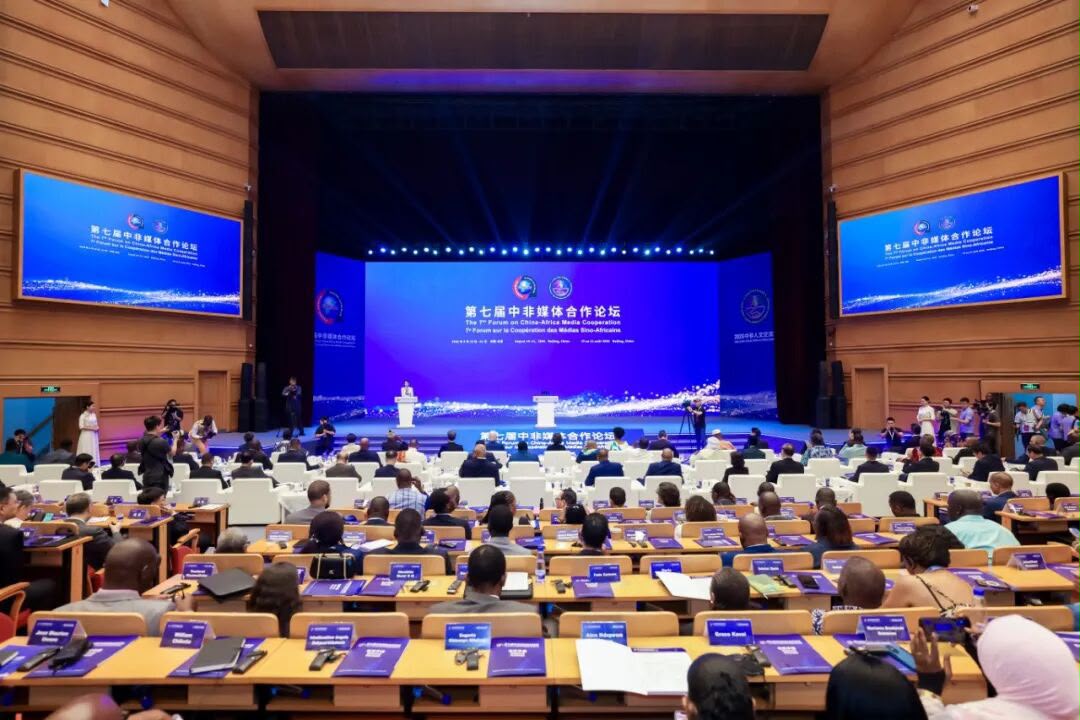
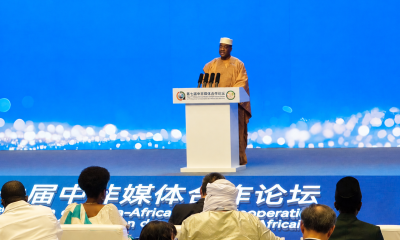
The 7th China-Africa Media Cooperation Forum opened in Beijing on Thursday, with African and Chinese officials and media practitioners calling for stronger cooperation in broadcasting, audiovisual content, technology and professional development.
Themed “Share Development Opportunities, Shape the Audio-Visual Future,” the forum seeks to promote media cooperation and strengthen people-to-people exchanges between China and Africa.
In his remarks, Alhaji Mohamed Sarjoh Bah, the African Union’s Permanent Representative to China, said the creative industries could drive economic growth, create jobs and attract investment.
Bah called for deeper Africa-China cooperation in film production, broadcasting, animation, gaming, digital content and other creative industries, saying the sector could create jobs, attract investment and stimulate innovation.
He stressed the importance of ensuring that Africa tells its own stories, urging stronger partnerships between African and Chinese media organisations in content production and distribution.
The envoy also advocated responsible use of artificial intelligence and digital technologies and called for increased investment in youth skills, professional exchanges and knowledge transfer.
Director-General of the African Union of Broadcasting, Gregoire Ndjaka, said China-Africa broadcasting cooperation had produced tangible results through technology, equipment and training that have supported the modernisation of African broadcasting.
Ndjaka called for expanded cooperation in modern broadcasting technologies and professional training, while urging greater distribution of African audiovisual content on Chinese media platforms.
He said a more balanced flow of content would allow Chinese audiences to see Africa through African perspectives and strengthen mutual understanding.
UN Under-Secretary-General and Special Adviser on Africa, Ahunna Eziakonwa, said the media had a critical role in reshaping perceptions of Africa and promoting greater ownership of the continent’s narrative.
She described Africa as resource-rich, idea-rich and youthful, noting the growing potential of its audiovisual industry to create jobs, support services trade and promote cultural exchange.
Eziakonwa urged African and Chinese media organisations to move from simply transmitting content to co-creating it, including through the use of artificial intelligence in African languages and contexts.
Delivering the keynote address, Cao Shumin, Deputy Head of the Publicity Department of the Communist Party of China Central Committee and Minister of the National Radio and Television Administration, called for stronger two-way media cooperation and content exchange.
Cao said China-Africa media cooperation had contributed to people-to-people bonds through high-quality content and urged both sides to focus on technological development, professional exchanges and regular cooperation among media practitioners.
She noted that China and Africa had already co-produced audiovisual programmes and encouraged further collaboration, including the use of artificial intelligence in content generation.
The forum, which runs from August 19 to 21, also featured a release of achievements in China- Africa Radio, and an adoption of the joint declaration of the 7th forum on China-Africa Media
Supporting events such as the China-Africa audio-visual program exchange, the China-Africa Audio-visual Youth Cooperation initiative and the China visit program for Africa media practioners will also be held alongside the forum.
Participants are expected to use the forum to deepen content cooperation, technological innovation and professional exchanges while strengthening China-Africa friendship and people-to-people relations.

By Achadu Gabriel, Kaduna
The Academic Staff Union of Universities (ASUU), Kaduna State University (KASU) chapter, has commended the Kaduna State Government for addressing some of the longstanding challenges confronting the institution, amid a face-off over alleged resignation of some members.
The chairman of ASUU-KASU, Dr Abubakar Abdullahi, made the remarks at a press briefing in Kaduna on Wednesday regarding the union’s ultimatum to the state government over what it described as poor working conditions and other challenges affecting the university.
Abdullahi, in a statement made available on Thursday, said the union’s position was not intended to castigate the government, but to draw its attention to areas requiring further intervention to strengthen the institution.
He acknowledged some steps already taken by the present administration, saying the union would continue to commend the government whenever it addressed issues affecting the university.
“Where you have done something, we commend you, and where there is an issue, we bring it to your attention to address,” he said.
Government addresses some issues
The chairman recalled that the government had addressed some of the issues contained in previous agreements with the union, including matters relating to salaries and allowances.
According to him, out of about 10 issues previously presented by the union, three had been addressed, while seven remained outstanding.
He said the union was particularly encouraged by the government’s review of a previous decision on school fees, recalling that ASUU had opposed the increase because of its potential impact on students.
“When the current government came about, they reviewed the decision and we commend them for that,” he said.
ASUU’s broader role
Abdullahi stressed that ASUU’s interventions were not limited to the welfare of its members, but were aimed at protecting the university system and ensuring that tertiary education in Kaduna State remained competitive.
He said the union considered its responsibilities to include teaching, research and community service.
The chairman also praised KASU’s achievements, saying the institution had performed creditably compared with other universities despite the challenges confronting it.
He described KASU as an institution that could serve Kaduna State for generations if properly supported.
“Roads would come and go. Physical infrastructure would not live more than 30 to 50 years. But KASU is an institution we hope and pray will still be here for the next 100 or 200 years,” he said.
He added that the university had started on “the very right footing” and had recorded achievements that compared favourably with established universities.
“I am not even talking about state universities. Federally established universities, first-generation universities, we go to places and we beat them, hands down,” Abdullahi said.
He therefore called for sustained government support, improved staff welfare and proper funding to enable the institution to retain its academic workforce and maintain its standards.
Union prefers dialogue
On the two-week ultimatum, Abdullahi clarified that the union was not eager to embark on industrial action, stressing that dialogue remained its preferred option.
“Usually, people have this wrong notion that ASUU always wants to embark on strike. That is not our desire or passion,” he said.
According to him, the purpose of the briefing was to bring the challenges to the attention of the government and the public in the hope that they would be resolved before the ultimatum expired.
He said ASUU remained ready for dialogue with the government at any time, stressing that peace and stability in the university were in the interest of all stakeholders.
“Even if the government calls us now, we are ready to move. Anything that will bring peace to the system, stability, that is what we want,” he said.
Call for implementation of agreement
Abdullahi also urged the government to implement the new Federal Government-ASUU agreement, saying its provisions could benefit both university staff and the administration through improved funding and management.
He appealed to the state government to see the outstanding challenges as an opportunity to strengthen KASU and leave a lasting legacy in the education sector.
“The government has the opportunity to write its name in gold by actually fixing a problem system they inherited,” he said.
The ASUU-KASU chairman said Kaduna, traditionally recognised as a centre of learning, should remain at the forefront of educational development and should not allow other states to overtake it in the sector.

Gov Sule Commends DSS, Other Security Agencies Over Rescue of Kidnapped Victims in Nasarawa State

7th China-Africa Media Cooperation Forum Opens in Beijing
ASUU Commends Kaduna Govt Over KASU Funding Amid Face-Off
-
 News14 hours ago
Hon. Jafaru Yakubu Commends President Tinubu’s Approval of Mutum Biyu–Garba Chede Road Reconstruction
-
 News12 hours ago
7th China-Africa Media Cooperation Forum Opens in Beijing
-
 News16 hours ago
AU, UN Seek Deeper Media Cooperation to Drive Africa-China Growth
-
Business and Economy16 hours ago
Julius Berger recommits to enduring quality as Buguma-Degema-Abonnema Road is commissioned
-

 News15 hours ago
Kaduna varsity lecturers ready for talks with govt to avert strike
-
News13 hours ago
ASUU Commends Kaduna Govt Over KASU Funding Amid Face-Off
-
 Business and Economy15 hours ago
FG Won’t Publish Details of $5bn Abu Dhabi Loan — Oyedele
-
 Politics13 hours ago
Kwankwaso explains decision to run with Obi in 2027
You must be logged in to post a comment Login