
Author: micheal

  • Experts Stress Importance of One-China Principle in China–Nigeria Relations

    Experts Stress Importance of One-China Principle in China–Nigeria Relations

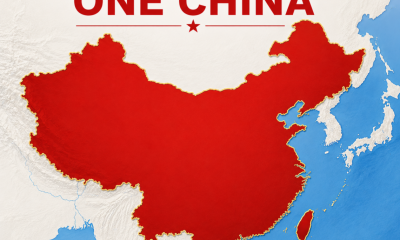
    Stakeholders in diplomacy, academia and media have reaffirmed Nigeria’s commitment to the One-China Principle, describing it as the foundation of the enduring strategic partnership between Nigeria and the People’s Republic of China.

    The position was reiterated during a Media Salon on the One-China Principle held at the China General Chamber of Commerce in Nigeria, Abuja, under the theme: “Understanding the One-China Principle and Its Role in Deepening China–Nigeria Strategic Relations.”

    The event was organised by the Centre for China Studies and the Centre for Contemporary China-Africa Research in collaboration with the Chinese Embassy in Nigeria.

    In her remarks,  Dong Hairong, Counsellor at the Chinese Embassy in Nigeria, said the international community must maintain clarity on the Taiwan question and resist what she described as “deceptive propaganda” by Taiwan authorities pushing for independence.

    She stressed that Taiwan has historically been part of China and that the People’s Republic of China remains the sole legitimate government representing all of China under international law and United Nations Resolution 2758.

    According to her, attempts by Taiwan’s leadership to expand what he called separatist activities undermine international consensus and threaten regional stability.

    The Chinese envoy also referenced recent developments involving Taiwan leader Lai Ching-te, including a visit to Eswatini and engagements involving some Nigerian journalists with Taiwanese officials, warning against actions that could contradict Nigeria’s long-standing adherence to the One-China Principle.

    She noted that Nigeria has consistently reaffirmed its recognition of the People’s Republic of China as the only legitimate government of China since diplomatic ties were established in 1971.

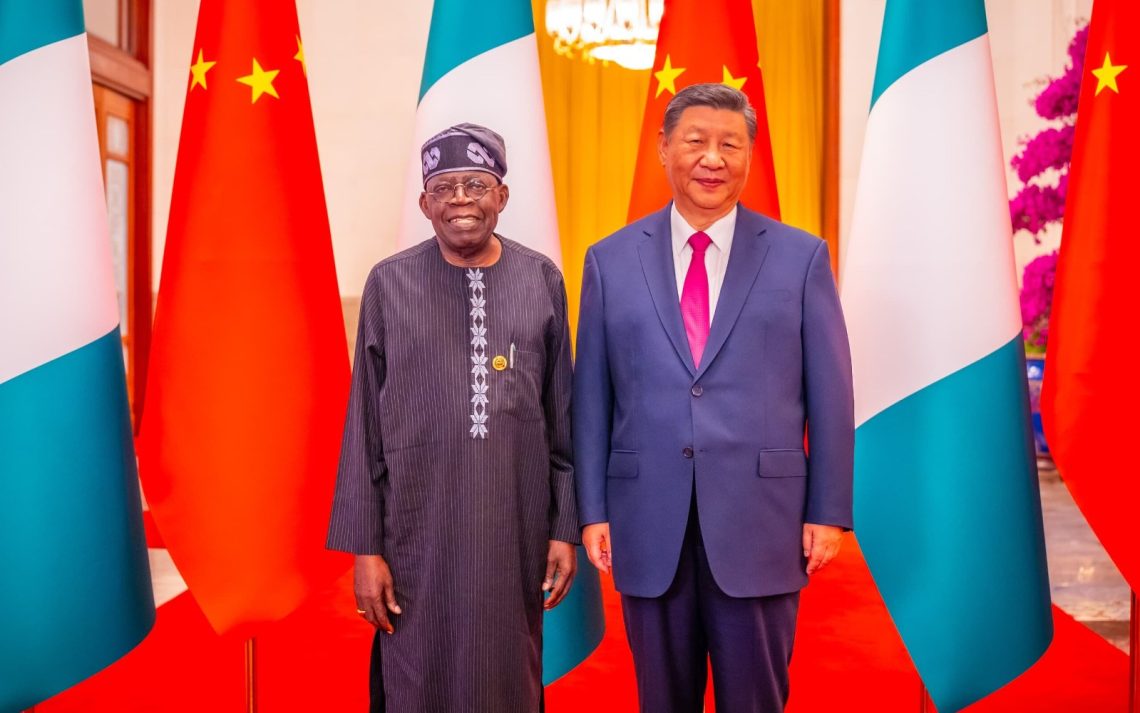
    Dong Hairong recalled that during President Bola Ahmed Tinubu’s state visit to China in September 2024, Nigeria reiterated its support for China’s sovereignty and territorial integrity, including recognition of Taiwan as an inalienable part of China.

    The counselor said the One-China Principle remains the political bedrock of China-Nigeria relations, which he noted have grown into a comprehensive strategic partnership with expanding economic and infrastructural cooperation.

    Highlighting recent cooperation, she cited the handover of the new Economic Community of West African States headquarters complex in Abuja, built with Chinese assistance, as well as China’s implementation of zero-tariff treatment for exports from 53 African countries with diplomatic ties to Beijing, including Nigeria.

    She explained that the policy would provide broader access for Nigerian agricultural products such as sesame, ginger, cocoa and cashew nuts into the Chinese market.

    Dong Hairong urged Nigerian journalists to adopt objective and accurate terminology in reporting Taiwan-related issues, warning against descriptions that imply Taiwan is a sovereign state.

    Speaking at the event, Prof. Sheriff Ghali Ibrahim, Director of the Centre for Contemporary China-Africa Research, described global support for the One-China Principle as overwhelming, noting that 53 out of 54 African countries recognise Beijing.

    He argued that Taiwan is not a sovereign state under international law and said the majority of countries across Africa, Asia, Latin America and other regions support the position that there is only one China.

    Prof. Ghali commended China’s approach to the Taiwan issue, describing Beijing as patient in pursuing peaceful reunification despite long-standing political differences across the Taiwan Strait.

    According to him, successive Chinese leaders from Mao Zedong to Xi Jinping have consistently promoted peaceful reunification under the “One Country, Two Systems” framework.

    He also criticised Eswatini for maintaining diplomatic relations with Taiwan, expressing optimism that the Southern African kingdom would eventually align with the broader African consensus supporting Beijing.

    On his part, Prof. Sam Amadi provided a broader diplomatic and legal interpretation of the One-China Principle and the One-China Policy, explaining that while they are often used interchangeably, they differ in meaning and application.

    He explained that the One-China Principle reflects Beijing’s position that there is only one China under the sovereignty of the People’s Republic of China, while the One-China Policy represents how other countries acknowledge and manage relations around that position.

    Amadi noted that many countries maintain what he described as “strategic ambiguity,” acknowledging Beijing diplomatically while still engaging Taiwan economically and commercially.

    He argued that African countries should avoid formal diplomatic relations with Taiwan while carefully calibrating trade and investment engagements to ensure they do not contradict international law or existing commitments to Beijing.

    The legal scholar acknowledged China’s growing developmental footprint across Africa, especially in infrastructure and regional integration projects, noting that China has emerged as one of Africa’s most significant development partners in recent decades.

    He, however, cautioned against what he termed “sovereignty for rent,” alleging that some countries recognise Taiwan in exchange for economic incentives.

    Other speakers, including Charles Onunaju, Segun Showunmi and Prof Mukhtar Imam, called for stronger public understanding of the One-China Principle and deeper cooperation between Nigeria and China in trade, infrastructure, cultural exchanges and diplomatic engagement.

  • President Xi’s Diplomatic Lessons for Trump and Thucydides-Trap Theoretical Approach

    President Xi’s Diplomatic Lessons for Trump and Thucydides-Trap Theoretical Approach

    By Prof Sheriff Ghali Ibrahim

     The world has seen a change in diplomatic presentation and engagement from Trump’s embarrasing moments with world leaders such as Cyril Ramaphosa of South Africa, Volodymyr Zelensky of Ukraine, Angela Merkel of Germany and King Abdallah of Jordan among others. Trump triggered an unhealthy debate with Zelensky on mineral rights, aid and handling of the war; ambushed Ramaphosa with a controversial video regarding unproven claims of “white genocide” in South Africa; attacked Macron by brushing dandruff off the French leader’s jacket and policy contradictions over Ukraine loans: embarrased Merkel by ignoring requests from photographers and Merkel herself to shake her hand.

    The lessons of diplomacy are best learnt in the class room of President Xi, where world leaders frequent Beijing for such hilarious lessons from the Core of the Communist Party, which they hitherto rejected and described as authoritarian, but today, they embrace comunism with Chinese characteristics as the solution to global challenges, and a place for political, economic and socio-cultural leaning.

    When President Xi, calmly, gently, confidently and intellectually addressed Donald Trump during the summit, what manifested was unmitigated diplomatic prowesse, leadership, intelligence, warmth and direct objectivised submissions. There were no dramatic gesticulations, bullying or disrespect to the personality of Trump, but Trump was overwhelmed by what he saw and met and could not help but revealed what was hidden in his mind by constantly uttering “China is Great,” watching Xi in an open-mouthed bewilderment.

    President Xi put-forward the concept of “constructive strategic stability” to guide bilateral relations. This framework prioritizes cooperation, managing differences, and keeping measured competition from spiraling into conflict. However, Xi warned that Taiwan is a “red line” that could derail this stability.

    Constructive Strategic Stability aims to establish rules for managing long-term strategic competition without allowing rivalries to escalate into direct confrontation or hostility. Xi emphasized that the two nations should act as partners rather than rivals.

    Manageable Differences: The two leaders agreed that constant, expectable communication is necessary to handle disagreements in areas like trade and advanced technology.

    The Taiwan Warning: Xi explicitly warned Trump that the Taiwan issue is the “most important and sensitive” part of China-U.S. relations. He noted that “Taiwan’s independence” and peace are irreconcilable, and mishandling the issue could draw the countries into clashes or conflict.

    President Xi Jinping views the “Thucydides Trap”—the historical theory that war is inevitable when a rising power challenges an established one—not as an inescapable prophecy, but as a threat that both the United States and China must proactively avoid through a “new model of major-country relations”. This theory was developed by Graham from Havard university using the lens of the Greek Writer Thucydides. It has been estimated that there have been about 16 confrontations from this theoretical analogy since 500 years ago, only four were avoided, but all came to reality. The major expectation of future super-power conflict has ben China-U.S. conflict, which President Xi pointed out that, that is not necessary, with a new model of major-country relations.

    It is now left for the United States to sincerely and honestly accept and implement the constructive strategic stability paradigm as China’s new diplomatic posture with the United States in the new era or choose to go by the Thucydides-Trap, which will accelerate the complete collapse of the United States as an existing empire.

    In conclusion, the major lessons from Xi’s diplomatic lessons for Trump can be drawn from managing differences, healthy competition, strategic cooperation and avoidance of war. These lessons are to be guided by mutual communication, interdependence and respect to territorial integrity and sovereignty. Taiwan as a point of departure, cannot be negotiated and cannot be compromised. The major and final lessons are: cordiality, joviality and respect to diplomatic guests, not harshness, embarrasment and rejection as witnessed by many leaders in their visit to the White House under Trump.

    Prof Sheriff is the Provost, Anti-Corruption Academy of Nigeria and Head of Contemporary China-Africa Research

  • China, Nigeria Renew Commitment to Tourism, Cultural Cooperation

    China, Nigeria Renew Commitment to Tourism, Cultural Cooperation

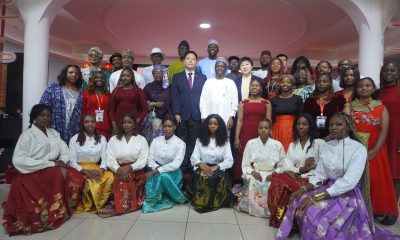
    China and Nigeria have reaffirmed their commitment to strengthening tourism and cultural ties to promote growth and international cooperation.

    The pledge was made at the 2026 edition of China Tourism Day held at the China Cultural Centre in Abuja on Friday.

    The event attracted government officials, diplomats, tourism professionals, cultural enthusiasts, and stakeholders from the creative industry, who gathered to celebrate the growing relationship between both countries and the role of tourism in fostering international cooperation.

    Addressing participants during the celebration, Cultural Counsellor Yang Jianxing said this year’s theme, “Enjoying Quality Tourism, Exploring Beautiful Landscapes,” reflects the importance of tourism in promoting friendship, cultural understanding, and shared experiences among nations.

    He explained that tourism goes beyond leisure and recreation, describing it as a platform that encourages interaction between peoples and civilizations.

    Yang noted that both China and Nigeria possess rich historical traditions and world-renowned tourist attractions that continue to strengthen cultural connections between their citizens. He pointed to landmarks such as the Great Wall of China, Mount Tai, Osun-Osogbo Sacred Grove, and Zuma Rock as important symbols of national identity and cultural pride.

    He also highlighted previous collaborative initiatives between the two countries, including cultural festivals and Chinese New Year programmes, which he said have created opportunities for deeper engagement through music, art, cuisine, and traditional performances.

    Representing the Federal Ministry of Arts, Culture, Tourism and Creative Economy, Abdulkarim Ozi Ibrahim said Nigeria’s cultural and diplomatic relationship with China has continued to expand over the last five decades.

    Represented at the event by Yohanna Evandu, the Permanent Secretary noted that cooperation between both nations has delivered significant benefits, especially in education, skills development, and cultural exchange.

    He observed that several Nigerian performers and cultural practitioners have benefited from training opportunities in China, while educational exchange programmes have also strengthened bilateral ties.

    Ibrahim praised China’s investment in tourism infrastructure and environmental management, describing the country’s approach to heritage conservation and urban aesthetics as impressive and worthy of study.

    Also speaking, Aare Abisoye Fagade, Director General of the National Institute for Hospitality and Tourism (NIHOTOUR), said China’s progress in tourism development offers practical lessons for emerging tourism economies such as Nigeria.

    According to him, China has successfully combined innovation, infrastructure development, technology, and cultural preservation to build a globally competitive tourism sector.

    Fagade said Nigeria could benefit immensely from stronger institutional partnerships with China in areas including hospitality training, tourism education, destination management, culinary arts, tourism technology, and professional certification.

    He explained that the implementation of the NIHOTOUR Act 2022 has positioned the institute to play a more active role in regulating and professionalising Nigeria’s hospitality and tourism industry.

    The NIHOTOUR boss also called for increased collaboration in tourism investment, workforce development, research, technology transfer, and destination marketing, stressing that stronger partnerships would improve the competitiveness of Nigeria’s tourism sector.

    Stakeholders at the event collectively expressed optimism about the future of Nigeria-China relations, particularly in tourism and the creative economy, noting that stronger cooperation would encourage cultural understanding, economic growth, and deeper people-to-people engagement.

    The celebration ended with cultural performances and interactive sessions showcasing the longstanding friendship and shared aspirations between Nigeria and China.

  • Xi holds talks with Trump in Beijing

    Xi holds talks with Trump in Beijing

    Source: Xinhua

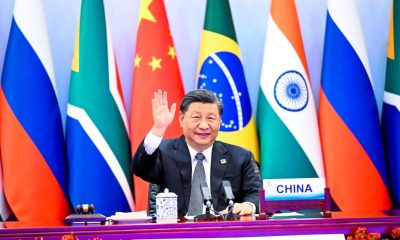
    Chinese President Xi Jinping held talks with visiting U.S. President Donald Trump at the Great Hall of the People in Beijing on Thursday.

    Transformation not seen in a century is accelerating across the globe, and the international situation is fluid and turbulent, said Xi.

    “Can China and the United States overcome the Thucydides Trap and create a new paradigm of major-country relations? Can we meet global challenges together and provide greater stability for the world? Can we build a bright future together for our bilateral relations in the interest of the well-being of the two peoples and the future of humanity? These are the questions vital to history, to the world and to the people,” said Xi.

    They are the questions of the times that the leaders of major countries need to answer together, he added.

    “I look forward to working together with you to set the course and steer the giant ship of China-U.S. relations, so as to make 2026 a historic, landmark year that opens up a new chapter in China-U.S. relations,” he said.

    According to the Chinese leader, both sides have agreed to work toward building a bilateral relationship of constructive strategic stability.

    The new characterization will provide strategic guidance for bilateral relations over the next three years and beyond, and should be welcomed by the people of both countries as well as the international community, he said.

    The “constructive strategic stability” should be a positive stability with cooperation as the mainstay, a sound stability with moderate competition, a constant stability with manageable differences, and an enduring stability with promises of peace, Xi said.

    The building of a constructive China-U.S. relationship of strategic stability should not be a mere slogan, but concrete action taken by both sides toward the same goal, he added.