China
Xi holds talks with Trump in Beijing

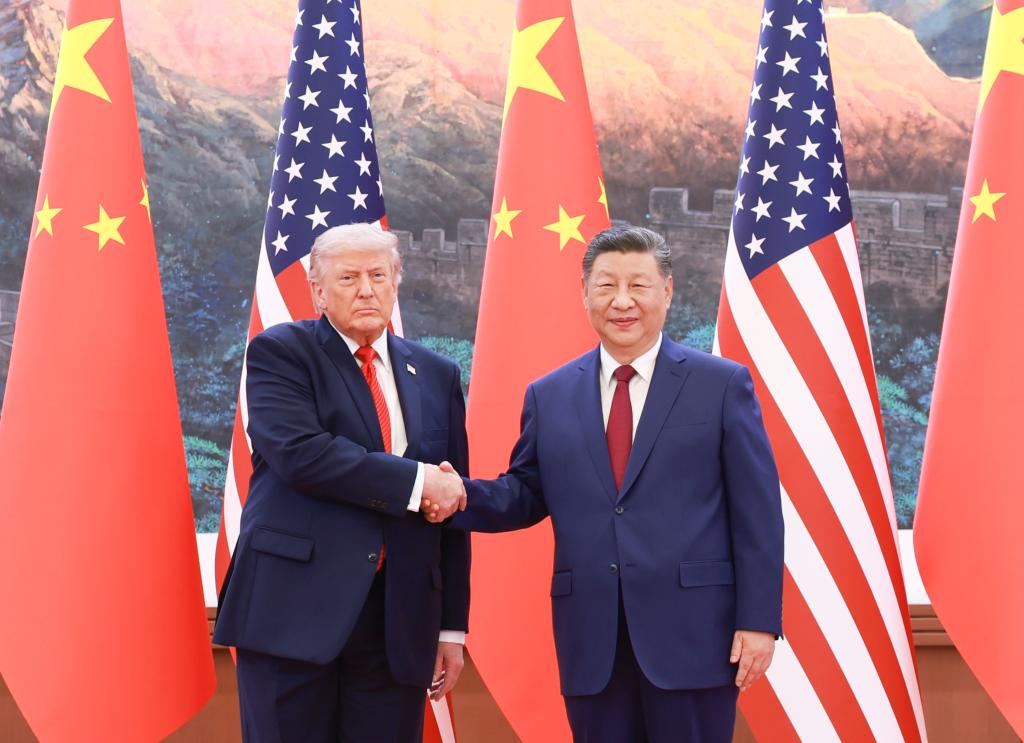
Source: Xinhua
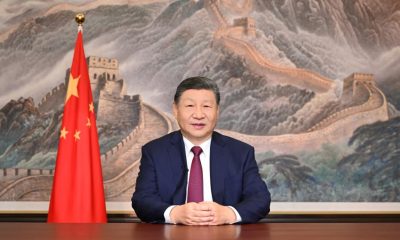
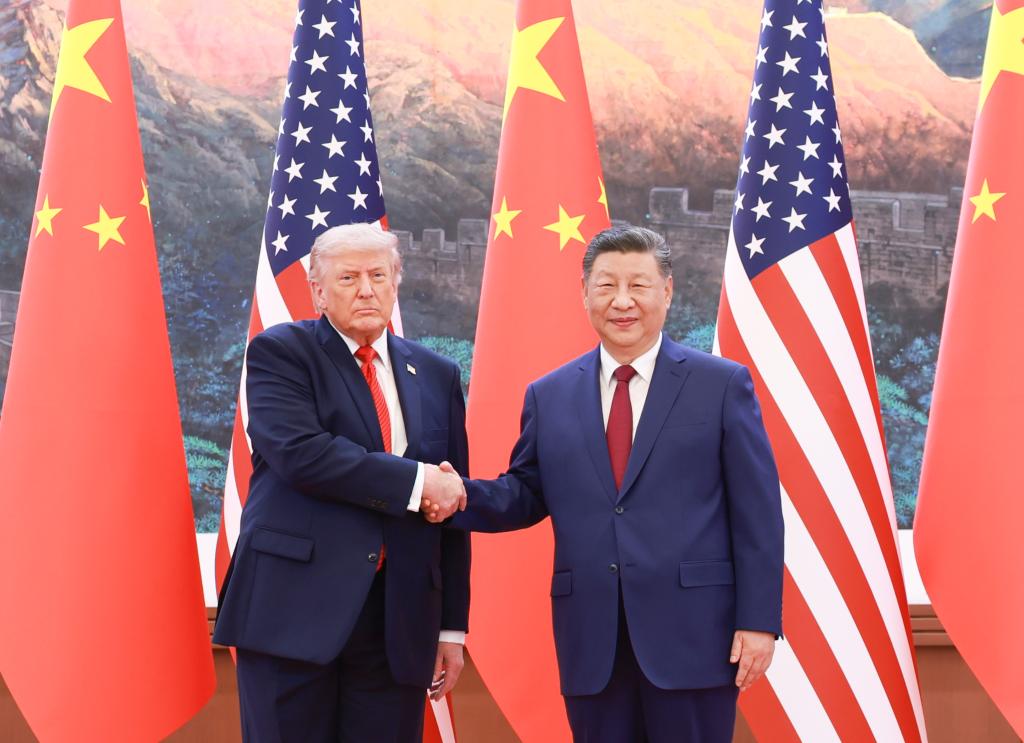
Chinese President Xi Jinping held talks with visiting U.S. President Donald Trump at the Great Hall of the People in Beijing on Thursday.
Transformation not seen in a century is accelerating across the globe, and the international situation is fluid and turbulent, said Xi.
“Can China and the United States overcome the Thucydides Trap and create a new paradigm of major-country relations? Can we meet global challenges together and provide greater stability for the world? Can we build a bright future together for our bilateral relations in the interest of the well-being of the two peoples and the future of humanity? These are the questions vital to history, to the world and to the people,” said Xi.
They are the questions of the times that the leaders of major countries need to answer together, he added.
“I look forward to working together with you to set the course and steer the giant ship of China-U.S. relations, so as to make 2026 a historic, landmark year that opens up a new chapter in China-U.S. relations,” he said.
According to the Chinese leader, both sides have agreed to work toward building a bilateral relationship of constructive strategic stability.
The new characterization will provide strategic guidance for bilateral relations over the next three years and beyond, and should be welcomed by the people of both countries as well as the international community, he said.
The “constructive strategic stability” should be a positive stability with cooperation as the mainstay, a sound stability with moderate competition, a constant stability with manageable differences, and an enduring stability with promises of peace, Xi said.
The building of a constructive China-U.S. relationship of strategic stability should not be a mere slogan, but concrete action taken by both sides toward the same goal, he added.





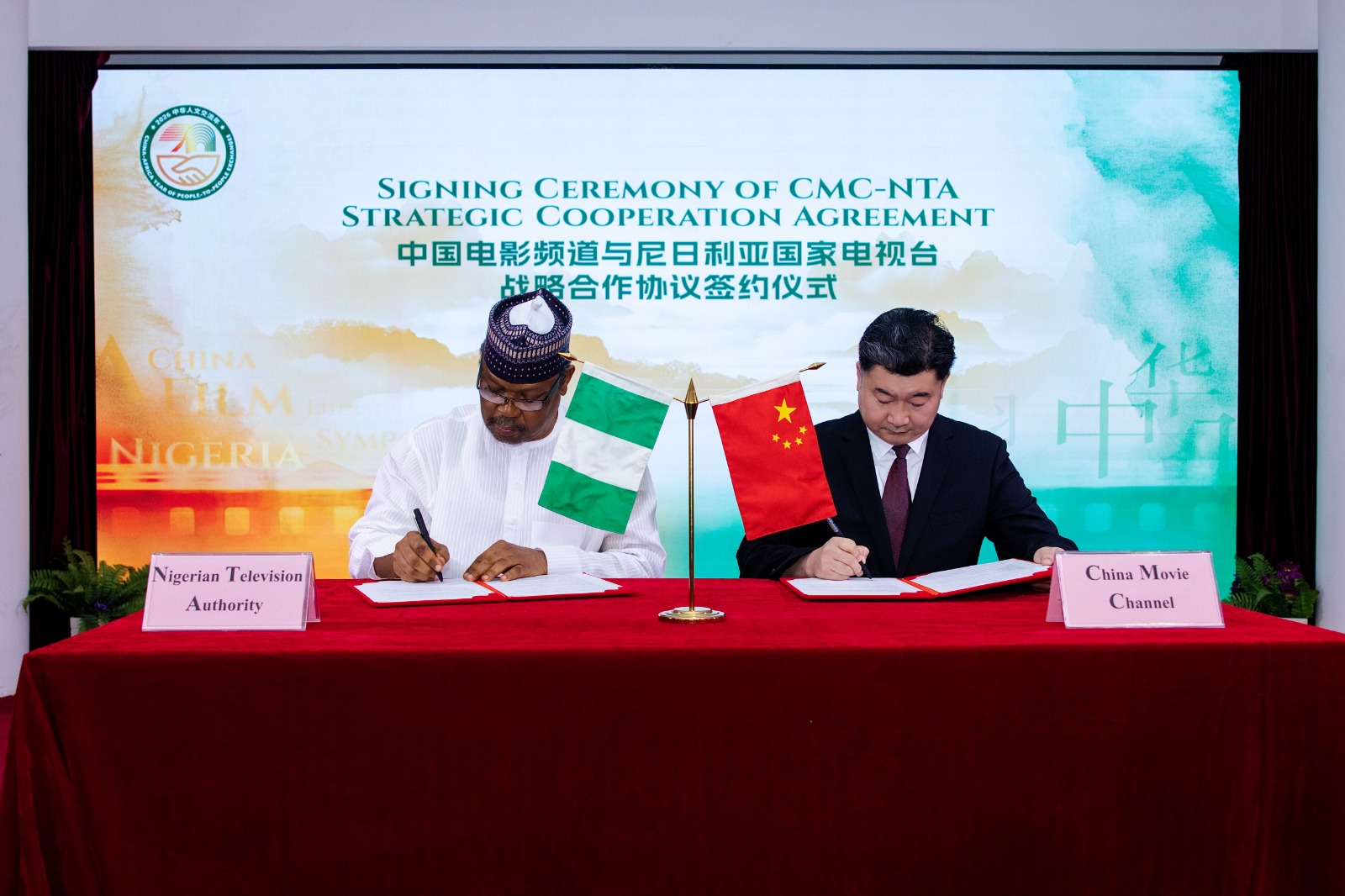
The China Movie Channel (CMC) and the Nigerian Television Authority (NTA) have entered into a strategic partnership to expand the exchange of film and television content and deepen cultural cooperation between Nigeria and China.
The agreement was signed on Friday at the China Cultural Centre in Abuja during the China-Nigeria Film and Literature Symposium, which brought together government officials, broadcasters, writers and creative industry practitioners from the two countries.
The partnership is expected to create fresh opportunities for Nigerian and Chinese audiences to access each other’s film productions, while encouraging greater interaction between professionals in the two creative industries.
Speaking at the ceremony, Chinese Ambassador to Nigeria, Yu Dunhai, said the agreement represented an important development in efforts to strengthen friendship and mutual understanding between the peoples of both countries.
He said film and literature serve as powerful vehicles through which societies preserve their histories, express their values and communicate their experiences to audiences beyond their borders.
Yu noted that Nigeria and China have rich literary traditions and vibrant film industries, pointing to the contributions of leading writers and filmmakers from both countries to global culture.
He said the growing circulation of Nigerian and Chinese creative works had already enabled audiences in both countries to gain a better appreciation of their respective cultures.
The ambassador cited the popularity of Chinese films among Nigerian audiences and the growing interest in Nigerian productions in China as evidence of the potential for further cultural cooperation.
According to him, the CMC-NTA agreement would provide an additional platform for strengthening these exchanges and creating opportunities for professionals in the film and television sectors to work together.
Also speaking, NTA Director-General, Salihu Abdulhamid Dembos, described the partnership as an opportunity to convert the longstanding friendship between Nigeria and China into practical cooperation within the creative economy.
Dembos said the agreement would support areas such as content sharing, joint production, professional development and technological cooperation.
He expressed confidence that the partnership would benefit filmmakers, broadcasters, writers and emerging talents by providing opportunities for knowledge sharing and access to new markets.
The NTA chief said the collaboration was also consistent with the authority’s drive to modernise its operations and strengthen its position as a competitive public broadcaster in the digital era.
He urged both organisations to pursue concrete initiatives capable of producing visible benefits for audiences and creative professionals in Nigeria and China.
Cui Binzhen, Editor-in-Chief of China Movie Channel, said the agreement would establish a framework for more regular interaction between the two broadcasting organisations.
Cui said the initiative was particularly significant because of the longstanding diplomatic relationship between Nigeria and China and the growing importance of cultural exchanges in strengthening bilateral relations.
He said CMC had accumulated considerable experience in promoting Chinese cinema internationally, having broadcast thousands of films and organised China Film Weeks in countries across the world.
According to him, the channel intends to use the partnership with NTA to further explore stories that showcase the relationship between the two countries and promote greater understanding through cinema.
The event also featured the China-Nigeria Film and Literature Symposium, which provided an opportunity for participants to examine the role of film and literature in reflecting social realities and promoting dialogue between peoples.
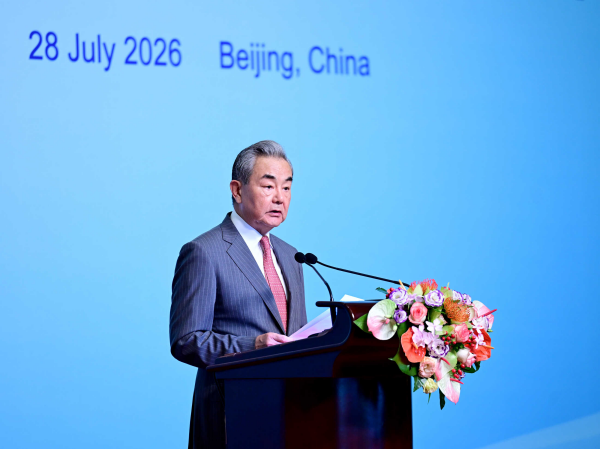
China has called for a renewed global commitment to sustainable development, urging countries to strengthen multilateral cooperation, increase development financing and embrace innovation to address widening inequalities and accelerate progress toward the United Nations Sustainable Development Goals (SDGs).
Chinese Foreign Minister Wang Yi made the appeal while addressing the High-Level Meeting on the Global Development Initiative (GDI), held to commemorate the fifth anniversary of the initiative proposed by President Xi Jinping during the 76th session of the United Nations General Assembly.
The meeting, jointly organised by China and UN agencies, brought together representatives to assess the progress of the initiative and discuss strategies for advancing global development amid mounting economic and geopolitical challenges.
Wang said the Global Development Initiative has evolved into a broad international cooperation platform over the past five years, attracting widespread participation from countries and international organisations.
According to him, more than 130 countries and international organisations have expressed support for the initiative, while nearly 100 countries and regional organisations have entered into cooperation agreements with China under the framework.
He said the initiative has also established a growing network of institutions dedicated to advancing development cooperation. These include the Group of Friends of the GDI, which now has 88 member states, and a UN task force involving more than 20 development agencies working to support implementation of the 2030 Agenda for Sustainable Development.
Wang highlighted China’s financial contributions to global development, noting that more than US$23 billion has been mobilised through development funds, including the China-UN Peace and Development Fund and the Global Development and South-South Cooperation Fund.
He said the resources have supported more than 1,800 community-based projects focused on improving livelihoods and have provided vocational and professional training opportunities for over 200,000 people.
The Chinese foreign minister cited several flagship programmes under the initiative, including China’s juncao technology for poverty reduction, the Sustainable Development Science Satellite-1 (SDGSAT-1), and the MAZU platform, which provides meteorological data and disaster early-warning services to developing countries.
He said these projects have benefited communities across more than 120 countries.
Despite these achievements, Wang warned that the global development agenda is facing increasing pressure as conflicts, economic instability and the growing development gap between developed and developing countries continue to undermine implementation of the SDGs.
He stressed that restoring development as a central priority of international cooperation is essential to securing long-term global peace and prosperity.
To that end, Wang outlined four areas requiring collective action. He called for stronger international solidarity to preserve peace and stability, increased investment and cooperation to accelerate sustainable development, expanded collaboration in science and technology to narrow digital and artificial intelligence divides, and reforms to global economic governance to better reflect the interests of developing countries.
On technological cooperation, Wang pointed to the recent establishment of the World Artificial Intelligence Cooperation Organization (WAICO), launched by China alongside 28 other countries, as a platform designed to promote inclusive AI governance and expand access to emerging technologies for developing nations.
He also urged developed countries to fulfil their commitments on development financing and called for closer international coordination as preparations begin for discussions on the post-2030 global development framework.
Turning to China’s domestic economy, Wang said the country’s steady growth demonstrates resilience despite a difficult international environment.
He noted that China’s gross domestic product expanded by 4.7 per cent during the first half of 2026, despite the impact of global energy shortages and disruptions to international industrial and supply chains.
Wang said China would continue to integrate its own development with global progress, deepen partnerships with countries across the Global South and contribute to building a more inclusive and equitable international development system.
He reaffirmed Beijing’s commitment to implementing the Global Development Initiative and sharing development opportunities with countries around the world as part of its broader vision of building a community with a shared future for humanity.
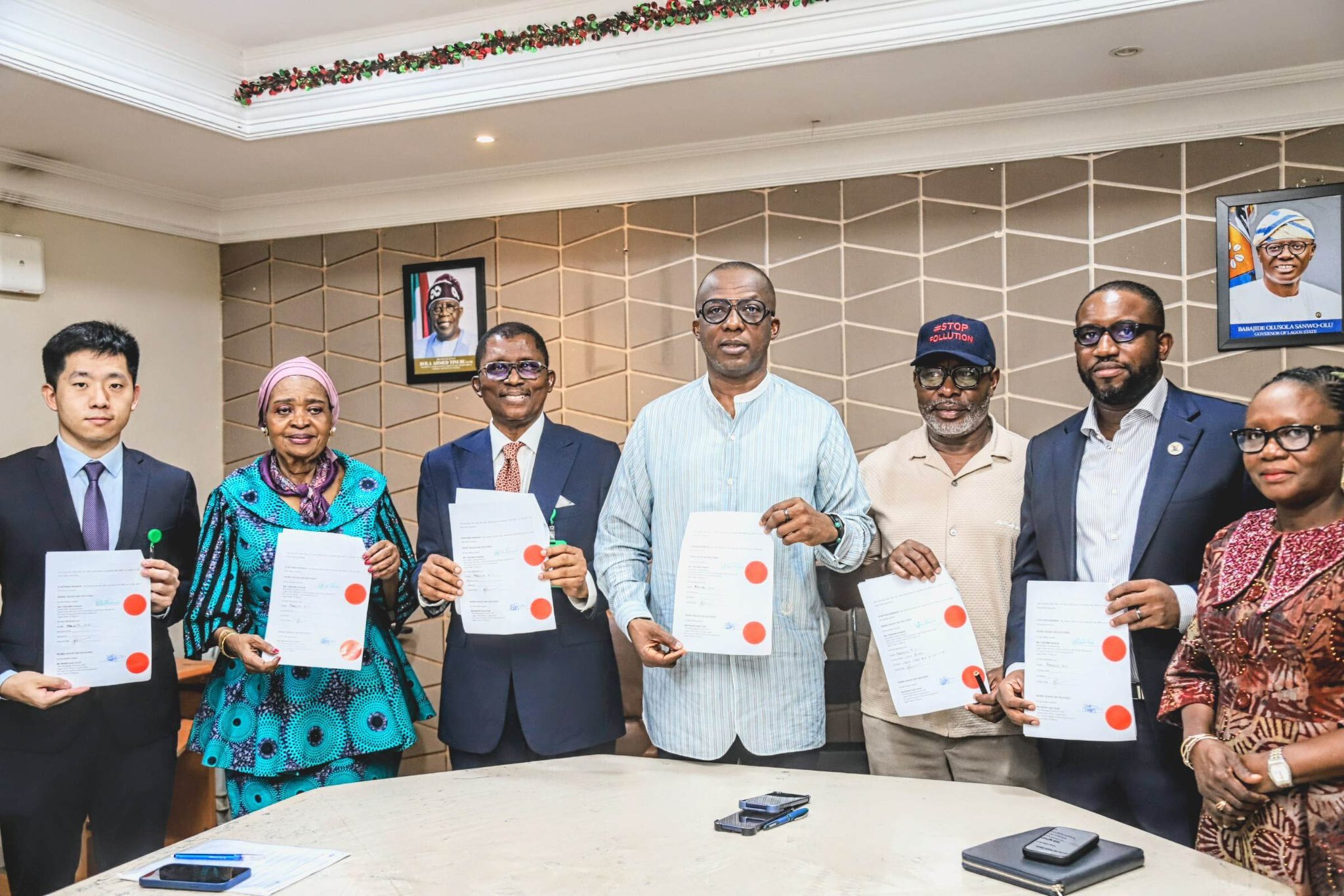
The Lagos State Government has partnered with a Chinese-led consortium to expand access to potable water across the state through the development of critical water infrastructure projects.
The partnership was formalised with the signing of a Memorandum of Understanding (MoU) between the Lagos State Government, China Harbour Engineering Company (CHEC) and Naston Engineering Nigeria Limited on Thursday, July 9, 2026, marking the commencement of the scoping and definition of key components of the state’s water infrastructure development.
According to a statement published by the Lagos State Government, the Commissioner for the Environment and Water Resources, Mr. Tokunbo Wahab, described the agreement as a significant milestone in the state’s efforts to strengthen water supply infrastructure and provide sustainable, safe and reliable potable water for its rapidly growing population.
Wahab explained that the one-year MoU establishes a collaborative framework for the development of two strategic project lots that will serve as the foundation for the next phase of water infrastructure expansion across Lagos.
He said the first project lot will focus on the installation of a water transmission pipeline beneath the Lagos Lagoon into the Lekki Concession Area, while the second will define downstream distribution activities, including metering and last-mile water connections within the concession area.
According to the commissioner, the engagement is expected to produce a comprehensive technical report and implementation framework that will guide the execution of the projects and facilitate the preparation of a concession agreement between the Lagos State Government and the consortium.
He noted that the exercise would also provide the technical and commercial framework required to move the projects into the implementation phase.
Speaking on behalf of Naston Engineering Nigeria Limited, the company’s Managing Director, Mr. Kole Funsho, expressed appreciation to the Lagos State Government for its confidence in the consortium, describing the MoU as the beginning of a process that would culminate in the delivery of a robust and bankable water infrastructure project.
Funsho said the agreement clearly outlines the scope of the proposed concession and reaffirmed the consortium’s commitment to delivering the required technical studies within the stipulated timeframe, or even ahead of schedule.
He disclosed that the consortium would prepare detailed engineering designs, project cost estimates and tariff structures needed to support the final concession agreement with the state government.
According to him, successful execution of the assignment will require close collaboration with the Ministry of the Environment and Water Resources and other relevant government agencies to obtain critical drainage and infrastructure data necessary to properly align the proposed transmission pipelines without disrupting existing roads, drainage systems and other public infrastructure.
Funsho expressed optimism that the partnership would pave the way for the successful implementation of the projects, significantly improving potable water supply and strengthening water infrastructure for residents across Lagos State.


NDLEA Arrests Alleged Cocaine Trafficking Kingpin at Lagos Airport

APC Sets August 22 for Legislative Primary Elections

BUDGET OFFICE OF THE FEDERATIONRESPONSE TO THE 2026 U.S. DEPARTMENT OF STATE FISCAL TRANSPARENCY REPORT ON NIGERIA
-
News23 hours ago
Election: Wike Expresses Confidence in Tinubu’s 2027 Victory
-

 Uncategorized23 hours ago
Cristiano Ronaldo’s Comment on Lionel Messi’s Tribute to His Dad Becomes Most-Liked Instagram Comment
-
 News21 hours ago
NITAD: Nigeria Risks Losing Workforce Without Investment in Local Talent
-
News23 hours ago
Breaking: Wike Vows Immediate Demolition of Houses Blocking Abuja Waterways
-
News21 hours ago
36,477 Women Benefit from IOM/GIFA Medical Outreach in A’Ibom
-
 Politics22 hours ago
Natasha Osawaru Emerges as Edo Assembly Minority Leader
-
 News24 hours ago
Taraba Govt, NAPTIP Rescue Woman Stranded in Ivory Coast
-
 Uncategorized22 hours ago
Tinubu To Varsities: Produce Job Creators, Drive National Devt
You must be logged in to post a comment Login