
Opinion
OPEN LETTER TO HIS EMINENCE, THE SULTAN OF SOKOTO

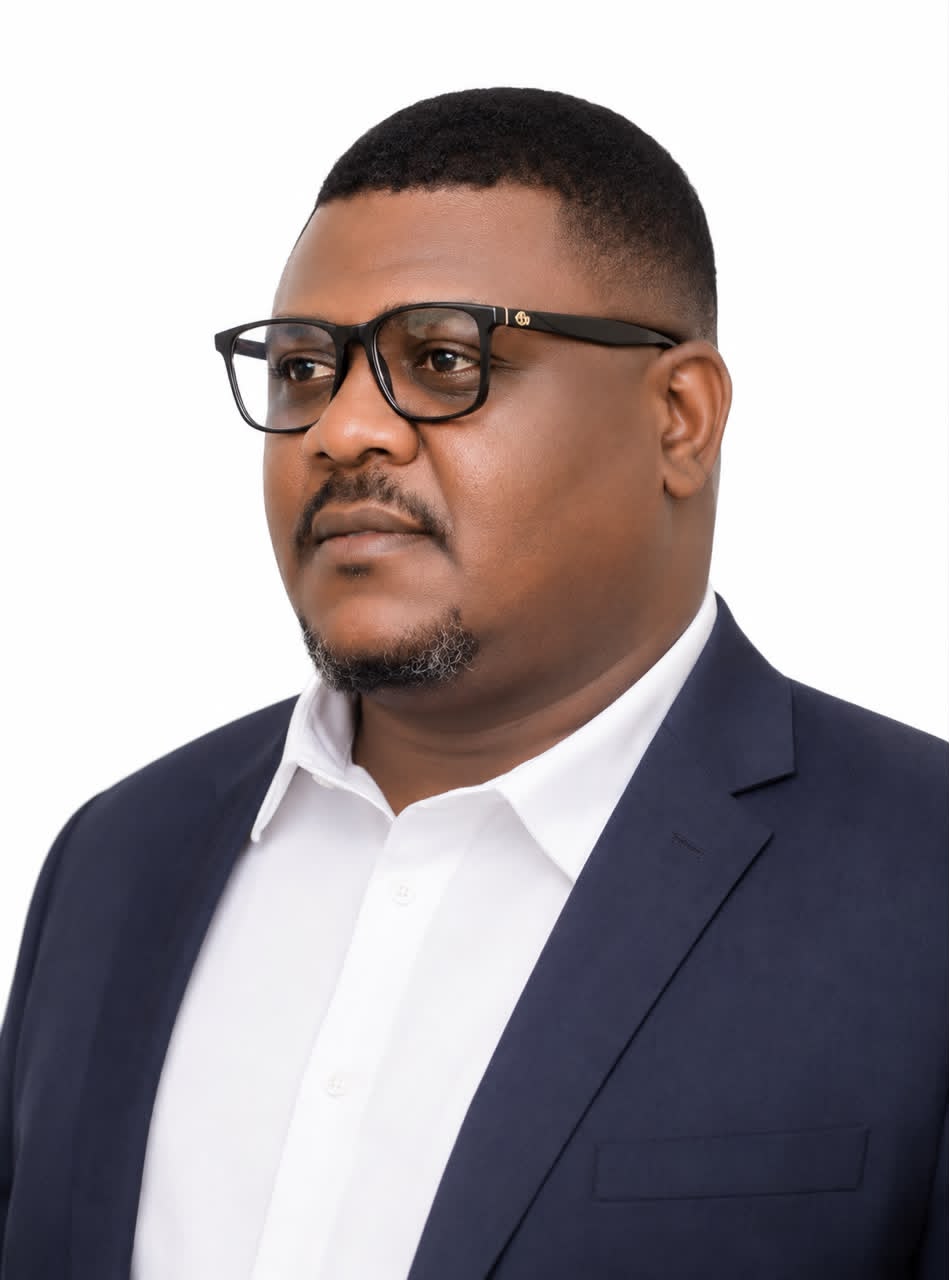
NIGERIA BELONGS TO ALL OF US
I have written this open letter to His Eminence, Alhaji Muhammad Sa’ad Abubakar III, CFR, mni, Sultan of Sokoto and President-General of the Nigerian Supreme Council for Islamic Affairs, with profound respect for his office and for the historic institution he represents.
This is not an attack on Islam, neither an attack on Christianity.
Also, It is not an attempt to diminish the historical importance of the Sultanate, rather, it is a sincere contribution to a conversation I believe Nigeria must have with greater honesty, courage and intellectual maturity:
What does equal citizenship mean in Nigeria?
Our country has a complex history involving kingdoms, caliphates, indigenous political systems, colonialism, amalgamation, independence, religion, ethnicity and competing political traditions.
But after all that history, one question remains fundamental:
Who does Nigeria belong to? My answer is simple:
Nigeria belongs to all Nigerians.
I am publishing this letter openly because I believe conversations of this magnitude should not be confined to private rooms.
I hope it reaches His Eminence.
More importantly, I hope it reaches Nigerians—Muslims and Christians alike—who believe that our future must be built on equal citizenship, mutual respect, constitutional democracy and a shared sense of belonging.
I invite people to read this letter in that spirit.
Not as a provocation or as a religious argument. But as an invitation to think.
AN OPEN LETTER TO HIS EMINENCE, ALHAJI MUHAMMAD SA’AD ABUBAKAR III, CFR, mni
SULTAN OF SOKOTO AND PRESIDENT-GENERAL, NIGERIAN SUPREME COUNCIL FOR ISLAMIC AFFAIRS
Your Eminence,
OUR HISTORY MUST BE REMEMBERED HONESTLY—BUT IT MUST NOT BECOME A CLAIM ON THE FUTURE
Nigeria’s history contains great Muslim civilisations and political institutions.
Kanem-Bornu, the Hausa states and the Sokoto Caliphate represent important chapters in the history of the territories that eventually became Nigeria.
The Sokoto Caliphate, in particular, became one of the most influential Islamic political formations in West Africa.
That history deserves recognition and respect.
But history presents us with an important question:
Does historical political authority confer permanent political ownership?
I believe the answer must be no.
The British colonial conquest and occupation of the territories that now constitute Nigeria occurred over decades, with the conquest of the Sokoto Caliphate culminating in 1903. The Northern and Southern Protectorates were subsequently amalgamated in 1914, and Nigeria achieved independence in 1960.
Whatever political arrangements existed before colonial consolidation, the Nigeria that emerged as a modern sovereign state ultimately became a constitutional republic in which citizenship could not legitimately be based upon the political history of one religion, ethnic group, kingdom or region.
Nigeria became something larger than all of those histories.
It became a country.
And that country belongs equally to the Muslim, the Christian, the adherent of another faith, and the citizen who professes no religion.
Your Eminence, Nigeria’s Constitution does not establish either Islam or Christianity as the religion of the Nigerian state.
Section 10 provides that:
“The Government of the Federation or of a State shall not adopt any religion as State Religion.”
Section 38 protects freedom of thought, conscience and religion.
Section 42 further provides constitutional protection against discrimination on the basis of religion, among other grounds.
These provisions are not merely legal technicalities. They represent an important national compact.
They establish principles of religious neutrality, religious freedom and equal citizenship.
They tell every Nigerian that his or her fundamental rights cannot legitimately depend upon belonging to the “right” religion.
That principle protects Muslims from Christian majoritarianism just as it protects Christians from Muslim majoritarianism.
And therefore, defending constitutional religious neutrality is not an attack on Islam neither an attack on Christianity.
It is protection for both.
THE DIFFICULT QUESTION OF POLITICAL SYMBOLISM
Your Eminence, this is where I believe our national conversation requires greater intellectual honesty.
A political arrangement can have two realities simultaneously:
its strategic reality and its symbolic reality.
Strategically, politicians may see a particular political ticket as an effective coalition, an electoral calculation, a mechanism for consolidating support or a means of improving political cohesion.
But citizens may interpret exactly the same arrangement symbolically.
They may ask:
Who is represented?
Who is included?
Who is excluded?
What does this say about the distribution of power?
What does this mean for people like me?
This distinction became particularly visible in Nigeria’s debate over the Muslim-Muslim presidential ticket.
Some citizens saw strategy while others saw symbolism.
Some saw political competence, Others saw the possibility of religious exclusion.
Both reactions can exist simultaneously.
A mature democracy must therefore be capable of understanding not only what a political arrangement is, but also what people believe that arrangement means.
This is not an argument against Muslims occupying political office nor should it be an argument against Christians occupying political office.
It is an argument for understanding the enormous responsibility that comes with political symbolism in a deeply religious society.
Political leaders must therefore understand that electoral strategy does not exist in a vacuum. Every political decision is interpreted through the lived experiences, fears, hopes and historical memories of the citizens who encounter it.
That is why responsible leadership requires both strategic intelligence and sensitivity to political meaning.
The Muslim citizen must not feel like a tolerated Nigerian, neither should the Christian.
This is perhaps the most important principle I wish to communicate.
A Christian should never have to feel that his citizenship is conditional upon political accommodation by Muslims. A Muslim should never have to feel that his citizenship is conditional upon political accommodation by Christians.
Neither should have to prove that his loyalty to Nigeria is greater than his loyalty to his faith.
Both should be able to say:
“Nigeria is my country, and nobody needs to give me permission to belong here.”
That is the Nigeria we should be building.
Your Eminence, traditional and religious leaders occupy a unique position in Nigerian society.
Political leaders come and go.
Governments change.
Political parties rise and fall.
But institutions such as the Sultanate carry historical memory.
That gives your words a different weight.
When a politician speaks about religion, Nigerians may suspect political calculation but when a respected religious leader speaks about coexistence, citizenship and national unity, the message can carry a moral authority that politics often cannot achieve.
This is why I believe the Sultanate has an extraordinary opportunity.
Not merely to speak for Muslims, But to speak to Nigeria.
To say clearly that the greatness of Islam in Nigeria does not require the political diminishment of Christianity. And equally, that the flourishing of Christianity in Nigeria does not require the political diminishment of Islam.
The strength of one faith should not require the weakness of another.
The security of one community should not depend upon the insecurity of another.
And the political advancement of one Nigerian should never require the political humiliation of another Nigerian simply because of religion.
WE SHOULD MOVE BEYOND THE COMPETITION FOR RELIGIOUS OWNERSHIP OF NIGERIA
There is a dangerous psychological temptation in deeply divided societies.
Each community begins to measure its security by the amount of power the other community possesses.
Then politics becomes a permanent struggle for religious arithmetic.
Who has the President?
Who has the Vice President?
Who controls the security institutions?
Who appoints judges?
Who controls the legislature?
Who controls the governors?
Who controls the economy?
And eventually, citizens stop asking the most important question:
Does the country work for everyone?
That is where we must break the cycle.
Nigeria cannot become great by producing a permanent contest between Muslim political power and Christian political power.
It can become great when both communities begin demanding something larger:
competent political power exercised for the common good.
The ultimate measure of political leadership should not be the religion of the person holding office.
It should be the quality of governance, the protection of citizens, the fairness of institutions, the security of communities and the opportunity available to every Nigerian.
PERHAPS OUR GREATEST NATIONAL TEST IS NOT RELIGIOUS DOMINANCE—BUT MUTUAL TRUST
Your Eminence, I believe Nigeria’s deepest problem is not simply that Muslims distrust Christians or Christians distrust Muslims.
It is that decades of political competition, violence, injustice, insecurity, corruption and unequal experiences of citizenship have created an enormous deficit of trust.
Religious suspicion is often the language through which that distrust expresses itself.
Therefore, if we want to defeat religious tension, we must do more than preach tolerance.
We must build institutions that make tolerance unnecessary as a condition of citizenship.
A Nigerian should not need to be tolerated.
He should simply be equal.
A Christian should not need a Muslim’s permission to belong.
A Muslim should not need a Christian’s permission to belong.
Our common citizenship should be the foundation upon which our religious differences are accommodated—not the other way around.
Your Eminence, I respectfully propose that Nigeria’s most respected Muslim and Christian leaders begin a different kind of conversation.
Not another conference where speeches are made and photographs taken.
But a serious national dialogue around five questions:
- What does equal citizenship actually mean in Nigeria?
- How should religious diversity influence political representation without becoming a mechanism for religious entitlement?
- How do we distinguish legitimate political strategy from symbolism that creates unnecessary fear or exclusion?
- How can traditional and religious institutions help rebuild trust between communities?
- What constitutional, institutional and political reforms are necessary to ensure that no Nigerian believes the country belongs more to another citizen than to himself?
These are difficult questions. But perhaps Nigeria has spent too many decades avoiding difficult questions because they are uncomfortable. And perhaps the price of that avoidance is becoming too high.
Your Eminence, history gives leaders a choice.
Every generation inherits history. But every generation also decides what to do with it.
We can use history as a weapon or wisdom
We can teach our children that Nigeria is a battlefield between religious communities.
Or we can teach them that Muslims and Christians inherited a complicated country together and have the responsibility to make it work together.
We can continue competing over who has the greater historical claim.
Or we can build a country where historical claims do not determine the value of a citizen.
I respectfully believe the latter is worthy of the office you occupy.
The greatest legacy of a historical institution is not merely that it preserves the memory of what once was.
It is that it helps a nation decide what it can become.
My final appeal Your Eminence, I do not ask you to abandon Islam.
I ask you to help Nigerians understand that Islam does not need Nigeria to belong exclusively to Muslims for Muslims to belong completely to Nigeria.
And I would say the same to Christian leaders:
Christianity does not need Nigeria to belong exclusively to Christians for Christians to belong completely to Nigeria.
The future must therefore be bigger than both arguments.
Nigeria must belong to Nigerians.
Not to Muslims.
Not to Christians.
Not to Hausa, Yoruba, Igbo, Tiv, Fulani, Igala, Idoma, Nupe, or any other ethnic nationality.
Not to the North.
Not to the South.
Not to one historical institution.
To all of us.
That, in my humble view, is the foundation upon which a truly united Nigeria can eventually be built.
I respectfully submit this thought to Your Eminence—not as an accusation, but as an invitation to a deeper national conversation.
May our religious differences become a source of moral strength rather than political division.
May our history become a source of wisdom rather than entitlement.
May our political differences never become a justification for denying one another’s citizenship.
And may the Nigeria we leave our children be a country in which neither Muslim nor Christian ever has to ask:
“Does this country belong to me?”
Because the answer should always be:“Yes. It is your country too.”
With profound respect,
Dr. Mike Achadu
A Nigerian Citizen


By Charles Onunaiju
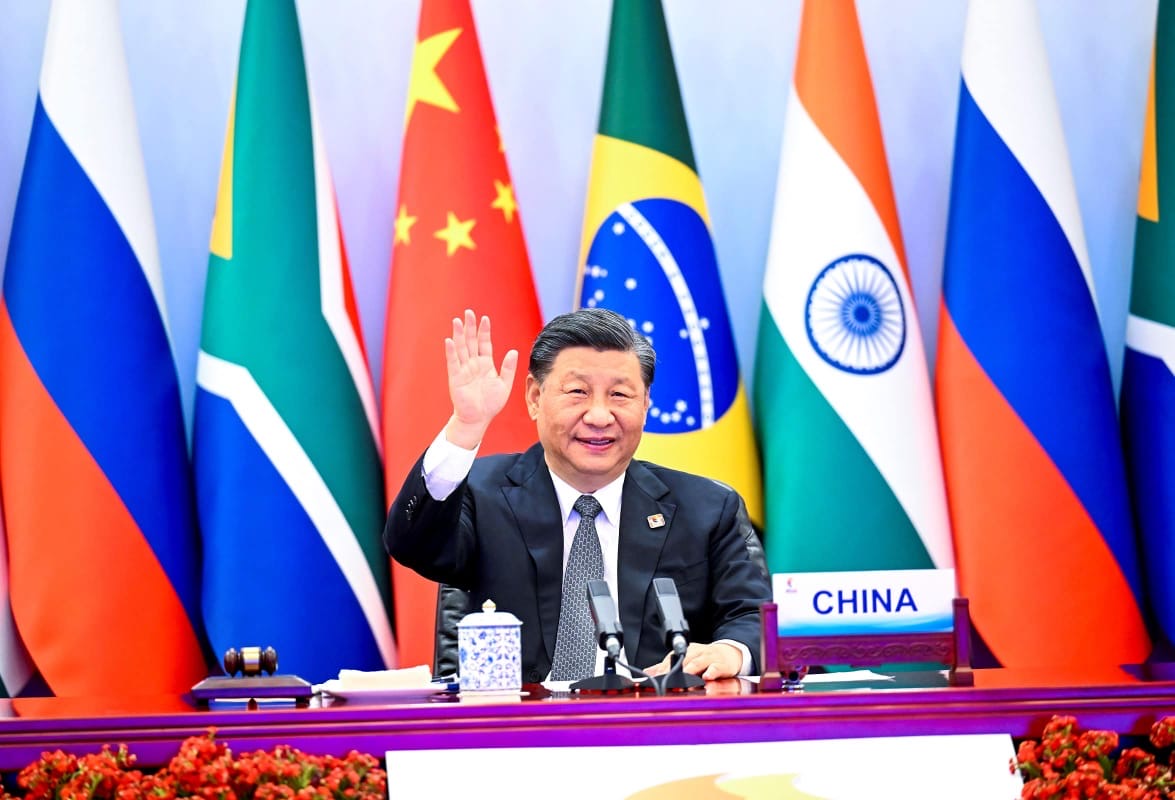
It has been five years since China through the General Secretary of the Communist Party of China (CPC) President Xi Jinping proposed the Global Development Initiative in his speech to the general assembly of the United Nations in 2021. In his speech, he highlighted the significance of the year for China. It was both the one-hundred-year anniversary, since the founding of the Communist Party of China (1921) and the 50th anniversary of the restoration of China’s legitimate seat at the United Nations. The speech came against the background of the then, ravaging covid-19 pandemic and je observed that “Our world is facing the combined impacts of changes unseen in a century and the covid-19 pandemic.
The year also coincided with the China’s crucial policy outcome of the end of absolute poverty and a contribution of about 70% to global poverty reduction. On account of these, China brought her unique national experience in successful eradication of one of mankind’s most enduring scourge; poverty to the international domain. The elimination of absolute poverty has been an existential battle and from the time of the 18th National Congress of the CPC and the election of Xi Jinping to the central leadership of the party and the country, the work on the poverty elimination became the core focus of the party and the state. And with an uncommon devotion, it won the battle and delivered the solemn pledge to the Chinese people to bring about moderate prosperity in all respects in the life of the people. With a reputation of the epic achievement, China’s pledge and commitment to help drain the swamp of global poverty is not empty or impulsive.
Therefore, when president Xi Jinping introduced the Global Development Initiative by way of offering Chinese experience and practical contribution to engaging issues of global development, the world took adequate notice. The structural inadequacy in the flow of international public goods, most evident in the decline of western development assistance to the developing countries especially in the Global South, produced a critical lacuna in global development outlook.
China emerging from the historic and epic defeat of extreme poverty stepped up to the global podium to bring the issue of inclusive and shared development to the sharp focus. The seminal initiative for inclusive global development focused on the then urgent imperative to contain and defeat the vile covid-19 pandemic and to put countries in better shape to recover from the after effects of the deadly virus. Vulnerable regions of the world including Africa where the virus was most disruptive of the socio-economic landscape were clearly brought to the core of the recovery efforts launched by Beijing under the framework of the Global Development Initiative. Food security and poverty alleviations were critical measures contained in the GDI framework to ameliorate the social and economic disruptions of the virus.
The GDI emphasizes development as a priority and closely aligns with the central task of implementing the 2030 Agenda for sustainable development of the United Nations. It aims to deepen cooperation and through specific projects, promote policy dialogue, experience sharing, capacity building and tangible cooperation in various fields and participation by all parties. The GDI embodies the earnest aspirations of the international community to coalesce and an extensive united front on the core issue, central to all mankind.
China’s successful practice of inclusive national development trajectory reveals the immense power of human will be supported by correct policy choices and driven by leadership suffused with integrity and competence. The vital clue from China is that inclusive and sustainable development is possible. The credibility of China national development practice, especially the epic defeat of poverty has tremendous global implication and consequently rallied broad consensus on the China’s proposed Global Development Initiative, GDI. Five years down the line, the initiative has evolved from a Chinese proposal into a major global public good attracting broad participation from the international community and delivering tangible benefits to ordinary people across the world. Up to now, more than 130 countries and international organizations have endorsed the GDI and participated in relevant cooperation programs, resulting in the implementation of 1,800 livelihood-oriented projects and the training of 200,000 people in various professions, costing over 23 billion U.S dollars of mobilized funds.
Over the past five years, China has widely shared the Juncao technology, which uses grass to cultivate edible fungi that has in no small measure helped to alleviate poverty, and also the sustainable satellite 1 that enables synchronized data sharing and the MAZU platform, a disaster monitoring and early warning system to support countries in the Global South improve disaster prevention and mitigation capabilities. The GDI is focused on people-centered. Inclusive, innovation driven and eco-friendly development principles and more importantly promote tangible outcomes.
The past five years have demonstrated the resulted oriented nature of the GDI and served as a beacon of hope for common development for all mankind. With the passage of time, the significance of the initiative is being felt by more countries in the world, especially in the Global South that strives earnestly to fill in their respective development gaps. At a tense moment in the international systems when few powers are busy with undermining the development of others through protectionism and geo-political confrontation, China has been steadfast pushing forward shared development through advancing the Global Development Initiative (GDI).
The principles of the GDI which is centered around inclusive and sustainable development partnership, mutual respect and win-win outcomes in cooperation are clearly different from ideologies that triggers geopolitical rivalry and seek unilateral gains.
In the past five years, China has launched more than 30 cooperation mechanisms and platforms to support Global South countries in enhancing their capabilities, thereby raising positive feelings towards China, across the world. According to the latest survey by the Pew Research Center, more people have a favorable view of China than the United States of America, in most of the 36 countries surveyed. People in many of the 17 middle-income countries surveyed see China as a more reliable partner than the United States and are more likely to say that China contributes to peace and stability around the world.
As its economy maintains high quality growth driven by innovation and greater openness, China continued to share significant opportunities for global development. Its innovations, such as open-source large language models, make new technologies affordable and drive shared development. Its cost-effective new energy products enrich global supply and promote green and low-carbon development.
Chinese manufacturing equipment exports and outbound investment help advance industrialization in developing countries, while cooperation under the Belt and Road Initiative improves infrastructure in many partner countries and expands their potential for development.
The implementation of the UN 2030 Agenda for sustainable development has been behind schedule. With less than five years left for achieving the Sustainable Development Goals (SDGs), only 36 percent of assessable SDG targets are on target or making moderate progress, nearly half are moving too slowly, while 15 percent have even gone into reverse.
The urgent need for common development among humanity underscores the pressing relevance of the GDI. As a member of the Global South and a major country, China has promised to align its growth with the common good of the world, and steadily advance the implementation of the GDI together with other countries for new progress in shared and sustainable development.
In the past five years, since the introduction of the GDI, China has stayed true to its commitments and it is no doubt, that Beijing would not waver in its pledges that the sunshine of shared development and its corollary of poverty alleviations is felt at every corner of the globe.
By Prof. Sheriff Ghali Ibrahim
The rhetoretical questions always asked by President Xi Jinping are all-encompassing particularly within the framework of international relations and politics. “what is wrong with the world? Where are we coming from? Where are we now? And where are we headed to? Some of the complementary questions are: Why are states irrational? Why do states cause doom against their existence and why are experienced nations not influencing the inexperienced ones to be calm and choose the peaceful path?
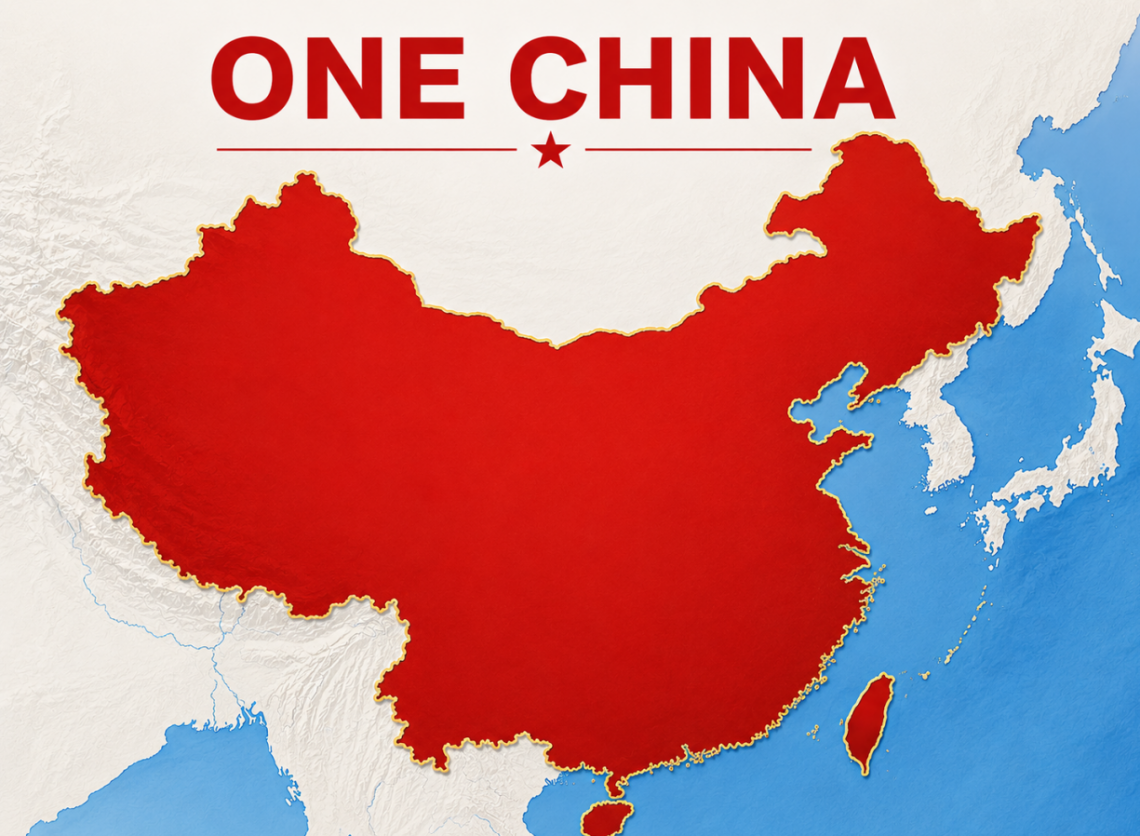
These questions are trigered by the dumbness of Taiwanese leadership in continuing the annual Military Drills called Han Kuang which they started since April, 1984, by General Hau Pei-tsun, to test the joint combat readiness, command flexibility, and defense strategies against what Taiwan called “potential invasions from China.” In contemporary military strategy, there is no rationality, there is no intelligence and there is no in-depth calculation by Taiwan to dream of protecting itslf against China. China is not a threat to Taiwan, but reverse is the case, as Taiwanese leaders are fixated to be seperatists and conspire with external forces against China.
When Han Kuang (the annual Military Drills) started in 1984 as a comprehensive War game and field exercise for Taiwan’s armed forces, it focused initially on classic beach anti-landing, anti-airborne, and counter-air raid scenarios. It also established the core two-phase format: a spring computer-simulated Command Post Exercise (CPX) and subsequent Field Training Exercises (FTX).
This vision of pushing China back and creating a shield and a safety-net against China, integrated high-tech hardware additions like Patriot missile deployments starting around 2006 by Taiwan. It Shifted operational concepts to reflect shifting political and strategic defense doctrines under successive administrations and adopted bilingual command formats (Mandarin and English) by 2017 to improve joint clarity, all aimed at defeating China in case of an abrupt eruption of conflict.
Taiwan was further pushed to expanded drill duration significantly, moving from traditional 5-day windows to extended 10-day live-combat simulations, which also increased reserve force mobilization and from modern conflicts like the Russia-Ukraine war. This has made Taiwan oblivious of the enormity of the Russo-Ukrainian conflict!
Due to continuous China-phobia developed by Taiwan in which external forces have informed Taiwan on the necessity to significantly prepare for war against China, it incorporated advanced mobile rocket systems (HIMARS) and decentralized command backbrief methods modeled on partner military frameworks, presumably that will protect them from China’s bid for reunification.
The next question is who has been behind Taiwan’s military ambition? Who has continued to sell weapons to Taiwan? Who has vowed to defend Taiwan in its quest to be permanently independent from China? Those behind the curtains are recently victims of their choice emanating from a war of choice and loosing from a strategy of choice. If the United States cannot protect itself in a modern warfare strategy, especially in its war with Iran, why should Taiwan continue to uphold provocative annual Military Drills that cannot protect them, but create more distance and disharmony from China’s efforts of peaceful reunification?
The United States has failed to achieve its strategic objectives and has faced outright defeat in Vietnam War, the War in Afghanistan, the Korean War (strategic stalemate), the Bay of Pigs Invasion, and the Lebanese Civil War intervention. The goal in Vietnam was to stop the spread of communism in Southeast Asia and protect South Vietnam, but high local resistance, a strong guerrilla insurgency, and low public support at home forced a U.S. withdrawal. North Vietnam took over the south in 1975.
The U.S. tried to destroy Al-Qaeda and remove the Taliban from power after the September 11 attacks, but after 20 years of conflict and nation-building, the Western-backed government collapsed rapidly, and the Taliban returned to power during the chaotic U.S. military exit in August 2021. The U.S. goal in Korea was to expel North Korean forces from South Korea and unify the entire Korean Peninsula under a democratic government, but Chinese military intervention pushed U.S. and United Nations forces back, resulting in a bloody stalemate and an armistice that left the peninsula permanently divided.
The U.S. attempted to overthrow the communist government of Fidel Castro in Cuba using CIA-trained Cuban exiles, but the invasion was poorly planned, lacked expected U.S. air support, and was quickly crushed by Cuban armed forces, becoming a major Cold War embarrassment for Washington. The U.S. intended to restore political stability and peace during the Lebanese Civil War as part of a multinational peacekeeping force, but following the devastating 1983 Beirut barracks bombing that killed 241 U.S. service members, the U.S. withdrew its military forces without achieving its stabilization goals.
The question remains, is it not irrational for Taiwan to continue with its annual Military Drills? Can the U.S. battling with shortage of Missiles and defensive capability salvage Taiwan in the period of war? Answers are self-providing for the wise.
In conclusion, it is recommended that Taiwan accepts China’s extended hand of peaceful reunification and desist from carrying out provocative Military Drills that will deteriorate the concurrent condition. It should divorce external tools of influence that sway its leadership to miscalculated risks and return to the mother land for good.
Prof. Sheriff Ghali Ibrahim is the Provost, Anti-Corruption Academy of Nigeria and Head of Contemporary China-Africa Research
Opinion
Presidency Defends Tinubu’s Reforms, Criticises Catholic Bishops’ Comments on National Issues

By Sunday Dare
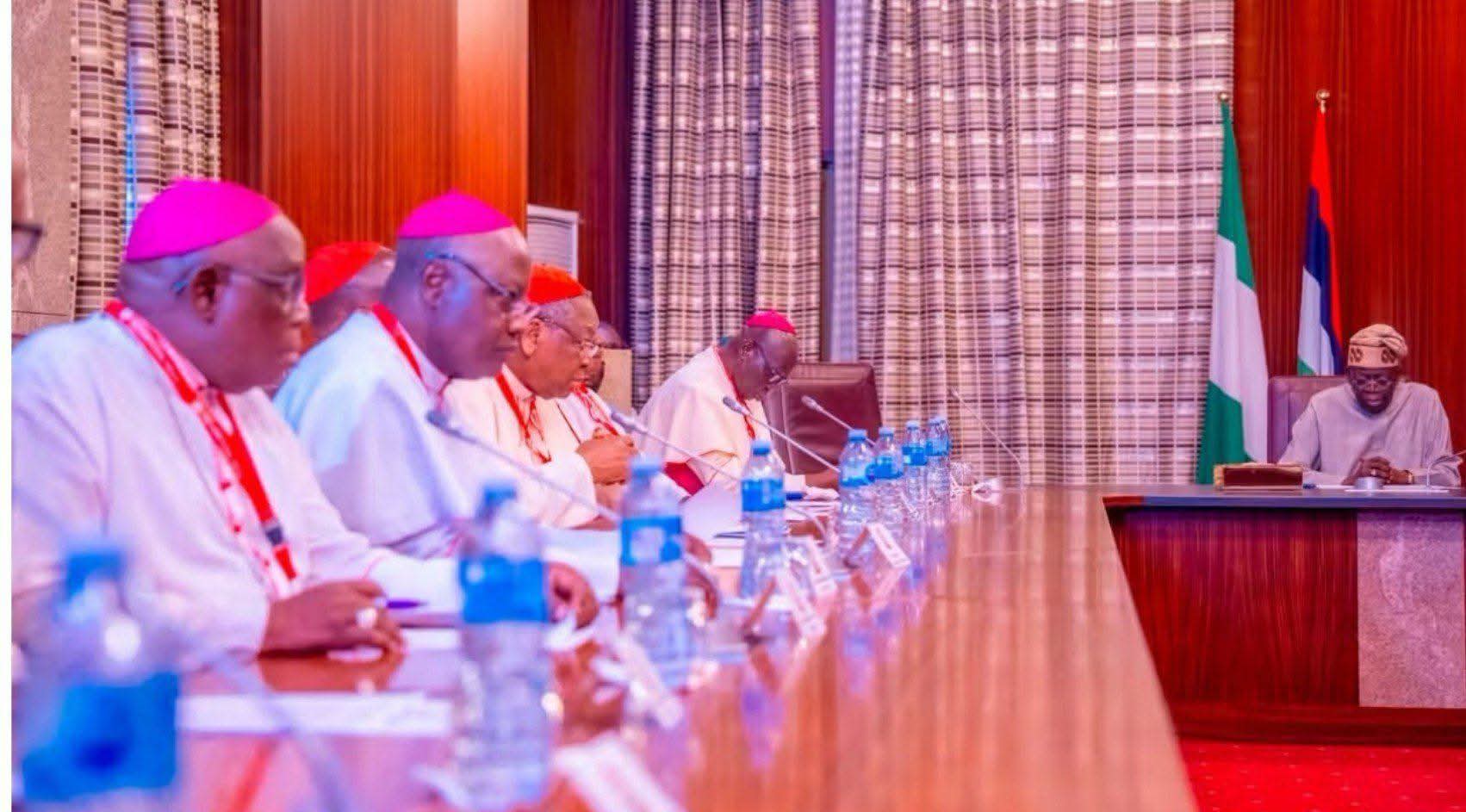
The Presidency has defended the policies of President Bola Ahmed Tinubu, accusing the leadership of the Catholic Bishops’ Conference of Nigeria (CBCN) of adopting what it described as a partisan stance in its recent public comments on national issues.
In an opinion article, Special Adviser to the President on Media and Public Communications, Sunday Dare, argued that religious leaders should maintain moral neutrality when engaging in political discourse. He said the bishops’ comments following a meeting with President Tinubu at the State House reflected opposition viewpoints rather than balanced national engagement.
Dare defended the administration’s economic reforms, including the removal of petrol subsidy and the unification of the foreign exchange market, describing them as necessary measures to address fiscal challenges inherited by the government in 2023.
He also cited increased allocations to states, reforms in public finance, the Nigerian Education Loan Fund (NELFUND), agricultural interventions and ongoing infrastructure projects as evidence of progress under the Tinubu administration.
The presidential aide further criticised comments attributed to Archbishop Emeritus John Cardinal Onaiyekan regarding governance and the 2027 elections, maintaining that President Tinubu remained committed to democratic principles and institutional integrity.
The article urged religious leaders to contribute constructive solutions to national challenges while preserving their independence from partisan politics.
The views expressed in the article are those of the author, who serves as Special Adviser to the President on Media and Public Communications.

ZACCH ADEDEJI, AND THE COMMON MAN’S WELFARE

OsunDecides2026: Tinubu Congratulated Adeleke Before INEC Declaration, Campaign Spokesperson Says

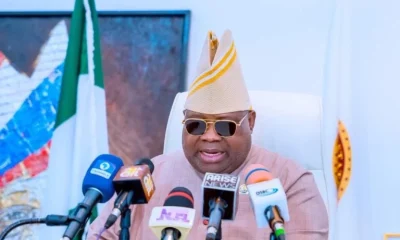
BREAKING: INEC Declares Adeleke Winner of Osun Governorship Election
-
 News18 hours ago
OPEN LETTER TO HIS EMINENCE, THE SULTAN OF SOKOTO ON CALL FOR EQUAL CITIZENSHIP, MUTUAL RESPECT IRRESPECTIVE OF RELIGIOUS AFFILIATION – BY DR MIKE ACHADU
-
 Politics16 hours ago
OsunDecides2026: Tinubu Congratulated Adeleke Before INEC Declaration, Campaign Spokesperson Says
-
 Politics16 hours ago
BREAKING: INEC Declares Adeleke Winner of Osun Governorship Election
-
News4 hours ago
ZACCH ADEDEJI, AND THE COMMON MAN’S WELFARE
You must be logged in to post a comment Login