Tag: Xi

  • President Xi’s Diplomatic Lessons for Trump and Thucydides-Trap Theoretical Approach

    President Xi’s Diplomatic Lessons for Trump and Thucydides-Trap Theoretical Approach

    By Prof Sheriff Ghali Ibrahim

     The world has seen a change in diplomatic presentation and engagement from Trump’s embarrasing moments with world leaders such as Cyril Ramaphosa of South Africa, Volodymyr Zelensky of Ukraine, Angela Merkel of Germany and King Abdallah of Jordan among others. Trump triggered an unhealthy debate with Zelensky on mineral rights, aid and handling of the war; ambushed Ramaphosa with a controversial video regarding unproven claims of “white genocide” in South Africa; attacked Macron by brushing dandruff off the French leader’s jacket and policy contradictions over Ukraine loans: embarrased Merkel by ignoring requests from photographers and Merkel herself to shake her hand.

    The lessons of diplomacy are best learnt in the class room of President Xi, where world leaders frequent Beijing for such hilarious lessons from the Core of the Communist Party, which they hitherto rejected and described as authoritarian, but today, they embrace comunism with Chinese characteristics as the solution to global challenges, and a place for political, economic and socio-cultural leaning.

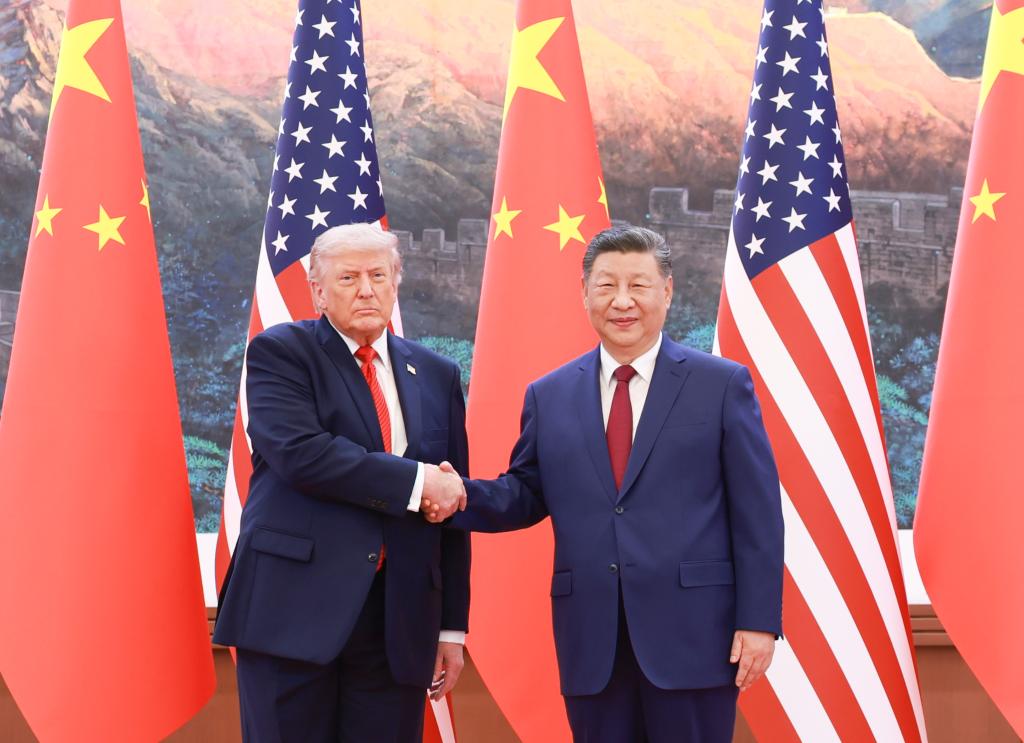
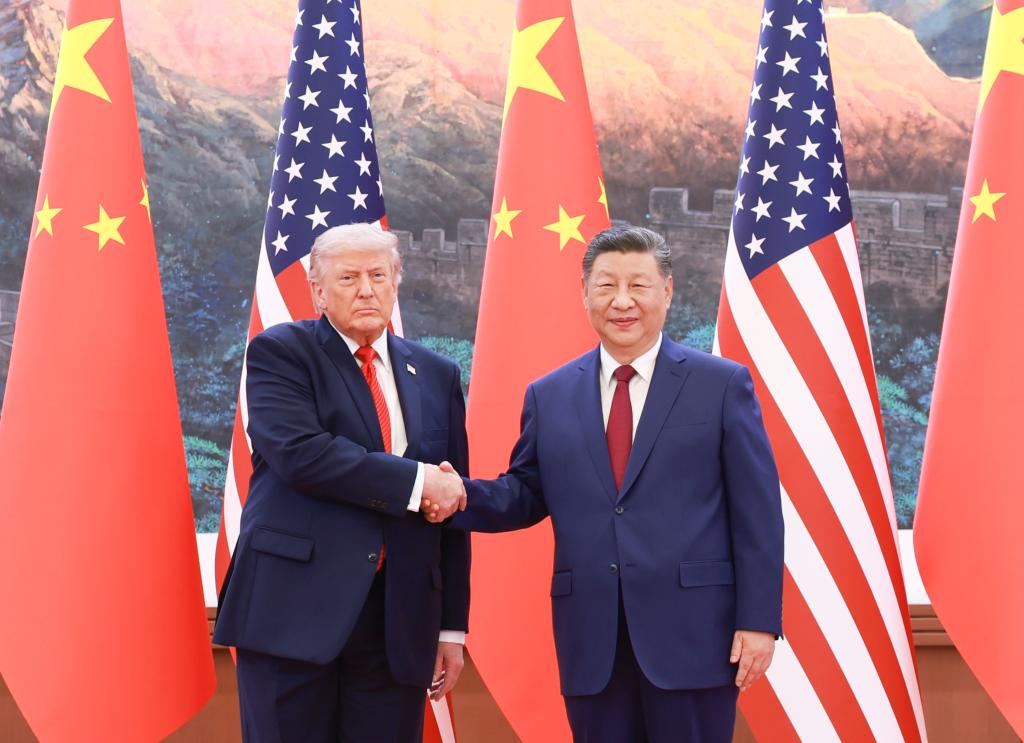
    When President Xi, calmly, gently, confidently and intellectually addressed Donald Trump during the summit, what manifested was unmitigated diplomatic prowesse, leadership, intelligence, warmth and direct objectivised submissions. There were no dramatic gesticulations, bullying or disrespect to the personality of Trump, but Trump was overwhelmed by what he saw and met and could not help but revealed what was hidden in his mind by constantly uttering “China is Great,” watching Xi in an open-mouthed bewilderment.

    President Xi put-forward the concept of “constructive strategic stability” to guide bilateral relations. This framework prioritizes cooperation, managing differences, and keeping measured competition from spiraling into conflict. However, Xi warned that Taiwan is a “red line” that could derail this stability.

    Constructive Strategic Stability aims to establish rules for managing long-term strategic competition without allowing rivalries to escalate into direct confrontation or hostility. Xi emphasized that the two nations should act as partners rather than rivals.

    Manageable Differences: The two leaders agreed that constant, expectable communication is necessary to handle disagreements in areas like trade and advanced technology.

    The Taiwan Warning: Xi explicitly warned Trump that the Taiwan issue is the “most important and sensitive” part of China-U.S. relations. He noted that “Taiwan’s independence” and peace are irreconcilable, and mishandling the issue could draw the countries into clashes or conflict.

    President Xi Jinping views the “Thucydides Trap”—the historical theory that war is inevitable when a rising power challenges an established one—not as an inescapable prophecy, but as a threat that both the United States and China must proactively avoid through a “new model of major-country relations”. This theory was developed by Graham from Havard university using the lens of the Greek Writer Thucydides. It has been estimated that there have been about 16 confrontations from this theoretical analogy since 500 years ago, only four were avoided, but all came to reality. The major expectation of future super-power conflict has ben China-U.S. conflict, which President Xi pointed out that, that is not necessary, with a new model of major-country relations.

    It is now left for the United States to sincerely and honestly accept and implement the constructive strategic stability paradigm as China’s new diplomatic posture with the United States in the new era or choose to go by the Thucydides-Trap, which will accelerate the complete collapse of the United States as an existing empire.

    In conclusion, the major lessons from Xi’s diplomatic lessons for Trump can be drawn from managing differences, healthy competition, strategic cooperation and avoidance of war. These lessons are to be guided by mutual communication, interdependence and respect to territorial integrity and sovereignty. Taiwan as a point of departure, cannot be negotiated and cannot be compromised. The major and final lessons are: cordiality, joviality and respect to diplomatic guests, not harshness, embarrasment and rejection as witnessed by many leaders in their visit to the White House under Trump.

    Prof Sheriff is the Provost, Anti-Corruption Academy of Nigeria and Head of Contemporary China-Africa Research

  • Xi holds talks with Trump in Beijing

    Xi holds talks with Trump in Beijing

    Source: Xinhua

    Chinese President Xi Jinping held talks with visiting U.S. President Donald Trump at the Great Hall of the People in Beijing on Thursday.

    Transformation not seen in a century is accelerating across the globe, and the international situation is fluid and turbulent, said Xi.

    “Can China and the United States overcome the Thucydides Trap and create a new paradigm of major-country relations? Can we meet global challenges together and provide greater stability for the world? Can we build a bright future together for our bilateral relations in the interest of the well-being of the two peoples and the future of humanity? These are the questions vital to history, to the world and to the people,” said Xi.

    They are the questions of the times that the leaders of major countries need to answer together, he added.

    “I look forward to working together with you to set the course and steer the giant ship of China-U.S. relations, so as to make 2026 a historic, landmark year that opens up a new chapter in China-U.S. relations,” he said.

    According to the Chinese leader, both sides have agreed to work toward building a bilateral relationship of constructive strategic stability.

    The new characterization will provide strategic guidance for bilateral relations over the next three years and beyond, and should be welcomed by the people of both countries as well as the international community, he said.

    The “constructive strategic stability” should be a positive stability with cooperation as the mainstay, a sound stability with moderate competition, a constant stability with manageable differences, and an enduring stability with promises of peace, Xi said.

    The building of a constructive China-U.S. relationship of strategic stability should not be a mere slogan, but concrete action taken by both sides toward the same goal, he added.