
By:
-SHERIFF GHALI IBRAHIM, University of Abuja
-LI CHUNGUANG, Beijing Foreign Studies University
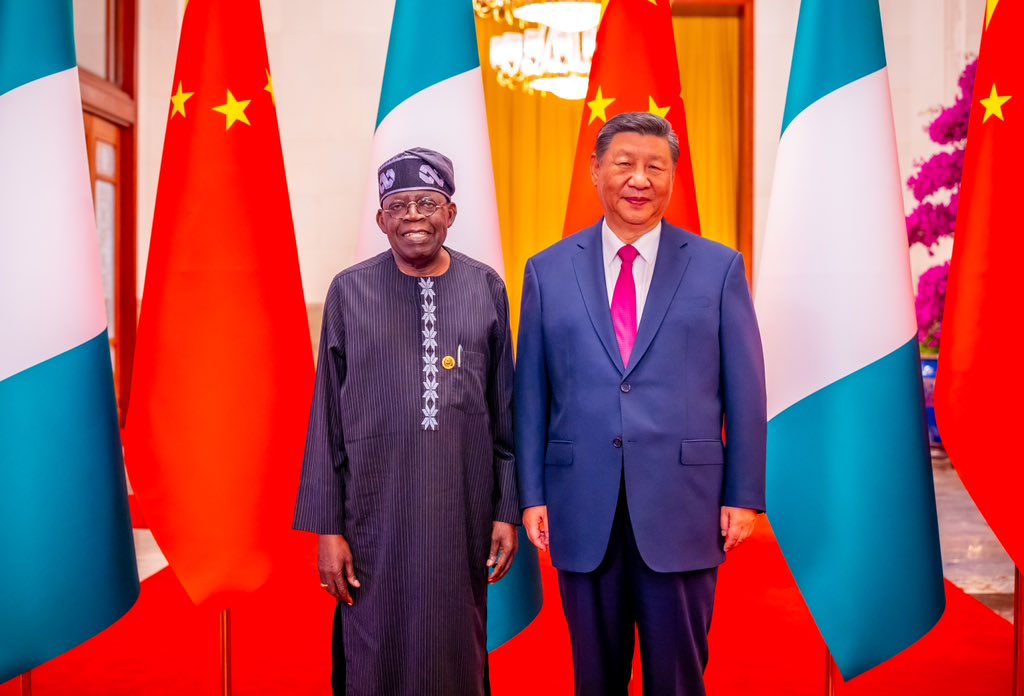
As the old saying goes, “A friend in need is a friend indeed.” On 4 November, a reporter at the Chinese Foreign Ministry press conference asked about comments on statement of U.S. President Donald Trump “the U.S. will immediately cut off all assistance to Nigeria if the Nigerian government continues to allow the killing of Christians and will very likely launch military operations.” Mao Ning, the Chinese Foreign Ministry spokesperson, responded, “As Nigeria’s comprehensive strategic partner, China firmly supports the Nigerian government in leading its people on the development path suited to its national conditions. China firmly opposes any country using religion and human rights as an excuse to interfere in other countries’ internal affairs, and threatening other countries with sanctions and force.” As two of the world’s major developing countries and emerging economies, China and Nigeria have consistently provided each other with firm mutual support on core issues, strengthened strategic communication and economic cooperation, promoted people-to-people exchanges, and advanced the continuous development of the China-Africa community with a shared future in the new era.
Firstly, the political-strategic conceptualization of the relationship has driven China and Nigeria to choose each other amidst global changes. In the context of the collective rise of the countries of the “Global South”, China and Nigeria have consistently pursued an independent multilateralist approach in their foreign strategies. This objective has been realized through the enhancement of international connectivity, particularly with nations in the “Global South”, thereby fostering strengthened cooperation between these states. The notion of the Belt and Road Initiative (BRI) and a Community with a Shared Future for Mankind, as well as the Four Global Initiatives (GDI, GSI, GCI, GGI) proposed by President Xi Jinping, have been identified as key elements in the foreign policy of China. The 4Ds foreign policy (Democracy, Development, Demography, Diaspora) concept, proposed by President Tinubu, has also been identified as a significant element in Nigerian foreign policy. Moreover, Nigeria’s dedication to the BRI Initiative and its involvement in BRICS partner countries have been recognized as significant accomplishments by the Nigerian government. The common thread running through all of these elements is the promotion of a global community, founded upon the principles of global equity and justice. The “theory of connection” in African wisdom and the concept of “harmony and coexistence” in Chinese thought have both been drawn upon by China-Nigeria. Multilateral platforms such as the Forum on China-Africa Cooperation (FOCAC), BRICS and the G20 have been utilized by China-Nigeria to promote peace and security in the development of the region, neighboring countries and other countries worldwide.
Secondly, the strategic economic value has driven the continued development of Nigeria-China economic, trade and investment relations. The collaborations between China and Nigeria in the domains of railroads, ports, and aviation have contributed to the enhancement of Nigeria’s infrastructural framework. The synergy in agricultural, energy, ICT sectors has been instrumental in propelling the advancement of Nigeria’s industrial technology. Now, Nigeria is not only China’s third largest trading partner and second largest export market in Africa, but also China’s first largest source of imports and an important trading partner. The development of China-Nigeria economic and trade relations has had a significant impact on the evolution of China-Africa relations. Moreover, it has played a pivotal role in highlighting the immense potential for cooperation between countries of the “Global South”. The economic and trade cooperation between the two parties has not only led to the development of their respective economies, but also served to dispel the myth that modernization is synonymous with Westernization. In their practical experience, the two sides have provided diversified road options for cooperation in the Global South.
Finally, the strategic concept of the humanities proves to be a suitable solution, effectively promoting the people-centered development concept on both sides. As significant political, economic and cultural powers within the Asian and African continents, the harmonious and inclusive development of multiple languages, cultures, ethnicities and religions is imperative for the advancement of the respective populations, as well as the populations of neighboring countries and the global community. The similarity of the social and national sentiments of the people has resulted in the capacity of the two populations to profoundly comprehend each other and sustain amicable attitudes towards each other. In recent years, dialogues in humanities fields such as universities and think tanks between the two sides have promoted humanistic exchanges in various fields with each other. Humanistic exchanges between the two sides in the fields of language cooperation, cultural exchanges, vocational education and other areas have promoted the development of a long-term and stable exchange mechanism between the two sides. The two countries attach great importance to the development of the “core interests” of each other and people. Furthermore, the construction of livelihood projects has also prompted the two sides to make full use of the advantages of each other’s populations and markets to strengthen mutual cooperation and development.
As a significant international and regional power, the strategic cooperation between China and Nigeria is poised to generate a consistent influx of kinetic energy, thereby propelling the modernization and development of both nations, as well as their respective national governance systems.