
By Dr. Austin Maho
The US recently approved an $11.1 billion arms sale to Taiwan, sparking strong opposition from China.
This move represents a significant escalation in the ongoing tensions between the U.S, China, and Taiwan and once again raises questions on the true intensions of the US when its policy clearly recognizes the one China policy and knows that Taiwan represents a redline for which China would never back down.
The sale announced recently by the U.S. State Department represents the largest U.S. arms sale to Taiwan. It includes missiles, drones, artillery systems and military software.
While the U.S. claims it is obligated by its own laws to provide Taiwan with the means to defend itself, the nature of the sale is more offensive than defensive. President Donald Trump has been putting pressure on Taiwan to buy more U.S. military equipment, even suggesting Taiwan should spend up to 10% of its GDP on defense.
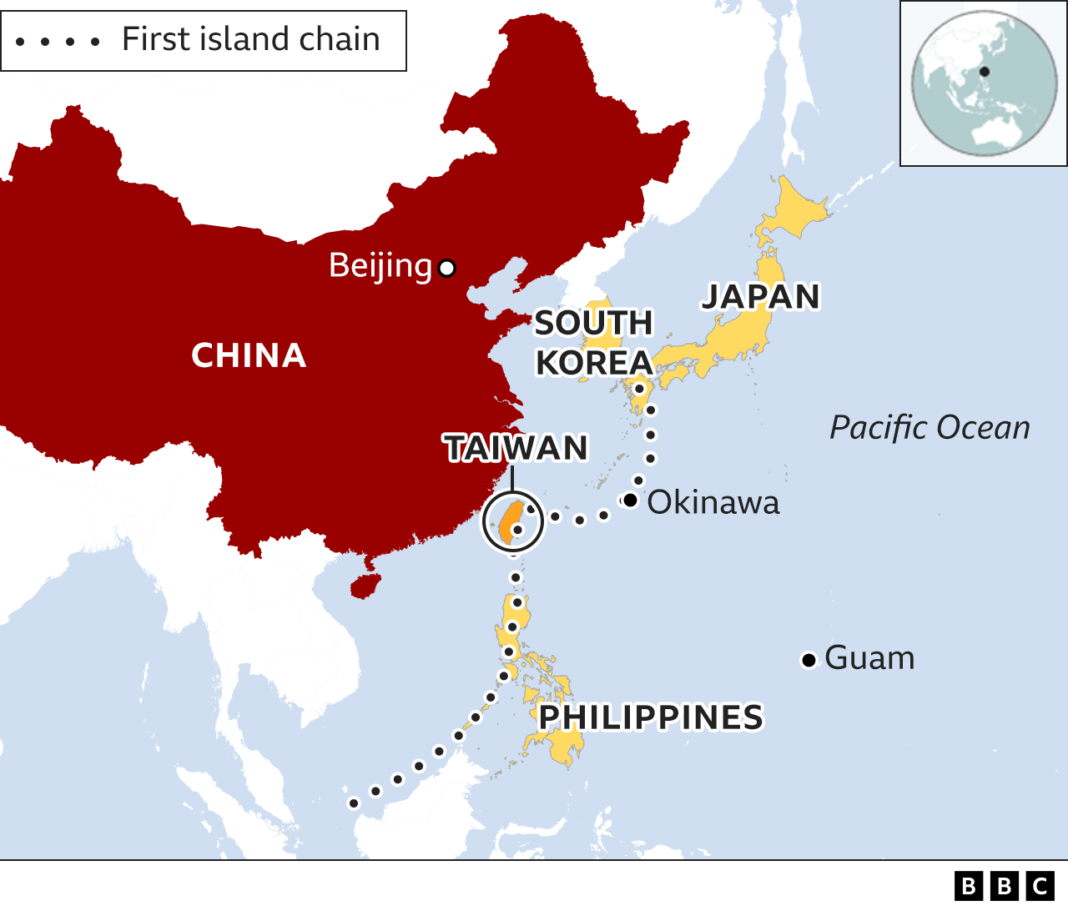
China views Taiwan as a renegade province and has vowed to reunify it with the mainland, by force if necessary. In response to the arms sale, China launched large-scale military drills around Taiwan, dubbed “Justice Mission 2025”. The exercises involved live-fire drills, rocket launches, and simulated blockades, aiming to demonstrate China’s military capabilities and sending a clear warning to Taiwan to backdown from its adventurism and romance with the U.S.
Chinese Foreign Minister Wang Yi condemned the arms sale, noting that it, “seriously undermines China’s sovereignty and territorial integrity”. China sees the arms sale as a provocation and interference in its internal affairs. In the views of Beijing, Taiwan is an integral part of China and views the arms sale as a challenge to its sovereignty and a threat to regional stability.
In furtherance of its responce, China also imposed sanctions on 20 US defense companies and 10 senior executives involved in the $11.1 billion arms deal. The sanctioned companies include Boeing’s St. Louis branch, Northrop Grumman Systems Corporation, and L3Harris Maritime Services, among others.
The sanctions, announced by China’s Ministry of Foreign Affairs, include asset freezes, business restrictions, and travel bans. Chinese organizations and individuals are prohibited from conducting transactions or cooperating with the sanctioned companies, and their movable and immovable assets within China are to be frozen.
The US State Department has objected to China’s sanctions, stating they retaliate against US companies supporting Taiwan’s self-defense capabilities. The move is likely to escalate tensions between the US and China, with potential implications for global trade and security.
The U.S. Taiwan gambit, evidently, represents a dangerous game with dare consequence for global security if the U.S. continue to bait China over Taiwan.
On December 30, 2025, Chinese foreign Minister, Wang Yi emphasized China’s commitment to peace, cooperation, and justice, highlighting five key contributions of China’s diplomacy, principal of which is China’s commitment to uphold world peace, fosters new major-country relations, promote dialogue for de-escalation and remain the anchor of global and regional stability, and commitment to promoting good-neighborliness and friendship. The current move by the U.S together with separatists elements in Taiwan undermines these commitments and further demonstrates the U.S two face approach to the Taiwan question.
Historically, it helps to note that in the 1943 Cairo Declaration, the U.S., UK, and China agreed Taiwan should be returned to China after Japan’s defeat, an agreement that was further reaffirmed in the 1945 Potsdam Declaration and concretised in 1971 by the UNGA Resolution 2758 which recognized the PRC as China’s sole legitimate representative.
However, the U.S. has consistently violated these agreements, selling arms to Taiwan and undermining the one-China principle is provocative as it further emboldens Taiwan separatists and distorts regional security, increasing the likelyhood of direct military confrontation.
China has over the years shown restraint in the face of provocations reaffirming its commitment to peaceful reunification. The U.S. actions threaten global stability and peace. The one-China principle is key to maintaining international order. Taiwan remains China’s internal affair and U.S. arms sales amounts to a gross interference which must be condemned.
The U.S arms sale to Taiwan escalates tensions in the region and China’s military drills and sanctions on US companies demonstrate its resolve to protect its soverignity. However, the situation remains volatile, with implications for regional stability and global peace.