
Uncategorized
Gov. Kefas Signs Executive Orders to Combat Drug Abuse, Political Thuggery and Environmental Crimes

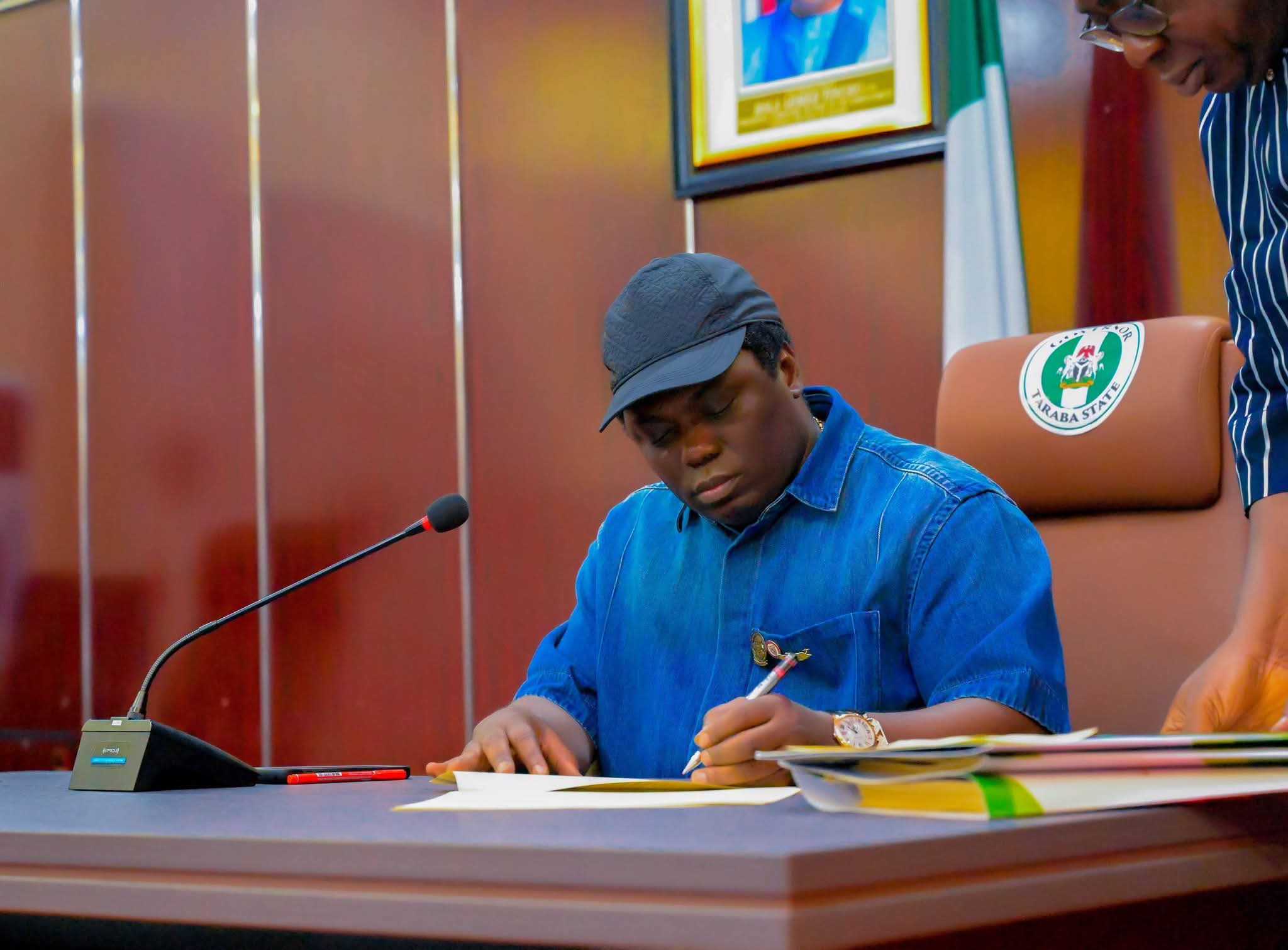
By Aga Samuel Imoter, Jalingo
Taraba State Governor Agbu Kefas has signed three Executive Orders aimed at tackling drug abuse, political thuggery and environmental crimes as part of efforts to strengthen security and promote public safety across the state.The orders, signed on Sunday, are designed to reinforce the enforcement of existing laws and address security and environmental challenges, according to the state government.
The first order targets drug abuse by strengthening the enforcement of laws regulating illicit drugs and controlled substances. It also directs relevant agencies to intensify public awareness campaigns, rehabilitation programmes and youth empowerment initiatives.
The second order prohibits political thuggery, including the recruitment, sponsorship, financing and deployment of political thugs. The government said the measure is intended to curb electoral violence, voter intimidation and other activities capable of disrupting public order.
The third order focuses on environmental protection by addressing illegal mining, unlawful logging and other unauthorised exploitation of natural resources. It seeks to strengthen enforcement against environmental crimes and promote the sustainable management of forests, farmlands and water resources.
Governor Kefas called on traditional rulers, religious leaders, political stakeholders, youth groups, civil society organisations and security agencies to support the implementation of the directives. He said the executive orders reflect his administration’s commitment to protecting lives and property, upholding the rule of law and creating a peaceful environment for sustainable development.









By Israel Adamu, Jos
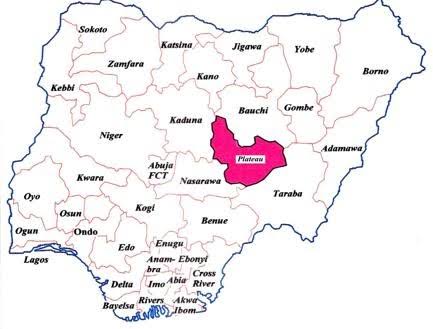
A former councillor representing Rim Ward in Riyom Local Government Area of Plateau State, Daniel Danjuma Chong, popularly known as “Hon. Star,” was reportedly killed by gunmen during an attack on Torok village in Rim Community on Sunday night.
According to a resident, Mrs. Cynitha Dung, the attack occurred around 11:45 p.m. and triggered panic as residents fled after hearing prolonged gunfire. She said Chong was found dead after the shooting, while another resident, Mr. David Dachollom Danjuma, sustained gunshot injuries and is receiving medical treatment.
The Berom Youth Moulders Association (BYM) condemned the killing in a statement signed by its National Publicity Secretary, Rwang Tengwong. The group alleged that armed attackers entered the community under the cover of darkness, opened fire, and fled after the incident.
The association expressed condolences to the family of the deceased and wished the injured resident a speedy recovery. It also called on security agencies and the Plateau State Government to identify and arrest those responsible and strengthen security in vulnerable communities.
BYM further urged authorities to address criminal hideouts it believes operate in the area and renewed its call for measures to improve security, including restrictions on open grazing. Efforts to obtain official confirmation from the spokesperson of the Plateau State Police Command, SP Alfred Alabo, were unsuccessful as of the time of filing this report.
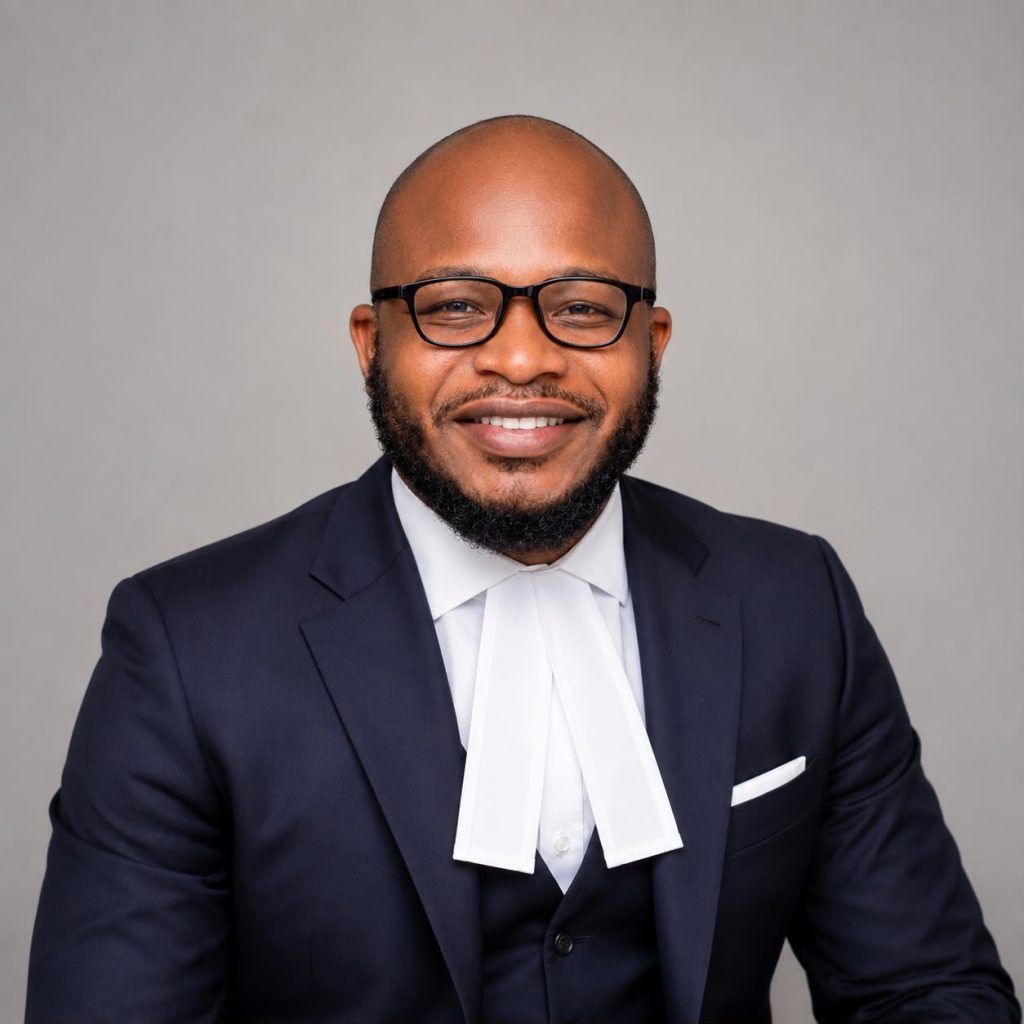
A legal practitioner and human rights advocate, Hamza D. Dantani, Esq., has called on security agencies across the country to emulate the Department of State Services (DSS) by compensating innocent Nigerians who are wrongly arrested, unlawfully detained or harmed during security operations.
Dantani made the call while commending the Director-General of the DSS, Mr Adeola Oluwatosin Ajayi, for what he described as a bold and unprecedented decision to compensate victims of wrongful arrests and operational errors.
He said the initiative demonstrated that while security agencies have a constitutional responsibility to safeguard the country, they also have a moral and legal obligation to acknowledge mistakes and provide remedies to innocent citizens whose rights have been violated.
According to him, the fight against terrorism, banditry, kidnapping and other violent crimes should not come at the expense of justice and respect for fundamental human rights.
He said the DSS initiative had shown that institutions could admit and correct their mistakes without compromising operational effectiveness, adding that such accountability would strengthen public confidence and reinforce the principle that no authority is above the law.
Dantani cited some of the publicly known beneficiaries of the compensation initiative to include Nura Idris, a Kaduna-based farmer and herder who received ₦3 million after he was wrongly linked to Boko Haram; Umar Ibrahim, Alhaji Bello Rabiu and Jaja Sarki Bamo, who shared a compensation package after they were mistakenly arrested over allegations of banditry and kidnapping; and Chineze Ozoadibe, an Abuja-based businesswoman, who was awarded ₦10 million following her wrongful arrest over allegations of oil bunkering.
He also listed a Sokoto-based trader who was mistakenly shot during a 2016 security operation in Jos and later received ₦20 million, comprising court-awarded damages and an additional goodwill payment, alongside lifetime healthcare, as well as 11 artisans from Osun State who were cleared of terrorism-related allegations and compensated.
He noted that these were only a few publicly known cases, stressing that many other innocent Nigerians might have suffered similar experiences without receiving public attention.
Dantani said wrongful arrest and unlawful detention often result in the loss of liberty, employment, businesses, reputation and peace of mind, while families also suffer emotional and financial hardship.
Although monetary compensation cannot fully restore lost time or erase emotional trauma, he said it remains an important acknowledgement of injustice and the state’s willingness to accept responsibility.
He urged the Nigeria Police Force, the Nigerian Army, the Nigeria Security and Civil Defence Corps (NSCDC), the Economic and Financial Crimes Commission (EFCC), the National Drug Law Enforcement Agency (NDLEA) and other law enforcement agencies to adopt similar measures whenever investigations establish that innocent citizens have been wrongly arrested, unlawfully detained or injured during official operations.
He also called on security agencies to strengthen their operational procedures by ensuring that arrests are based on credible intelligence and verified evidence, improving identity verification, investing in technology and forensic investigations, enhancing inter-agency intelligence sharing, and providing regular human rights training for personnel.
Dantani further advocated strict compliance with constitutional safeguards, independent internal review mechanisms to investigate complaints of wrongful arrest and unlawful detention, and accountability for officers found culpable of negligence or abuse of power.
He said arrest should never be treated as punishment, while detention should never replace proper investigation.
Commending the DSS Director-General for what he described as exemplary leadership, Dantani expressed hope that the initiative would usher in a new era in which all security agencies would embrace accountability, uphold constitutional rights and ensure that innocent citizens affected by operational errors receive justice and appropriate compensation.
He added that the true measure of a nation’s justice system lies not only in its ability to punish offenders but also in its willingness to protect the innocent and correct its mistakes whenever they occur.
A New Standard for Justice: Why Other Nigerian Security Agencies Should Emulate the Director-General of the DSS
As a legal practitioner, human rights activist, and advocate for the rule of law, I have closely observed the recent actions of the Director-General of the Department of State Services (DSS), Adeola Oluwatosin Ajayi, in compensating innocent Nigerians who were wrongly arrested, unlawfully detained, or otherwise affected during security operations.
This is a bold, commendable, and unprecedented gesture that deserves national recognition. It demonstrates that while security agencies have a constitutional responsibility to protect the nation, they also have a moral and legal obligation to acknowledge mistakes and provide remedies to innocent citizens whose rights have been violated.
The fight against terrorism, banditry, kidnapping, and other forms of criminality is a national priority. However, the pursuit of security must never come at the expense of justice. National security and respect for fundamental human rights are not opposing ideals; they are complementary principles that strengthen one another. A security institution that respects the rule of law earns greater public confidence, cooperation, and credibility.
The recent compensation initiative by the DSS is evidence that institutions can correct their errors without compromising their operational effectiveness. On the contrary, such accountability enhances public trust and demonstrates that no authority is above the law.
Among the beneficiaries of this commendable initiative are:
- Nura Idris, a Kaduna-based farmer and herder who was wrongfully linked to Boko Haram and was awarded ₦3 million.
- Umar Ibrahim, Alhaji Bello Rabiu, and Jaja Sarki Bamo, who were mistakenly arrested and detained over allegations of banditry and kidnapping and later shared a compensation package.
- Chineze Ozoadibe, an Abuja-based businesswoman who was wrongfully arrested over allegations of oil bunkering and was awarded ₦10 million.
- A Sokoto-based trader, who was mistakenly shot during a 2016 security operation in Jos, received ₦20 million, comprising court-awarded damages and an additional goodwill payment, together with lifetime free healthcare.
- Eleven artisans from Osun State, including Mohammed Adamu, Adamu Abubakar, Mohammed Bindi, and Baba Kura Mallam, who were eventually cleared of terrorism-related allegations and compensated.
These are only a few publicly known examples. There may be many more deserving victims whose stories have never reached the public domain.
Wrongful arrest and unlawful detention inflict profound harm. Victims often lose their liberty, employment, businesses, reputation, and peace of mind. Their families equally suffer emotional and financial hardship. In some cases, the stigma associated with being falsely accused continues long after their innocence has been established.
Although monetary compensation can never fully restore lost time, damaged reputations, or emotional trauma, it is an important acknowledgment that an injustice has occurred and that the State is willing to accept responsibility for its actions.
I therefore urge every security agency in Nigeria—including the Nigerian Police Force, the Nigerian Army, the Nigeria Security and Civil Defence Corps (NSCDC), the Economic and Financial Crimes Commission (EFCC), the National Drug Law Enforcement Agency (NDLEA), and other law enforcement institutions—to adopt similar measures whenever investigations establish that innocent citizens have been wrongly arrested, unlawfully detained, or injured during official operations.
Beyond compensation, there is an urgent need to prevent such incidents from occurring in the first place. Prevention is always better than remedy. Security agencies should therefore strengthen their operational procedures by adopting the following measures:
- Ensure that arrests are based on credible intelligence, verified evidence, and thorough investigations rather than mere suspicion, rumours, anonymous allegations, or unreliable informants.
- Conduct proper identity verification before arresting suspects, particularly in terrorism, kidnapping, and banditry investigations where mistaken identity is common.
- Subject intelligence reports to supervisory review before authorising high-risk arrests or detention.
- Improve intelligence gathering through technology, forensic analysis, and inter-agency collaboration instead of relying solely on confessional statements or unverified information.
- Provide continuous human rights and constitutional law training for security personnel, particularly on the legal standards governing arrest, detention, and the treatment of suspects.
- Ensure strict compliance with constitutional safeguards, including informing suspects of the reasons for their arrest, granting prompt access to legal representation, and producing them before a court within the time prescribed by law.
- Establish independent internal review mechanisms to promptly investigate complaints of wrongful arrest, unlawful detention, and abuse of power.
- Hold officers accountable where investigations reveal negligence, recklessness, bad faith, or abuse of authority that resulted in the violation of innocent citizens’ rights.
Professionalism demands caution before depriving any citizen of liberty. An arrest should never be treated as punishment, and detention should never become a substitute for proper investigation. Every officer should remember that once an innocent person’s liberty is taken away, no amount of compensation can fully restore the lost time, dignity, opportunities, and emotional well-being.
A justice system that readily admits and corrects its mistakes is stronger than one that refuses to acknowledge them. Transparency and accountability should never be viewed as signs of institutional weakness; rather, they are hallmarks of professionalism and democratic governance.
I commend the Director-General of the DSS, Mr. Adeola Oluwatosin Ajayi, for demonstrating exceptional leadership, fairness, and respect for the rule of law. His actions have set a commendable precedent for security institutions across Nigeria.
It is my sincere hope that this initiative marks the beginning of a new era in which every Nigerian security agency embraces accountability, respects constitutional rights, and ensures that innocent citizens who suffer from wrongful arrest, unlawful detention, or operational errors are not left without justice or appropriate compensation.
The true measure of a nation’s justice system is not merely its ability to punish the guilty, but also its willingness to protect the innocent and to correct its own mistakes whenever they occur.
Hamza N. Dantani Esq
Human rights Activist
Uncategorized
Alleged cybercrime: Again, DSS prays court to foreclose Sowore’s defence for allegedly frustrating trial


The Department of State Services (DSS) on Monday prayed the Federal High Court in Abuja to foreclose the defence in the ongoing trial of online publisher and presidential candidate of the African Action Congress (AAC) Omoyele Sowore, for allegedly frustrating his trial.
The DSS is prosecuting Sowore for alleged criminal defamation, cyberstalking and incitement, over posts he made on his social media platforms last year calling President Bola Tinubu a “criminal.”
DSS counsel, Akinloku Kehinde, SAN, made the application before Justice Mohammed Umar after Sowore’s lawyer, Adeyinka Olumide-Fusika, SAN, sought an adjournment in the matter.
When the case was called, Olumide-Fusika informed the court that the matter was scheduled for continuation of defence.
He stated that he had been reliably informed that a DSS witness was in court to represent the Director General of DSS, Mr Oluwatosin Ajayi, however, adding, “unfortunately, it will not be possible for us to proceed.”
According to the lawyer, he filed an application since July 22 requesting the judge to attest to some documents which he planned to use in leading the subpoenaed witness, but discovered a few minutes to the beginning of hearing that the request had just been granted.
“We filed an application on 22nd July, 2026, and we were told that your lordship has not approved it. We only discovered that the court approved it since 27th July, few minutes before the court began sitting,” he said, and went ahead to blame the court registry.
At this point, however, counsel to the DSS opposed the excuse preferred by the defence, arguing that it was part of a dilatory tactic to prolong the trial.
He submitted that, at the last adjourned date, it was agreed by all parties that a nominated officer from the DG of the DSS would appear in court to testify for the defence.
“That part of the agreement was kept in toto by the prosecution and the essence of the witness being in court is to be cross-examined on Exhibit DW-D tendered on July 22 before this court.
“It is trite that when an application is made to the court in a case by the defence, it is the responsibility of the applicant to follow up,” Kehinde said.
The senior lawyer, therefore, urged the court to foreclose Sowore’s case, arguing that he was merely wasting the court’s time.
He submitted that the court had repeatedly granted Sowore opportunities which had been deliberately and persistently frustrated, the court is entitled to invoke its discretionary case management powers.
He argued that this would not amount to a breach of the constitutional right to fair hearing.
Relying on Section 36(4) and (6) of the 1999 Constitution (as amended), Kehinde argued that the constitution only guarantees an opportunity to be heard, and not an unlimited right to delay proceedings.
He also cited a 2011 Supreme Court decision between Segun Ogunsanya against the State to support his argument.
Kehinde, SAN, submitted that the apex court held that deliberate attempts to stall a trial should not be entertained by the court.
He, therefore, urged the court to make a consequential order directing parties to file their final written addresses.
Responding, Olumide-Fusika disagreed with the submission.
He argued that the prosecution had failed to address the facts placed before the court.
He accused Kehinde of blaming every problem on the defence, including its own refusal to produce a subpoenaed witness.
Responding to the prosecution’s submission that the defence ought to have followed up on its application, he said they were not in a position to determine when the judge signed the application since the communication would be through the registry.
He cited Section 4 to 13 of the Evidence Act to back his argument.
Olumide-Fusika added that if he had planned to delay proceedings, he wouldn’t have come to court since the court had already commenced its vacation.
“If he (Kehinde) doesn’t want to cooperate with me, and he wants us to be fighting,.. ” Olumide-Fusika stated, prompting the judge’s interjection.
He drew the attention of Olumide-Fusika to the fact that he had just taken over the case, and reminded him that the defence had been delaying the matter since March when the prosecution closed its case.
“I have been on the Bench for 22 years. We have junior counsel here. This is not good. This should be the last time. If you are no longer interested in the case, you should say so,” warned the judge, stressing, “You cannot behave in my court in that manner..
Justice Umar consequently adjourned the matter until September 20 for continuation of the defence.


World Bank Urges Developing Nations to Adopt AI for Growth and Better Governance

Why accident victims beg for water—and why you shouldn’t give it to them, according to a nurse

Wike Says Rivers Crisis Ended Fubara’s Second-Term Ambition
-
 News13 hours ago
Nigeria Police Academy WhatsApp Channel Surpasses 50,000 Subscribers, Tops Security Agencies’ Digital Platforms
-
 News13 hours ago
Ogobiri Youths Seek Stronger Police Partnership to Enhance Community Security
-

 News13 hours ago
Okonjo-Iweala Urges Delta State to Build Globally Competitive Investment Economy
-
 Business and Economy8 hours ago
Tinubu Invites China to Partner with Nigeria on Geophysical Data to Boost Blue Economy
-

 Opinion13 hours ago
Understanding the Rationale Behind New Guidelines for Hajj and Umrah Private Tour Operators
-
 News13 hours ago
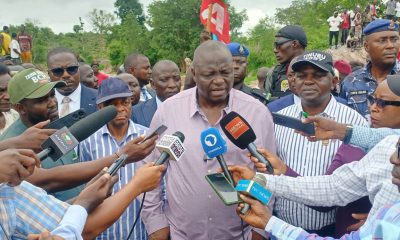
FG Plans Multipurpose Dam to Improve Water Supply, Agriculture in Plateau Communities
-

 News13 hours ago
Shettima, Soludo Back Oborevwori’s Investment Drive at Delta Economic Summit
-

 News13 hours ago
Gov. Kefas Reaffirms Education Reform Agenda at Taraba Polytechnic’s Maiden Convocation
You must be logged in to post a comment Login