By Xu Jun, People’s Daily
Food waste is more and more becoming an issue of the Chinese society as life quality gets better and better nowadays. However, apart from moral condemnation, there was no way to punish the practices of food waste in the past.
Thanks to a draft law on preventing food waste deliberated by the 24th session of the 13th National People’s Congress (NPC)Standing Committee on Dec. 22 last year, there is now a legal basis to bring wasters to book.
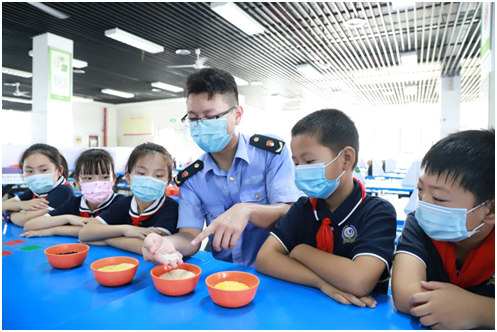
According to the law, the providers of catering services shall remind customers of not wasting food by posting conspicuous anti-food waste signs or verbal explanation, and guide them to order food based on actual demand.
Enterprises with canteens shall enhance inspection during meal time and timely rectify food waste practices. For online food delivery platforms, conspicuous reminders shall be displayed to guide consumers to order food in accordance with their actual needs.
Similar provision is also made to regulate the tourism industry. Tour service providers shall guide tourists to dine in a civilized and healthy manner, according to the draft law. Tour agencies and tour guides must remind tourists to order or fetch food in accordance with their actual needs.
According to the draft law, catering service providers can charge consumers who waste too much food for waste disposal. Catering service providers may face a fine ranging from 1,000 yuan to 10,000 yuan ($1,196) if they encourage or mislead consumers into ordering excessive quantities of food which causes waste, and refuse to rectify the problem after being warned by market supervision departments, according to the draft law.
In recent years, speed eating shows enjoyed huge popularity on Chinese social media platforms. What’s behind the bizarre videos is a profit chain. Those who film these videos might be invited for endorsements after they go viral. Many of these videos are actually edited, and the eating influencers would also induce vomiting after filming. These videos not only spread unhealthy dietary habits, but also waste food.
The Cyberspace Administration of China said in an announcement last September that its local branches, in a month-long activity aiming to clamp down onspeed eating shows, punished 338 livestream platforms and shut down over 74,000 webcasts. In addition, 105,000 accounts were banned and 13,600 punished.
The draft law stipulates that shows or audio contents that encourage food waste shall be banned. Online video and audio content providers must remove relevant contents and even stop their services in cases of gross violation.
According to the law, TV stations, as well as online video and audio content providers may face a warning from authorities and cyberspace administrationsand be requested to rectify if they make, broadcast or transmit shows or audio contents that encourage food waste. Violators who refuse to correct the problem will be fined from 10,000 yuan to 100,000 yuan.In addition, they may be requested to suspend relevant businesses and held accountable in accordance with the law.
The draft law clarifies that the food and strategic reserve administration shall enhance food storage and management. They also need to implement food storage, transport and processing standards with relevant departments of the State Council. Catering service providers shall also use big data and other technologies to analyze and predict the needs of consumers, and manage food purchase, transport and storage in science-based manners to prevent and reduce waste. The country would improve its food storage, transport and processing standards, promote new technologies, techniques and equipment for food processing, and guide food processing and comprehensive utilization of byproducts, in a bid to reduce food wastage.
“China is a broad country with a long history of food culture. Different regions of the country vastly differ in diet custom, due to their respective geographical locations, resources and conventions. Therefore, food waste might also be different in these regions,” said Yue Zhongming, spokesperson with the NPC Standing Committee’s Legislative Affairs Commission.
He said local authorities shall make their own regulations in accordance with actual situation and demands to stop food waste, and further refine the measures in the draft law.