
Amgbare Ekaunkumo, Yenagoa
In line with the zero tolerance for crime policy of the prosperity administration of Governor Douye Diri, the Senior Special Assistant (SSA) to the governor on Tourism, Mr. Piriye Kiyaramo has reiterated that Bayelsa is not a safe ground for traffickers in persons, warning that hotels and other tourism establishments found to be culpable in aiding and abetting human trafficking will be made to face the law.
Mr Kiyaramo regretted that human trafficking is a devastating, widespread and critical issue that unfortunately relies on travel and tourism networks to operate, adding that “as a sector, we must do everything in our power to help eradicate the problem so that people may move freely and safely without being coerced”.
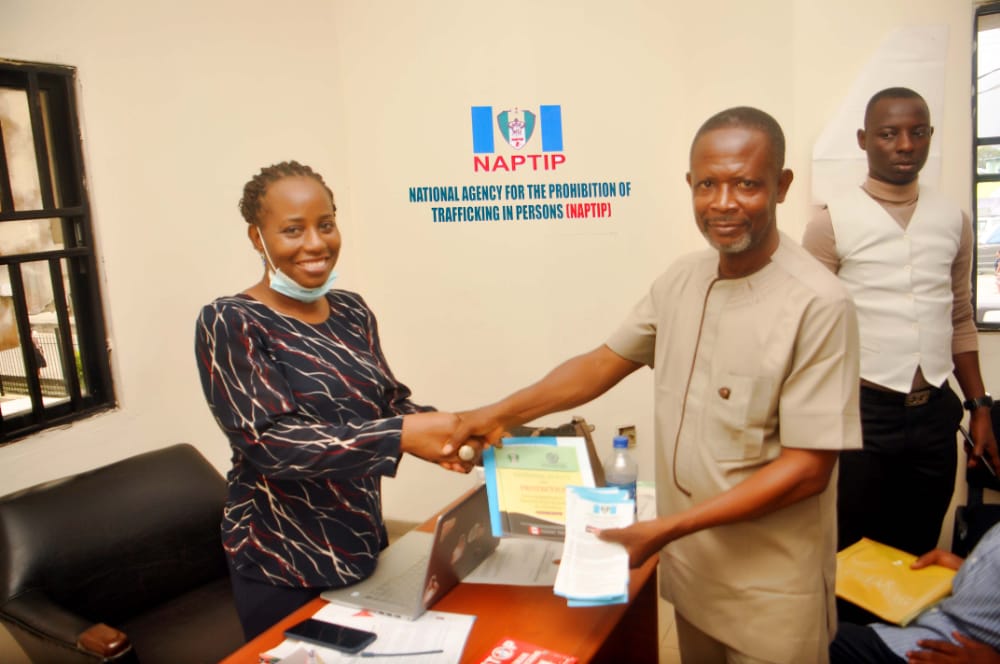
The SSA to the governor on Tourism stated this when he visited the Bayelsa State Commander of the National Agency for the Prohibition of Trafficking in Persons and Other Related Matters, (NAPTIP), Mrs Abieyewa Ikhidero in her office in Yenagoa, lamenting that the aspiration for quick money and search for greener pastures have been the driving force behind sex tourism participants, whether with consent, like in the case of prostitutes or without consent.
He said some tourism establishments such as hotels and resorts often unknowingly sell rooms to traffickers for exploitation, informing that over the last decade, transportation and hotel professionals have however recognized their responsibility on the front lines of identifying potential trafficking victims, just as he assured the state command of effective collaboration to eradicate the crime in the state.
The governor’s aide said traffickers usually move their victims on airplanes, buses, trains, and taxis with the intention of frequently relocating them to avoid detection by law enforcement agents, while they target big markets, such as major sporting events and vacation destinations.
He stressed the urgent need for the training of staff of hotels and airlines on how to spot and report signs of trafficking victims, pointing out that tourism being an industry that relies heavily on a service sector, driven by a willing population with the abilites to maintain a “safe or paradise-like” reputation to attract visitors and tourists alike, also has a responsibility to fight against the crime of human trafficking and sexual exploitation.
Earlier, the Bayelsa State Commander of the National Agency for the Prohibition of Trafficking in Persons and Other Related Matters (NAPTIP), Mrs Abieyewa Ikhidero had expressed worry over the rising cases of human trafficking in state, while soliciting for support from the state government, corporate organisations and well meaning individuals.
Mrs Ikhidero who commended the state governor for his zero tolerance for crime, explained that trafficking in persons includes all acts and attempted acts involved in the recruitment, transportation within or across Nigerian borders, purchase, sale, transfer, receipt or harboring of person involving the use of deception, coercion or debt bondage for the purpose of placing or holding the person, whether for or not involuntary servitude (domestic, sexual or reproductive) in forced or bonded labour or in slave-like conditions.
According to the state Commander, hundreds of Nigerian women and girls are trafficked each year into forcible prostitution and made to endure slave-like conditions in foreign countries, notably Italy, and the Middle East, informing that the command is stepping up its efforts to expose and erradicate this abusive and illegal practices.
It will be recalled that the World Travel and Tourism Council (WTTC) encourages governments to enact legislation that recognises human trafficking as a crime that occurs throughout the entire travel and tourism chain and to develop resources and support needed to fight against the crime.
The United Nations defines human trafficking as the recruitment, transportation, transfer, harboring, or receipt of persons by improper means (such as force, abduction, fraud, or coercion) for an improper purpose including forced labor or sexual exploitation.