
Business
CBN bets on new FX rules to deepen market stability, transparency

By Abigail David
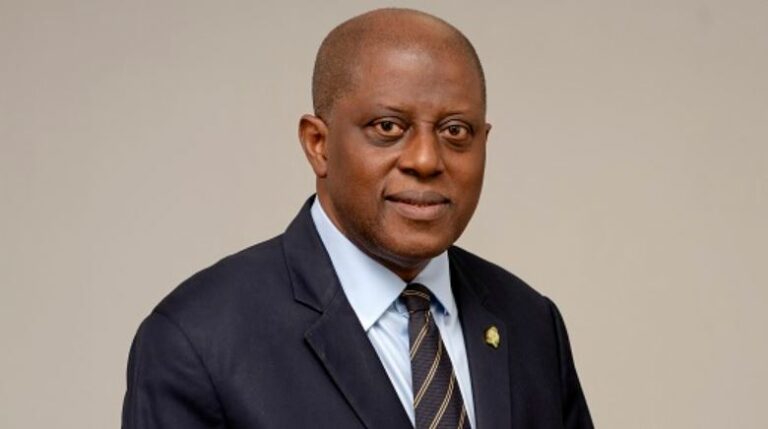
The Central Bank of Nigeria has unveiled the fourth edition of its Foreign Exchange Manual, introducing new rules aimed at improving transparency, strengthening compliance and enhancing efficiency in Nigeria’s foreign exchange market.
The revised manual, which took effect on June 1, marks the first comprehensive update since 2018 and forms part of the apex bank’s broader reform agenda to restore confidence and deepen liquidity in the foreign exchange market.
Speaking at the launch, CBN Governor, Olayemi Cardoso, said the review became necessary due to significant changes in global and domestic economic conditions over the past decade.
According to him, foreign exchange remains a critical driver of price stability, trade, capital flows and investor confidence, making a modern regulatory framework essential for market efficiency.
Cardoso noted that ongoing reforms in the foreign exchange market required a more coherent and forward-looking framework capable of addressing emerging realities.
The Deputy Governor in charge of Economic Policy, Muhammad Abdullahi, described the manual as part of a wider strategy initiated by the current leadership of the apex bank to improve transparency, strengthen market discipline and encourage participation through official channels.
Among the key changes introduced are the harmonisation of Personal Travel Allowance and Business Travel Allowance transactions with revised Bureau de Change guidelines, with 75 per cent of such transactions now to be processed electronically and only 25 per cent allowed in cash.
The manual also increases allowable advance payments for imports from 15 per cent to 30 per cent, a move expected to provide businesses with greater flexibility in settling transactions with foreign suppliers.
To encourage exports, the CBN has removed charges associated with processing Form NXP and introduced new provisions covering service exports, technology-sector remittances and transactions under the Pan-African Payment and Settlement System.
Other reforms include the introduction of Non-Resident Investment Accounts and Non-Resident Ordinary Accounts, as well as approval for foreign companies in the extractive sector to repatriate 100 per cent of export proceeds.
The apex bank also removed the mandatory Form A requirement for remittances through ordinary domiciliary accounts, although authorised dealer banks will continue to verify the legitimacy of transactions.
In addition, the revised guidelines permit tuition fee payments of up to $25,000 per semester for Nigerian students studying abroad and allow transfers between export proceeds domiciliary accounts and ordinary domiciliary accounts under specified conditions.
Commercial banks welcomed the reforms, describing them as a continuation of efforts to build a transparent and rules-based foreign exchange market.
Group Managing Director of United Bank for Africa, Oliver Alawuba, said the revised manual would reinforce transparency, ethical conduct, stronger documentation and improved oversight within the market.
Similarly, Group Managing Director of Access Holdings Plc, Roosevelt Ogbonna, said the framework would reduce ambiguity and promote market discipline among participants.
Representing the Minister of Finance and Coordinating Minister of the Economy, Taiwo Oyedele, Permanent Secretary for Special Duties, Mohammed Danjuma, described the manual as an important component of Nigeria’s economic reform agenda aimed at promoting macroeconomic stability and sustainable growth.
Analysts say the success of the revised framework will depend largely on consistent implementation, effective enforcement and sustained policy stability across the financial system.



By Abigail David
Bitcoin surged above $77,000 on Friday as investors responded positively to renewed hopes for US cryptocurrency legislation and the Treasury’s decision to increase its bond buybacks.
The world’s largest cryptocurrency by market value rose 6.9% to $77,675.94 after touching its highest level since May. It has gained more than 20% since Wednesday, marking its third straight day of gains exceeding 5%.
The rally followed US President Donald Trump’s call on Wednesday for lawmakers to pass the Clarity Act, a cryptocurrency bill that has stalled in the Senate.
Bitcoin also benefited from the US Treasury’s move to double its purchases of government bonds in an effort to reduce long-term borrowing costs. The move boosted investor appetite for riskier assets.
The Treasury intervention came after the 30-year US Treasury yield climbed to levels last seen in 2007, shortly before the global financial crisis.
Lower bond yields can make safer investments less attractive, potentially encouraging investors to put more money into riskier assets such as cryptocurrencies.
“Renewed optimism around crypto progress in Washington helped light a fire under Bitcoin,” said Bret Kenwell, a US investment analyst at eToro.
He added that falling Treasury yields and short-position liquidations provided further momentum for the rally.
Business
Gov Kefas Launches Youth Enterprise Fund, Empowers Over 200 Taraba Youths With N500,000 Each

By Aga Samuel Imoter, Jalingo
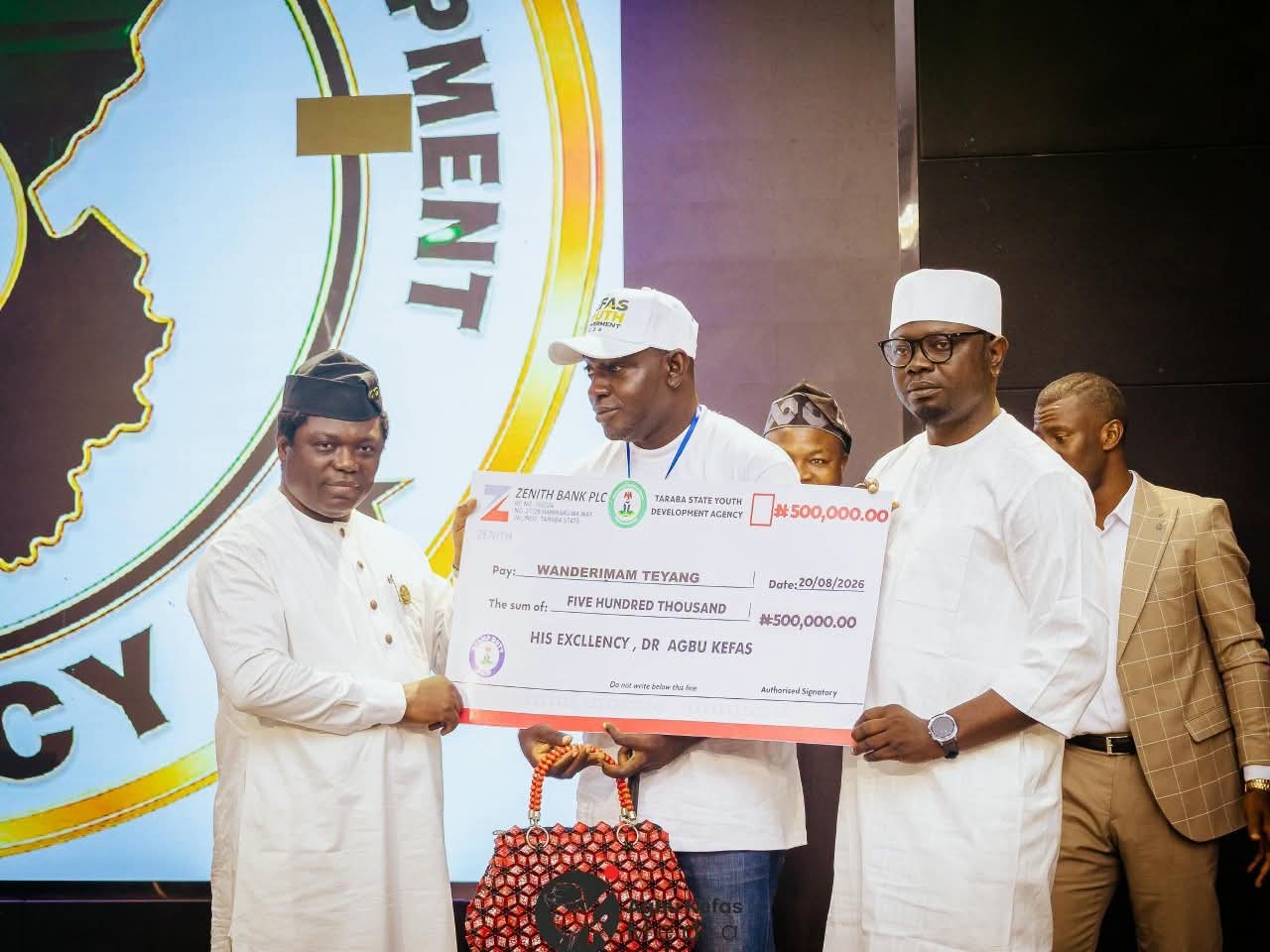
Taraba State Governor, Dr Agbu Kefas, has launched the Kefas Youth Enterprise Fund, disbursing N500,000 each to more than 200 young beneficiaries as part of efforts to promote entrepreneurship, self-reliance and economic empowerment among youths in the state.
The programme was officially flagged off on Thursday at the Banquet Hall of the TY Danjuma House, Jalingo, with the governor describing youth empowerment as a critical component of his administration’s development agenda.
Kefas said his administration was committed to creating sustainable economic opportunities for young people and providing them with the support required to build viable enterprises and contribute meaningfully to the development of Taraba State.
According to him, empowering young people goes beyond providing financial assistance. He stressed the need to create an environment where youths can develop businesses, acquire sustainable livelihoods and assume greater responsibility for their economic future.
He charged the beneficiaries to invest the funds wisely, focus on viable businesses and avoid activities capable of undermining their future.
The governor further disclosed that beneficiaries under the next phase of the programme would receive N1 million each, indicating the government’s intention to expand its youth-focused economic intervention.
Kefas also commended President Bola Ahmed Tinubu for his support for Taraba State and his administration.
Minister commends initiative
Speaking at the event, the Minister of Youth Development, Ayodele Olawande, commended the governor for allocating substantial resources to youth development and economic empowerment.
Olawande urged the beneficiaries to treat the financial assistance as seed capital, stressing the importance of investing in sustainable businesses, expanding their enterprises and creating employment opportunities for other young people.
He also called on other state governments to emulate Taraba by developing practical youth empowerment initiatives capable of improving access to capital and expanding opportunities for entrepreneurship.
More beneficiaries expected
The Chairman of the Taraba State Youth Development Agency, Hon Gara Nongha, said the initiative was designed to place tangible economic opportunities in the hands of young people across the state.
Nongha disclosed that more than 200 youths would benefit from the financial intervention, enabling them to establish new businesses or strengthen existing enterprises.
He said the agency would continue to develop and implement programmes focused on entrepreneurship, leadership development and economic independence for young people.
Nongha also appealed to the North East Development Commission (NEDC) to establish a Taraba Youth in Agriculture Scheme, noting that targeted investment in youth participation in agriculture could create jobs, strengthen food production and expand economic opportunities across the state.
Youth Development Roadmap unveiled
A major highlight of the ceremony was the unveiling of the Taraba State Youth Development Roadmap, a strategic framework designed to provide direction for youth-focused policies, programmes and interventions in the state.
The roadmap is expected to strengthen coordination among relevant stakeholders and provide a structured approach to addressing the economic, social and leadership aspirations of young people.
The Taraba State Youth Development Agency also honoured Governor Kefas with an award in recognition of his administration’s commitment to youth empowerment and development.
The Minister of Youth Development was similarly honoured for his contribution to youth-focused initiatives.
The ceremony featured cultural performances by the Taraba State Arts Council and attracted government officials, youth representatives, community stakeholders and other participants.
The launch of the enterprise fund represents a significant component of the state government’s ongoing efforts to expand access to economic opportunities, encourage youth entrepreneurship and strengthen the capacity of young people to become active contributors to Taraba’s economic development.

By Abigail David
Apple will change how third-party apps seek users’ consent for personalised advertising on iPhones and iPads after Germany’s competition regulator raised concerns about the company’s treatment of competing apps.
The Bundeskartellamt said Apple had offered binding commitments to address the concerns, bringing its competition investigation to an end.
The regulator said Apple’s App Tracking Transparency framework required third-party app providers to obtain additional consent through Apple-designed prompts for certain types of cross-company data use. However, the requirements did not apply in the same way to Apple’s own services.
Bundeskartellamt President Andreas Mundt said Apple could provide strong privacy protections, but its rules should not give its own products an advantage over competitors.
Under the new commitments, Apple will make consent prompts for its own services and third-party apps more similar. It will also remove wording and symbols that could discourage users from granting consent to third-party apps.
App developers will have greater flexibility to combine Apple’s consent requests with those required under data protection laws, provided the process remains clear to users.
The regulator stressed that the changes are not intended to increase consent rates for personalised advertising but to ensure users can make free and informed choices.
Apple has four months to implement the changes. The commitments will remain in force for seven years and will be monitored by an independent trustee.
The investigation began in June 2022 after the regulator found Apple held a position of paramount significance across markets. Germany’s Federal Court of Justice confirmed the finding in March 2025.


Women Must Become Co-Creators of Prosperity, Minister Says

Bella Okagbue Breaks Silence on Sheggz Breakup, Addresses Marriage and Engagement Plans

Bitcoin Surges Above $77,000 on US Crypto Policy Optimism
-

 News24 hours ago
7th China-Africa Media Cooperation Forum Opens in Beijing
-
News21 hours ago
Gov Sule Commends DSS, Other Security Agencies Over Rescue of Kidnapped Victims in Nasarawa State
-

 Business11 hours ago
Gov Kefas Launches Youth Enterprise Fund, Empowers Over 200 Taraba Youths With N500,000 Each
-
 News4 hours ago
Women Must Become Co-Creators of Prosperity, Minister Says
-
News11 hours ago
Bandits Attack Kaduna Millennium City, Kill Vigilante, Abduct Woman, Son
-

 Metro plus5 hours ago
46 Bodies Recovered After Sokoto Boat Accident
-
 Entertainment4 hours ago
Bella Okagbue Breaks Silence on Sheggz Breakup, Addresses Marriage and Engagement Plans
-

 News5 hours ago
WAEC releases 2026 WASSCE certificates on digital platform
You must be logged in to post a comment Login