
By Milcah Tanimu
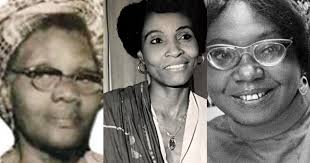
As Nigeria reflects on its journey to independence, it’s essential to honor the women whose bravery and determination shaped its history. These remarkable figures broke barriers in male-dominated spaces and fought for their beliefs, leaving a lasting impact on contemporary Nigeria.
Funmilayo Ransome-Kuti (1900–1978)
Funmilayo Ransome-Kuti, known as the “Lioness of Lisabi,” was a pioneer in women’s rights and activism. Born on October 25, 1900, in Abeokuta, Ogun State, she became the first female student at Abeokuta Grammar School. Ransome-Kuti was also the first woman to drive a car in Nigeria. As a dedicated teacher and activist, she fought against colonial taxation and championed women’s rights, securing her place as a key figure in Nigeria’s history.
Margaret Ekpo (1914–2006)
Margaret Ekpo was born on July 27, 1914, in Creek Town, Cross River State. She was a prominent political figure and fashion icon. After her father died, she pursued political activism by attending Constitutional Conferences that led to Nigeria’s independence in 1960. Known for using fashion as a form of protest against colonial rule, Ekpo’s legacy continues to inspire many.
Hajia Gambo Sawaba (1933–2001)
Hajia Gambo Sawaba was born in February 1933. She became a courageous activist in Northern Nigeria. Although married at 13 after losing her parents, she joined the Northern Elements Progressive Union (NEPU). Sawaba campaigned against British colonial rule and forced child marriages. Her activism led to her imprisonment 16 times, showcasing her incredible bravery.
Flora Nwapa (1931–1993)
Flora Nwapa was born in 1931 and became the first African woman to publish a novel in English. Her groundbreaking work, *Efuru*, was released in 1966. Nwapa used her writing to highlight Igbo culture from a female perspective. After the Biafran war, she aided orphans and refugees, showing her commitment to her community.
Hannah Idowu Dideolu (HID) Awolowo (1915–2015)
HID Awolowo, wife of Chief Obafemi Awolowo, played a key role in Nigeria’s political landscape. She supported her husband’s political career and stepped into politics during his imprisonment. Awolowo participated in efforts to form the United Progressive Grand Alliance (UPGA). As a devoted matriarch, she upheld her husband’s legacy until her passing at 99 in 2015.
These women exemplify courage and determination. Their legacies continue to inspire future generations in Nigeria.