
News
CHIEF AMB. EKA DICKSON A’ADU SALUTES GOVERNOR ALIA AT 60


Chief Ambassador Eka Dickson A’adu, the Chief Executive Officer of Ekason Groups of Companies — a reputable conglomerate with diverse interests spanning commerce, real estate, trade, and community development — and a distinguished community leader of Benue State extraction, has risen with a heart full of gratitude and admiration to celebrate His Excellency, Rev. Fr. Dr. Hyacinth Iormem Alia, the Executive Governor of Benue State, as he marks his 60th birthday — a golden milestone in the life of a man who has become synonymous with transformation, courage, and servant leadership. Chief Amb. Eka, a man who has long held the conviction that a governor who builds roads builds futures and a leader who bridges divides builds a people, found in Governor Alia the living proof of that conviction — a builder and a bridge-maker in the truest and most literal sense of both words.
In a heartfelt tribute made available to this publication, Chief Amb. Eka described Governor Alia as a rare breed of leader — one whose footprints are not found in the pages of press releases alone, but etched permanently in the concrete of roads, the steel of bridges, and the grateful hearts of millions of Benue people who can today travel with dignity, conduct business with ease, and look upon their state capital with well-deserved pride.
When Governor Alia assumed office on the 29th of May, 2023, the streets of Makurdi told a tale of neglect — potholed, waterlogged, and weary. Yet with the single-minded focus of a man on a divine assignment, he wasted no time. He simultaneously flagged off the construction of sixteen township roads within the Makurdi metropolis, a feat that stunned critics into silence and set the tone for what was to become a legacy of unparalleled infrastructure renewal. That number has since grown to over fifty road projects cascading across Benue State like arteries of progress — connecting communities, opening markets, and restoring the dignity of a people who had long navigated the indignity of impossible terrain. As a businessman whose operations span multiple sectors and who travels regularly across the length and breadth of the state, Chief Amb. Eka affirmed with firsthand authority that the roads now being laid in Makurdi, Gboko, and beyond are a testament to a governor who truly means business.
Beyond the roads themselves, Chief Amb. Eka was emphatic that the construction of modern underpasses and overhead bridges in both Makurdi and Gboko represents the boldest expression yet of Governor Alia’s transformative vision. The flyover at the High-Level roundabout in Makurdi and the underpass at Gyado Junction in Gboko were not merely engineering projects — they were declarations. They declared that Benue State had arrived on the map of modern infrastructure, that its cities deserved the same dignity afforded to any other state capital in the federation, and that the era of traffic gridlock strangling commerce and daily life was firmly over. For a state that had languished in infrastructural stagnation for years, these structures stand as enduring monuments to what becomes possible when leadership is purposeful, courageous, and unafraid to dream big. Every morning that motorists ease through those underpasses and over those bridges, they move through a corridor built from a governor’s sacrifice, commitment, and unyielding love for his people.
Chief Amb. Eka equally praised Governor Alia for understanding that great governance does not stop at the gates of the state capital. The Governor’s administration has pursued an ambitious programme to link virtually all Local Government Area headquarters across Benue State to Makurdi through quality, durable roads — roads that do not surrender to the first rains but are built to serve generations yet unborn. Of particular note, and one that Chief Amb. Eka described as touching his heart most deeply, is the ongoing reconstruction of the Oju-Awajir road. This vital corridor, which had for years condemned the people of Oju and surrounding communities to near-isolation, is being transformed into a modern thoroughfare worthy of the industrious people it serves. Its completion, he noted, will not only ease the movement of goods and persons but will unlock the enormous agricultural and economic potential of those communities, weaving them permanently into the fabric of Benue’s development story. “This,” he declared, “is governance with a conscience.”
To understand Governor Alia the builder, Chief Amb. Eka noted, one must first appreciate Governor Alia the man. Born on the 15th of May, 1966, in the quiet hills of Mbangur, Mbadede in Vandeikya Local Government Area, and educated across some of the finest institutions in Nigeria and the United States of America — including a Master’s degree in Religious Education from Fordham University, Bronx, New York, and a Master’s in Biomedical Ethics from Duquesne University, Pennsylvania — Governor Alia is a leader shaped by intellectual rigour, spiritual discipline, and a lifetime of humanitarian service. He did not arrive at Government House as a career politician seeking personal comfort. He arrived as a servant leader carrying the full and solemn weight of a people’s hope. His inaugural declaration — “You were waiting for Hope” — was not political theatre. It was a covenant. And on this, his 60th birthday, that covenant is being honoured visibly and verifiably on every newly tarred road, every standing bridge, and in every community now within reach of Makurdi and of opportunity.
Chief Amb. Eka Dickson A’adu himself is no stranger to the weight of responsibility and the demands of leadership. Hailing from a family with deep roots in the commercial and philanthropic life of Benue State, he has built Ekason Groups of Companies into a reputable institution serving the people of the state and beyond across multiple sectors. His business philosophy has always been anchored on one conviction: when the land prospers, its people prosper, and when its people prosper, enterprise thrives. It is from this vantage point — as a businessman, a community leader, and a proud Benue son — that he stands to celebrate Governor Alia, affirming that the Governor’s developmental strides have not only transformed the state’s infrastructure but have improved the business climate, reduced logistics costs, and opened fresh corridors of opportunity for entrepreneurs, traders, farmers, and small business owners across Benue State.
In his own words, Chief Amb. Eka closed with a solemn, public, and unequivocal pledge:
“Your Excellency, on this milestone birthday, I make this pledge publicly and unequivocally: I stand fully behind you. I pledge my unwavering support — moral, social, and material — for your re-election bid in 2027. Benue State cannot afford to interrupt a journey that has only just found its stride. The roads you are building must be completed. The bridges you have raised must be maintained. The vision you carry must be seen to its fullest fruition. May God Almighty grant you many more years of health, wisdom, and the strength to serve. Happy 60th Birthday, Your Excellency. The Heart of the Nation beats proudly because of you.”
— Chief Amb. Eka Dickson A’adu
Chief Executive Officer, Ekason Groups of Companies
Community Leader & Philanthropist, Benue State

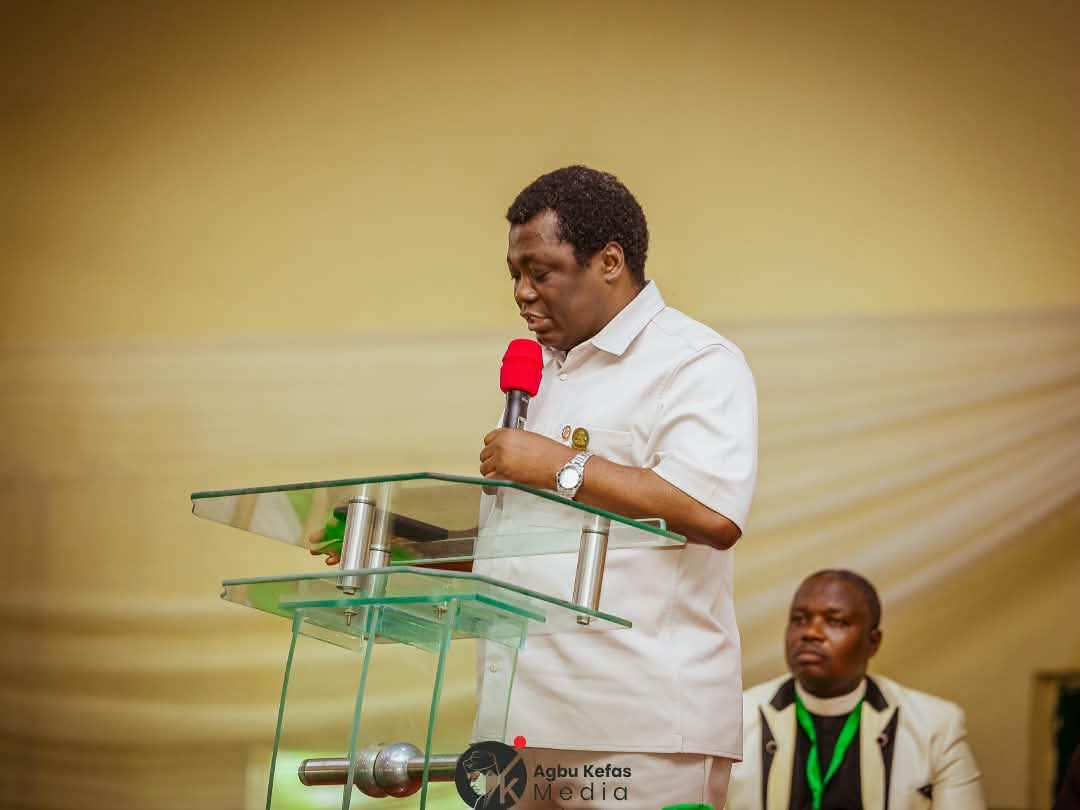
By Aga Samuel Imoter, Jalingo
Taraba State Governor Agbu Kefas has urged Christian leaders to defend truth, speak to political authorities when necessary and promote peace and moral values amid the social, economic and security challenges facing the country. Kefas made the call on Wednesday, August 19, 2026, while addressing participants at the Ministers’ Conference organised by the Christian Association of Nigeria (CAN), Taraba State Chapter, in Jalingo.
The conference, themed “The Church and the State: Partners in God’s Plan in a Changing World,” brought together Christian ministers and leaders to discuss the role of the Church in nation-building, peacebuilding and good governance. The governor said government and the Church have distinct constitutional and spiritual responsibilities but could collaborate in areas that promote peace, development and social stability.
He urged Christian leaders to uphold truth, compassion, justice and moral discipline while advising political authorities without allowing partisan interests to compromise the Church’s independence. “The Church must not become an extension of any political party,” Kefas said, urging ministers to provide constructive guidance and resist divisions based on politics, ethnicity or personal interests.
Kefas also called on religious leaders to use their platforms to discourage corruption, drug abuse, violence, hatred and injustice, while encouraging young people to pursue legitimate opportunities. He assured residents that his administration would continue to promote fairness, justice and peaceful coexistence while protecting citizens’ rights and freedom of worship.
The governor also expressed readiness to deepen collaboration with religious institutions in education, peacebuilding, community development and efforts to address drug abuse. He appealed to citizens and religious leaders to embrace unity and forgiveness, saying the development of Taraba required collective responsibility.
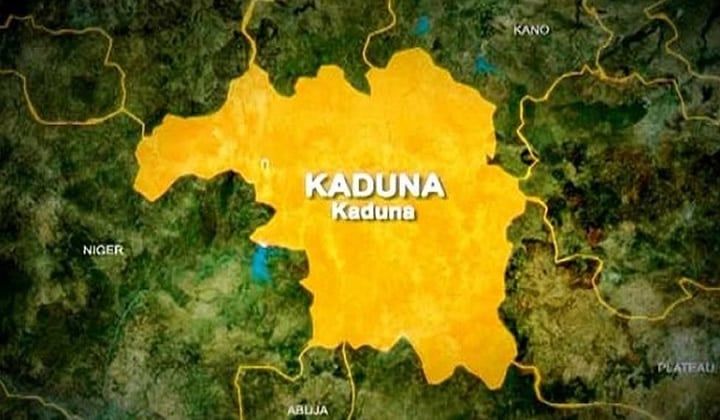
By Achadu Gabriel, Kaduna
The Kaduna State Police Command will hold a three-day Police–Youth Engagement Programme from Thursday, August 20, to Saturday, August 22, 2026, as part of activities to mark International Youth Day and strengthen community efforts to prevent crime and promote peace.
The programme, themed “Different Contexts, Common Aspirations,” will bring together police officers, youths, community leaders, youth organisations and other stakeholders.In a statement issued on Wednesday, the Police Public Relations Officer, DSP Mansir Hassan, said the initiative was in line with a directive by the Inspector-General of Police, IGP Olatunji Rilwan Disu, to deepen engagement between the police and young people.
According to the Command, activities will include a Walkathon/Peace Walk aimed at promoting unity, healthy living and responsible citizenship. A medical outreach will also provide basic healthcare services and health awareness to young people and community members.
The programme will conclude with a lecture and interactive session addressing crime prevention, cultism, drug abuse, political and digital thuggery, responsible social media use, youth participation in community policing and emerging security challenges.
The Commissioner of Police, Kaduna State Command, CP Rabiu Muhammad, urged youths, community leaders and other stakeholders to participate actively in the programme. He called on participants to support efforts to promote peace, unity, responsible citizenship and a safer Kaduna State.
From Noah Ocheni, Lokoja
The Federal University Lokoja (FUL) has matriculated 900 postgraduate students for the 2025/2026 academic session, with the Vice-Chancellor, Prof. Ggenga Solomon Ibileye, reaffirming the institution’s commitment to expanding postgraduate opportunities and strengthening its research culture. Ibileye made the commitment during the postgraduate matriculation ceremony held at the university’s permanent site in Lokoja.
The Vice-Chancellor said research remained central to the value of postgraduate education and stressed the university’s commitment to maintaining and improving its academic standards.
He said postgraduate students would undergo prescribed coursework and examinations, while their projects, theses and dissertations would be subjected to originality and similarity checks. According to him, students would also be required to defend research proposals, participate in internal seminars and submit their work to external examiners.
“These processes ensure that the certificate eventually conferred by the university is worth the years a candidate will spend earning it,” he said. Ibileye said the university currently offers postgraduate programmes at the Postgraduate Diploma, Master’s and Doctor of Philosophy levels, covering both professional and academic disciplines.
He commended the Provost of the postgraduate college, Prof. Matthew Ola-Rotimi Ajayi, for his leadership and expressed confidence that the institution’s academic standards would continue to improve. The Vice-Chancellor congratulated the new students and welcomed them to the postgraduate scholarly community of the university.


ADP Presidential Candidate Aliyu Bin Abbas Signs National Peace Accord

Kefas Urges Church Leaders to Defend Truth and Promote Peace in Taraba

Kaduna Police to Hold Three-Day Youth Engagement Programme on Crime and Drug Abuse
-
News19 hours ago
KADSG Faults ADC Guber Candidate’s Criticism, Defends Sani’s Education Funding Records
-
News18 hours ago
24 Bandits Killed As Army, DSS, Vigilantes Foil Mass Kidnap in Katsina Community, Rescue Victims
-
 News12 hours ago
Middle Belt Forum Says 2031 Presidency Should Return to Region
-
 News12 hours ago
Jigawa Governor Namadi Deserves More Recognition, Says Dr Hafiz Muktar
-
 News11 hours ago
Kefas Urges Church Leaders to Defend Truth and Promote Peace in Taraba
-
 News11 hours ago
Kaduna Police to Hold Three-Day Youth Engagement Programme on Crime and Drug Abuse
-
 Uncategorized7 hours ago
ADP Presidential Candidate Aliyu Bin Abbas Signs National Peace Accord
-
 News12 hours ago
Benue Assembly Elects Peter Ipusu as New Majority Leader
You must be logged in to post a comment Login