
By Michael Onjewu, Abuja
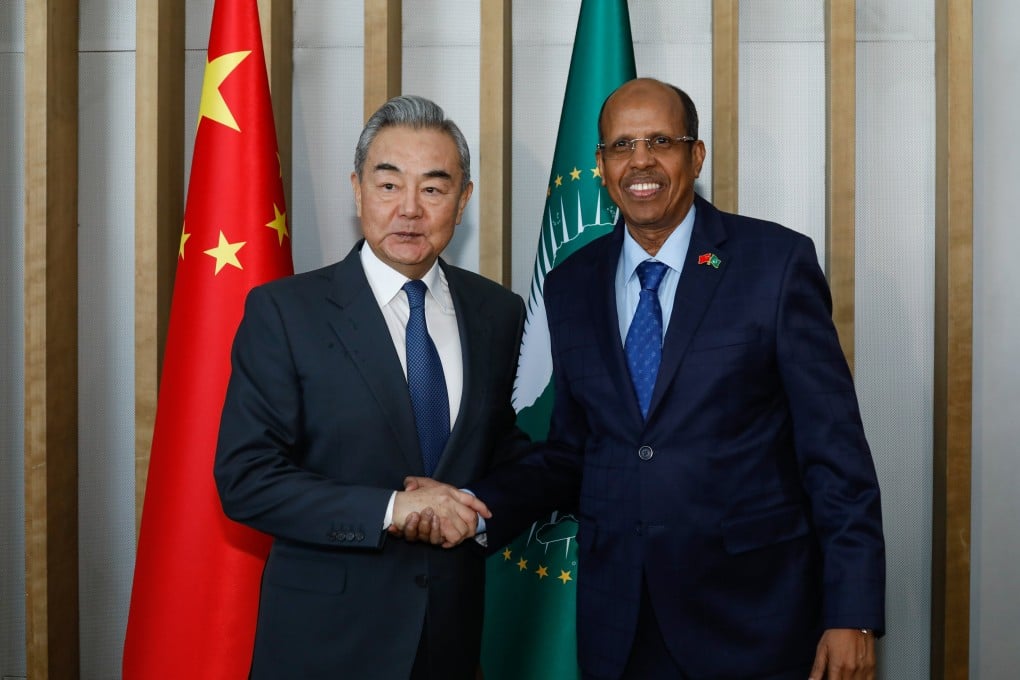
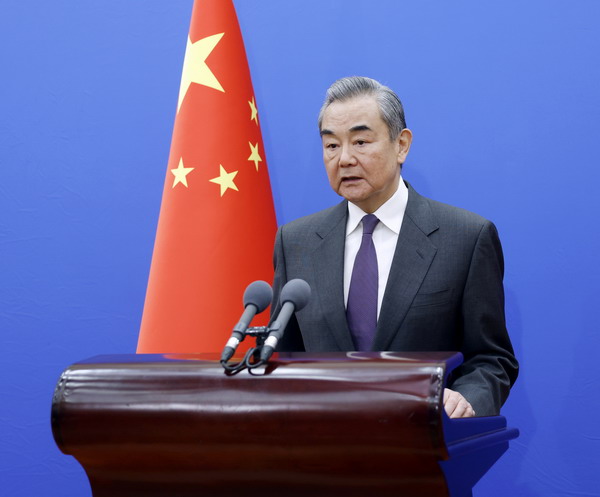
In a ritual that has become as predictable as it is symbolically potent, Chinese Foreign Minister Wang Yi embarked on his first overseas trip of 2026 to Africa, visiting Ethiopia, Tanzania, and Lesotho from January 7 to 12.
This marks the 36th consecutive year that a Chinese foreign minister has chosen the continent as their inaugural destination, a tradition that began in 1991 and demonstrates Beijing’s unwavering commitment to Africa as a cornerstone of its global diplomacy.
The itinerary, which included a stop at the African Union (AU) headquarters in Addis Ababa to launch the China-Africa Year of People-to-People Exchanges, comes at a time of heightened geopolitical tensions, economic uncertainties, and shifting alliances. As the world grapples with U.S. policy volatility, Wang’s visit signals China’s intent to position itself as a reliable partner for African nations navigating an increasingly fragmented international order.
The choice of Ethiopia, Tanzania, and Lesotho this year reflects a calculated mix of historical sentiment and forward-looking strategy.
Ethiopia, as the seat of the African Union (AU), served as the stage for the official launch of the 2026 China-Africa Year of People-to-People Exchanges. By starting in Addis Ababa, Beijing reaffirmed its support for African integration and the AU’s “Agenda 2063.” Ethiopia’s role as a newly minted BRICS member further positions it as a bridge for China into the Horn of Africa.
Tanzania, on the other hand, represents the historical soul of the partnership. As the two nations celebrate the 70th anniversary of diplomatic ties this year, the focus has shifted toward the revitalisation of the TAZARA Railway, a monumental project from the 1970s that is now being reborn as a “Prosperity Belt” through high-tech modernisation and green logistics.
Lesotho’s inclusion demonstrates China’s “no country left behind” philosophy. By visiting one of the continent’s smaller, landlocked nations, Wang Yi demonstrated that China’s interest extends beyond resource-rich giants to include partners focused on agricultural modernisation, energy transition, and human capital development.
Wang’s tour is not merely ceremonial; it embodies China’s Global Governance Initiative, emphasising UN-centric multilateralism and development-oriented partnerships in an era of great power rivalry.
This trip is the first major follow-up to the 2024 FOCAC Beijing Summit, serving as a “road test” for the ambitious Ten Partnership Actions for modernization. The underlying consideration is clear: China aims to prove that its “All-Weather” friendship can withstand global turbulence. Amidst rising protectionism in the West, China is doubling down on Africa as a partner in “inclusive economic globalization.” By engaging with nations in the Horn of Africa and the South, China is positioning itself as a mediator and a stabilizer, emphasizing sovereignty and territorial integrity, a message that resonates deeply with African leaders wary of external interference.
In Ethiopia, both sides agreed to expand cooperation into emerging areas such as the digital economy, artificial intelligence and green energy. Ethiopia reaffirmed its adherence to the one-China principle, while China expressed support for Ethiopia’s independent development path and regional connectivity in the Horn of Africa. In Tanzania and Lesotho, discussions focused on aligning development strategies, upgrading trade through China’s zero-tariff policies, and advancing high-quality Belt and Road projects in infrastructure, energy and other productive sectors.
As of 2025, bilateral trade between China and Africa reached a record high of nearly $300 billion, supported by China’s landmark policy of granting zero-tariff treatment to 100% of tariff lines for products from 53 African nations. China has provided over RMB 130 billion in financial support and RMB 140 billion in insurance to African nations, translating into infrastructure marvels like the Lekki Deep Sea Port in Nigeria, Bagamoyo Port in Tanzania, the Chad-Sudan Railway, the high-speed Mombasa-Nairobi railway in Kenya, the Djibouti-Ethiopia railway, Ethiopia’s light rail, TAZARA’s refurbishment in Tanzania and various digital 5G networks transforming local economies from analog to digital. Other tangible outcomes include debt restructuring under the G-20 framework, and military grants worth RMB 1 billion to bolster African armed forces, alongside training for 6,000 personnel.
People-to-people exchanges have flourished through the “Cultural Silk Road,” with initiatives in education, cultural exchange, health and biodiversity protection.
In September 2025, the Chinese Embassy in Nigeria commissioned its 15th Chinese Corner at Government Secondary School, Nyanya, Abuja, as part of efforts to strengthen education, cultural exchange, and people-to-people diplomacy between the two countries.
The embassy hosted a variety of people-to-people exchange programs in 2025. Some of these include: China-Nigeria Singing Competition, China-Nigeria Wushu Championship, China-Nigeria Culture and Tourism Festival, International Day for Dialogue Among Civilizations, and International Chinese Language Day Celebration, among others.
The 2024 FOCAC summit in Beijing pledged $51 billion in credit and funding over three years in green initiatives, agriculture, and digital economy, areas that have already seen breakthroughs, such as Huawei’s role in Ethiopia’s telecom sector and solar projects in Lesotho.
To maximise mutual benefits, China and Africa should prioritise areas where synergies align with the continent’s Agenda 2063: infrastructure resilience, green energy transitions, digital infrastructure, and agricultural modernisation. Continent-wide, Beijing could expand BRI projects to include climate-adaptive railways and solar grids, while fostering trilateral partnerships with Western donors to mitigate debt risks.
Capacity-building programs, such as training 6,000 military personnel and joint biodiversity research, should be scaled to empower African institutions like the AU in global governance. Ways to achieve this include establishing dedicated FOCAC working groups for monitoring outcomes and leveraging zero-tariff policies to boost intra-African trade under the African Continental Free Trade Area (AfCFTA).
For Nigeria (China’s second-largest trading partner on the continent with trade volume surpassing $22.3 billion in 2025), cooperation should deepen in energy, mining, digital economy, and cultural exchanges under the 2024-2026 three-year plan. To enhance ties, Nigeria could negotiate technology transfers for green energy projects, such as solar farms and electric vehicle assembly, creating jobs and reducing oil dependency. In infrastructure, expanding Chinese financing for rail and ports would integrate Nigeria into regional supply chains.
Agricultural collaboration, including mechanization and agro-processing, could address food security, while space programs like NigComSat should evolve into joint satellite ventures for climate monitoring. From Nigeria’s perspective, diversifying beyond trade by attracting FDI in manufacturing and promoting cultural diplomacy would foster balanced growth. China, in turn, could support anti-terrorism efforts with equipment and training, aligning with Nigeria’s security needs.
In conclusion, Wang Yi’s 2026 African odyssey reaffirms China’s role as a steadfast ally, offering a model of cooperation that prioritises shared prosperity over hegemony. As global dynamics evolve, this partnership could redefine Africa’s place in the world if both sides seize the moment with bold, innovative steps.
Michael Onjewu is a Nigerian journalist based in Abuja.