
News
EFCC Seeks Stronger Collaboration Among Anti-Graft Agencies to Tackle Procurement Fraud

By Francis Wilfred
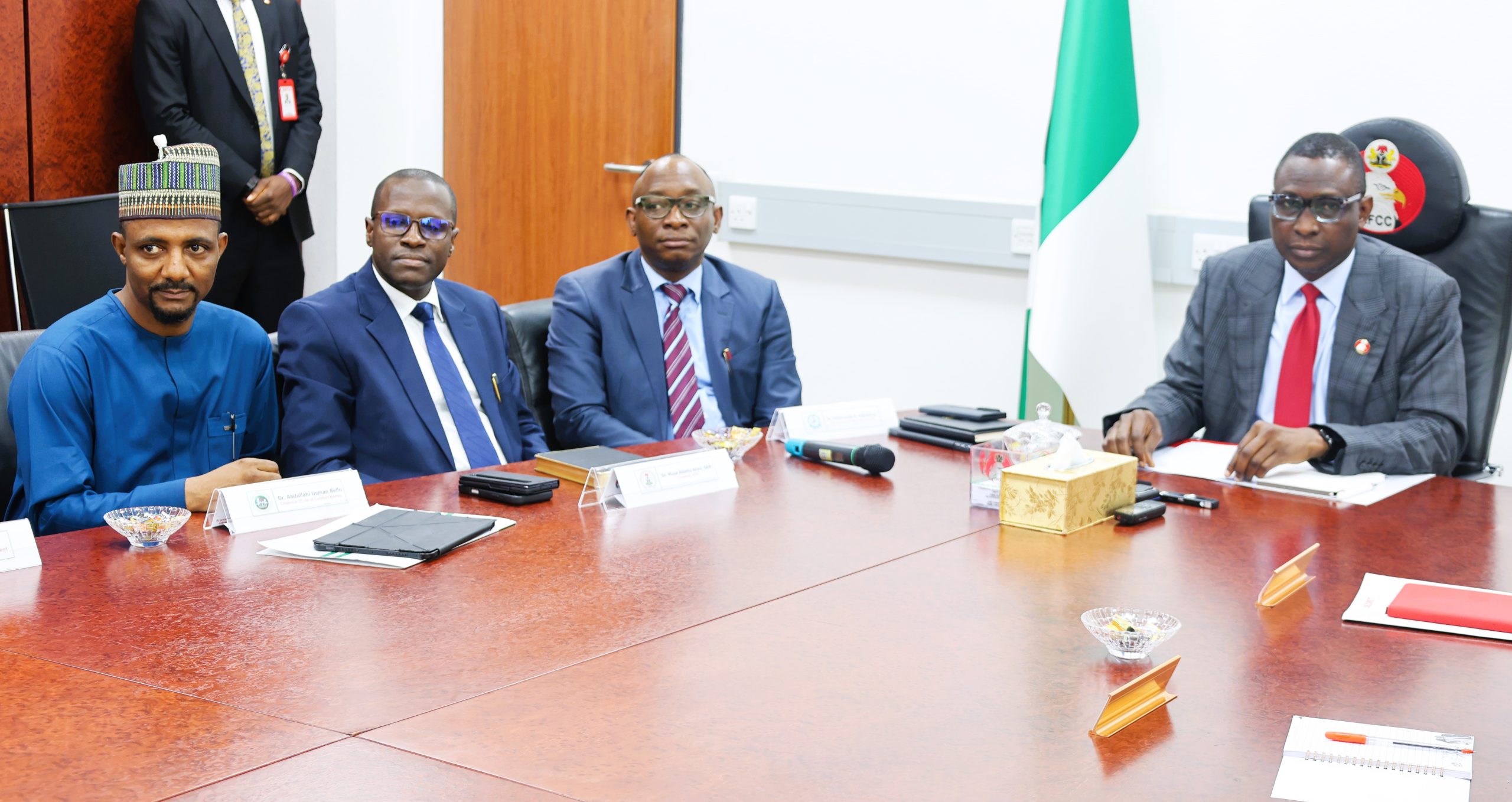
The Chairman of the Economic and Financial Crimes Commission (EFCC), Ola Olukoyede, has called for stronger collaboration among Nigeria’s anti-corruption agencies to combat procurement and contract fraud, describing it as the largest source of public sector corruption in the country.
Olukoyede made the call during a strategic roundtable meeting at the EFCC headquarters in Abuja on Wednesday. The meeting brought together the Chairman of the Independent Corrupt Practices and Other Related Offences Commission (ICPC), Musa Adamu Aliyu; the Chairman of the Code of Conduct Bureau (CCB), Abdullahi Usman Bello; and the Director-General of the Bureau of Public Procurement (BPP), Adebowale Adedokun.
According to a statement signed by EFCC Head of Media and Publicity, Dele Oyewale, the meeting was aimed at developing a stronger framework for collaboration among the EFCC, ICPC, CCB and BPP in tackling corruption, economic crimes and financial misconduct.
Speaking at the meeting, Olukoyede said procurement and contract fraud account for more than 80 per cent of corruption cases in Nigeria’s public sector.
He noted that curbing procurement fraud would significantly improve the economy, healthcare, social development and public service delivery.
The EFCC chairman stressed that anti-corruption efforts should focus not only on prosecuting offenders but also on preventing fraud through stronger risk management systems. He explained that the BPP, as the regulator of public procurement, possesses technical expertise needed by law enforcement agencies to effectively investigate procurement-related offences.
According to him, closer collaboration between the BPP and anti-graft agencies would help detect irregularities early, strengthen oversight and reduce opportunities for corruption.
Olukoyede also observed that several provisions of the Public Procurement Act remain underutilised and could enhance anti-corruption efforts if fully implemented.
He advocated joint investigations, collaborative project monitoring, enhanced intelligence sharing and regular capacity-building programmes among the agencies.
The EFCC chairman further proposed the development of a Standard Operating Procedure (SOP) to clearly define the responsibilities of participating institutions while ensuring confidentiality in information management.
He disclosed that the agencies plan to hold similar meetings every quarter to review progress and strengthen their coordinated response to corruption.
Supporting the initiative, ICPC Chairman Musa Adamu Aliyu said stronger cooperation among anti-corruption agencies would boost public confidence in the government’s anti-corruption drive.
He noted that corruption petitions are often submitted to multiple agencies, resulting in duplication of efforts and operational inefficiencies.
Aliyu called for technology-driven solutions to facilitate information sharing and eliminate overlaps in investigations, while urging agencies to continue referring cases outside their statutory mandates to the appropriate institutions.
The Chairman of the Code of Conduct Bureau, Abdullahi Usman Bello, described corruption as a major obstacle to national development, revealing that trillions of naira have been lost to corrupt practices over the years.
He identified procurement fraud as one of the biggest challenges confronting the public sector and called for stronger collaboration among the CCB, EFCC, ICPC and the Nigerian Financial Intelligence Unit (NFIU) to enhance intelligence gathering and enforcement.
In his presentation, BPP Director-General Adebowale Adedokun stressed the need for sustained public procurement reforms.
He warned that weak procurement systems often lead to waste, cost overruns, abandoned projects, substandard infrastructure and widespread corruption.
Adedokun maintained that the most effective anti-corruption strategy is to build procurement systems that prevent wrongdoing before it occurs.
He identified legal and institutional reforms, stronger governance and accountability, strategic procurement, digital procurement and improved market operations as key measures for promoting transparency and efficiency in public procurement.
Participants also examined challenges including procurement without cash backing, abuse of procurement laws and deliberate violations of established procedures, agreeing that sustained inter-agency collaboration is essential to addressing the problems.
*Arrested in tactical uniform, with fake pistol, allegedly extorting motorists
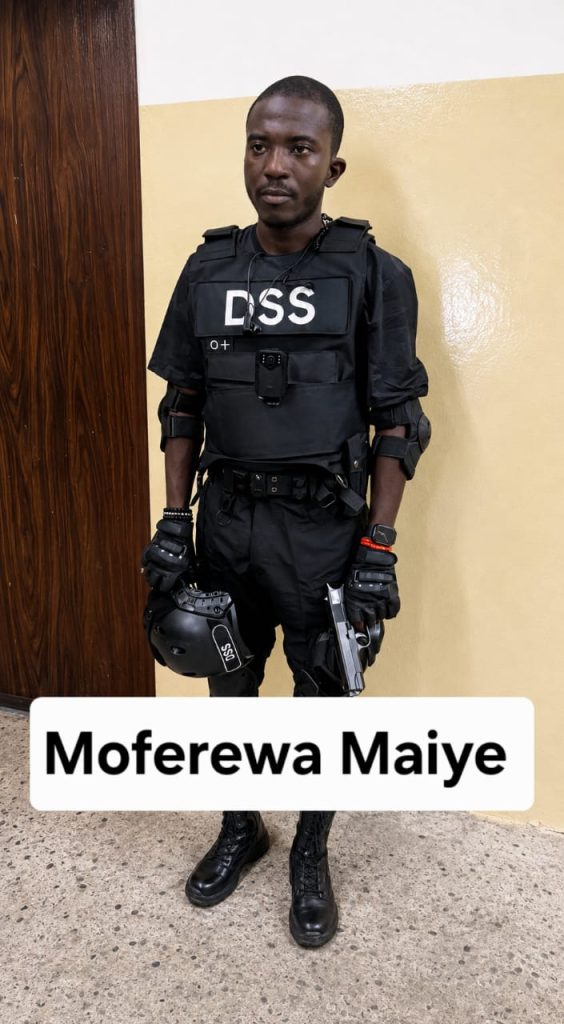
The Department of State Services (DSS) late on Wednesday in Abuja arrested a man identified as Moferewa Maiye, discovered to be impersonating a personnel of the Service.
Maiye, who claimed to hail from Agbajojun Village, Mopamuro Local Government Area of Kogi State, was trailed and arrested by DSS officers in his hideout around the NITEL Junction, along Adetokunbo Ademola Way, Wuse II, Abuja.
At the time of his arrest, Maiye was in DSS tactical uniform and armed with a fake pistol.
According to a security source, the Secret police acted on credible intelligence that Maiye was using the uniform and the fake weapon to intimidate commuters and motorists, extorting money from them.
During interrogation, added the source, the suspect reportedly claimed that his brother was a DSS personnel who died years ago.
He identified the brother as Monday Maiye, stressing that the DSS kit in his possession was his late brother’s.
The suspect is currently being interrogated as security operatives, the source stated, adding that the Service was investigating how he came about the DSS uniform and kit.
“Investigators are also trying to establish how long the suspect has been involved in similar acts of impersonation and extortion.
“The arrest underscores growing concerns by the Service over the activities of individuals who impersonate security personnel to intimidate members of the public and commit criminality,” the source declared.
News
24 Bandits Killed As Army, DSS, Vigilantes Foil Mass Kidnap in Katsina Community, Rescue Victims


At least 24 bandits were killed on Tuesday after soldiers of the Nigerian Army, operatives of the Department of State Services (DSS), Katsina Community Watch Corps foiled an attempt to mass-kidnap persons in Gidan Bawa village, Kandarawa Ward, Bakori Local Government Area of the state.
According to a security source, the operation followed sustained intelligence which uncovered plans by about 40 gunmen loyal to notorious bandit kingpin, Isiya Kwashen Garwa, to invade the village and abduct many residents, especially women and children.
The plot, sources said, was intended to replicate the mass abduction of residents of Woro community in Kwara State, ostensibly to embarrass the government.
Acting swiftly on the intelligence, DSS operatives mobilised the Community Watch Corps, and the Civilian Joint Task Force (CJTF) from Guga camp, and ambushed the bandits.
The source disclosed that the joint security operatives neutralised 24 bandits and rescued the abducted villagers.
Security operatives also recovered 19 stolen cattle from the community during the raid.
The source added that there were ongoing efforts to track down the fleeing bandits.

…Says 25% of budget spent on education in three years
…Says Ashiru needs lesson in education funding
By Achadu Gabriel, Kaduna
The Kaduna State Government has faulted African Democratic Congress (ADC) governorship candidate Alhaji Isa Mohammed Ashiru over his criticism of Governor Uba Sani’s commitment to education, insisting the state has consistently surpassed global funding benchmarks.
Commissioner for Information and Culture, Malam Ahmed Maiyaki, said in a statement on Wednesday that while Ashiru is entitled to criticise, his claims on education funding were inaccurate.
“Mr. Ashiru is entitled to criticise the government. But when an aspirant to the highest office in the state gets basic facts about education funding wrongly, a little lesson becomes necessary,” he said.
Maiyaki faulted Ashiru’s claim that UNESCO recommends 15 to 20 per cent budgetary allocation to education. He explained that the Education 2030 Framework for Action recommends at least 4 to 6 per cent of Gross Domestic Product (GDP) or 25 per cent of total public expenditure.
According to the commissioner, Kaduna State allocated 25 per cent of its budget to education in 2024, 26.14 per cent in 2025, and another 25 per cent of its N985.9 billion 2026 budget, amounting to about N246.5 billion.
“For three consecutive years, therefore, Governor Uba Sani has committed about one-quarter of Kaduna State’s annual budget to education,” Maiyaki disclosed.
Investment yields results
The commissioner said the investment has yielded results across basic, tertiary and skills education. He noted that the National Board for Technical Education recognised the three Skills Development and Vocational Training Centres established by the governor as the best-equipped in Nigeria.
Maiyaki added that out-of-school children in the state dropped from over 550,000 to 187,719 within three years through enrolment drives and infrastructure upgrades. “The Federal Government has also drawn from the Kaduna model” for national interventions, he said.
KASU interventions
On Kaduna State University (KASU), Maiyaki listed interventions including over N800 million for staff welfare, N146 million for withheld salaries and SIWES obligations, and a N50 million monthly standing intervention.
The government also provided more than N200 million in overhead support in 2026 alone, and over N300 million for accreditation of 57 academic programmes and resource verification for 60 postgraduate programmes. These, he said, led to full accreditation of seven professional programmes and the university’s Digital Learning Centre.
Maiyaki further disclosed that more than N1.6 billion has been committed to scholarships and student support, alongside a 50 per cent reduction in tuition fees across state-owned tertiary institutions.
“These interventions are hardly the actions of a government that is ‘lukewarm’ towards education,” the statement added.
Challenge on professor resignations
On allegations that about 200 professors resigned from KASU due to poor conditions, the commissioner challenged critics to provide names, dates and reasons.
“Repetition does not turn an unverified allegation into fact,” he said.
Maiyaki also acknowledged ASUU-KASU’s role in advocating for members and said the administration remains committed to constructive engagement. However, he noted that domesticating Federal Government-ASUU agreements in state universities requires “serious legal, financial and institutional consideration, not political grandstanding.”

DSS Trails, Nabs Man Impersonating Personnel in Abuja
24 Bandits Killed As Army, DSS, Vigilantes Foil Mass Kidnap in Katsina Community, Rescue Victims
KADSG Faults ADC Guber Candidate’s Criticism, Defends Sani’s Education Funding Records
-
 News14 hours ago
BUDGET OFFICE OF THE FEDERATIONRESPONSE TO THE 2026 U.S. DEPARTMENT OF STATE FISCAL TRANSPARENCY REPORT ON NIGERIA
-

 News16 hours ago
Beyond the ECOWAS–AES Divide: Rethinking Regional Cooperation, Peace and Security in West Africa
-

 News16 hours ago
Tinubu Committed to Transforming Nigeria’s Electricity Sector, Says Power Minister
-
 Crime12 hours ago
NDLEA Arrests Alleged Cocaine Trafficking Kingpin at Lagos Airport
-

 News16 hours ago
Mangu Killings: ADC Governorship Candidate Calls for Immediate Security Action
-
 News16 hours ago
Tinubu Urges Politicians to Avoid Divisive Politics Ahead of 2027 Elections
-

 News16 hours ago
Delta to Train 1,000 Youths in Agribusiness to Boost Agriculture
-
 News16 hours ago
24 Killed, Three Injured in Fresh Attack on Plateau Community
You must be logged in to post a comment Login