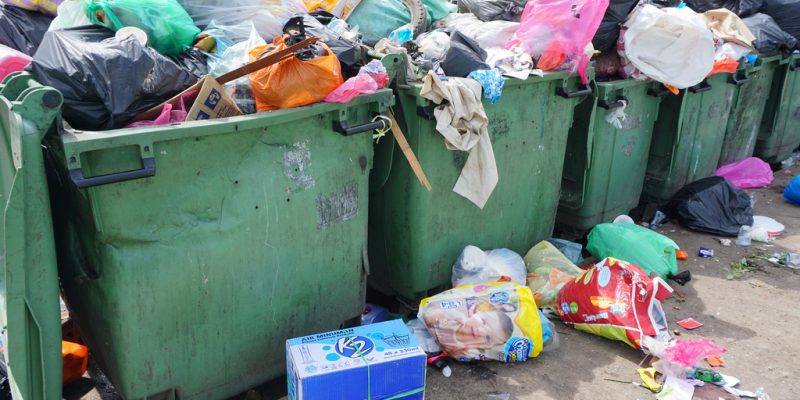

… Put global waste to energy market profit at about $25 billion by 2025
By Joyce Remi-Babayeju
Experts in the field of Engineering and Environment studies have urged the Federal Government to convert the huge Agricultural Food Wastes , AFW, generated in the country by investing in technical waste management for renewable energy and wealth creation for Nigerians.
Speaking at a Symposium on Advanced Technological Synergy for Renewed Energy Production in Sub- Saharan Africa held yesterday at the Raw Materials Research and Development Council, RMRDC, Head office in Abuja, the Principal Investigator , Dr. Shola Afolabi, a Researcher and Lecturer at the Loughborough University, UK made this call on the Nigerian Government to start investing in technological waste management for the country to surmount it’s energy challenges an well create awareness for waste to wealth.
The waste to energy market is expected to be about $25 billion by 2025 ,so Nigeria needs to invest in waste management, Afolabi disclosed
He noted that Nigeria having one of the largest dump sites in the world could compete well with advanced nations in investing in waste to wealth technologies.
Speaking to newsmen after his Research Presentation on how Agricultural Food Wastes can be managed to produce energy, Afolabi said, ” Having done a thorough research on AFW in Nigeria , particularly in 33 Agric markets across the country, the nation has the potential to create energy and wealth from these wastes.
He said ,”the nature of food markets wastes in Nigeria is similar to that of Uganda, Senegal and the United Kingdom, UK. Our responsibility as Researchers and as a nation is to provide the technology for combating these wastes back to energy through a variety of forms like Electricity, Bio-gas and others. adding that these wastes are generated from the villages and cities. ”
Afolabi emphasized that Nigeria can displace the use of coal if the country can invest in technology for renewable energy.
According to the Researcher, there is need to convert Agric wastes back to energy by ensuring that there is affordable technology and available because people will find out that what they normally use money to dispose off before is actually a source of wealth to them.
With environmental technology people will have to go and buy gas instead of causing climate issues with cutting down of trees.
All these will be contained because we have enough wastes that we generate from the yam, the oranges and banana peels, all these can easily converted to energy, he emphasized.
Speaking further he admonished government to carry people along through raising awareness, sensitize the public through symposia on, the waste to wealth initiative and also make it an open market with regulatory laws as a way to avert fake products from entering the market.
Ultimately, before the technology is deployed into the market, the Standard Organization of Nigeria, SON, should look at the products and certify it fit for use , adding that all regulatory agencies like Ministry of Environment, Power and the academia should be involved to ensure that the technology is safe for use, equally affordable and the market be protected from fake products.
Chairman of the Symposium, Vice Chancellor of Ahamadu Bello University, ABU, Zaria who was represented by the Deputy Vice Chancellor, Professor Ahmed Ibrahim in his welcome address said,”megacities in Sub-Saharan Africa are characterized by large agri-food markets / processing industries which generate enormous amount of avoidable and unavoidable AFW which end up in open dumpsites , unsanitary landhills or incinerated in the open.”
The Professor stated that these mis- management practices cause greenhouse gas emissions, environmental pollution and public health risks , adding that inherent in these wastes are rich organic content good for energy recovery.
Ibrahim said that proffering technical solutions to tackle improper AFW management , domestic energy shortages and lack of access to improved cooking solutions in a integrated way has enormous benefits and transformational impacts on the economic development and social welfare improvement of Nigeria and the Sub Saharan African countries.