
By Maya Majueran
The world is undergoing its most profound shift in power since the Cold War. The pillars of the brief unipolar moment are eroding, giving way to a more fluid and multipolar order shaped increasingly by regional actors. Rising economies are asserting greater agency and resisting rigid alignments.
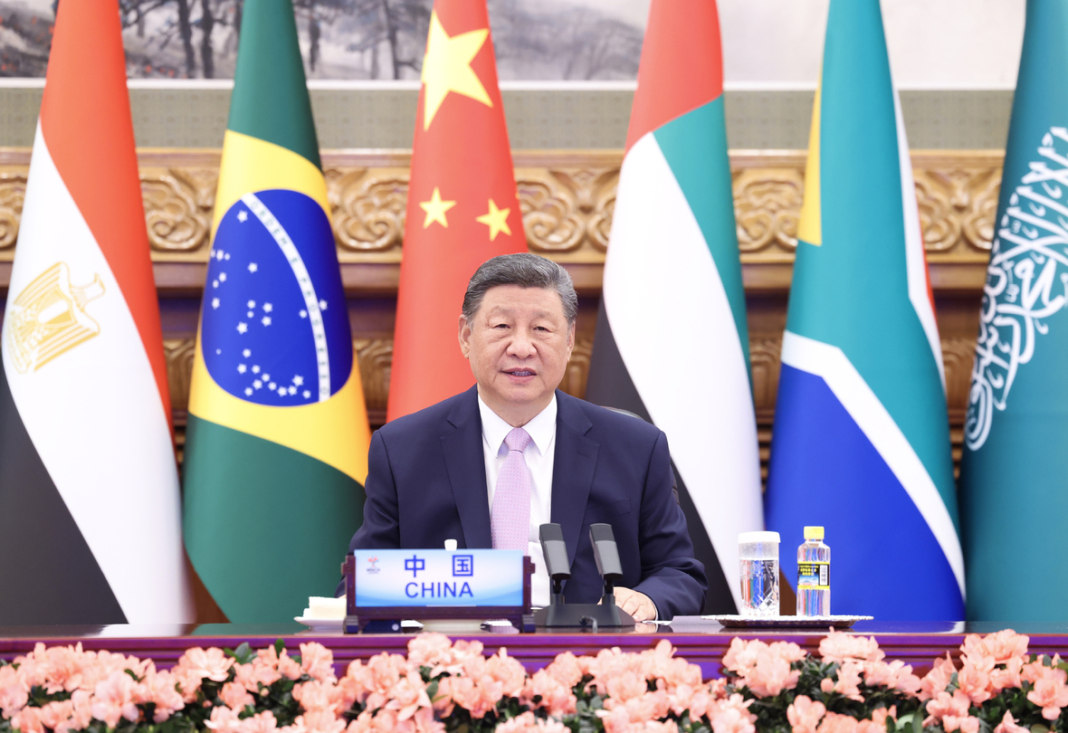
Crucially, this transition is not the result of a sudden collapse of a dominant power but of the gradual and collective rise of the Global South, a process accelerated by initiatives such as China’s Global Governance Initiative (GGI). By 2026, the international system is set to become more multipolar, more dynamic and, if managed responsibly, potentially more inclusive.
For decades, the post-World War II order, reinforced after the Cold War, has shown widening cracks. The criticisms are familiar: a UN Security Council that no longer reflects today’s distribution of power, disproportionate voting shares in the Bretton Woods institutions, and a growing democratic deficit in how global rules are made and enforced. These shortcomings have weakened the legitimacy of the existing architecture and fueled demand for alternative platforms and governance models. As the gap between global realities and institutional structures has widened, states outside the Western core have become increasingly vocal, seeking not only reform but, in some cases, a fundamental redesign of the system that has shaped international decision-making for decades.
The Global South now accounts for most of the world’s population, much of its economic dynamism and a rising share of geopolitical ambition. Its markets are reshaping global consumption, its economies are driving a growing portion of global output and innovation, and its governments are demanding influence commensurate with their weight. Across Southeast Asia, Africa and Latin America, countries are no longer passive rule-takers but active participants, and at times agenda-setters, in debates over trade, technology, security and global governance. Together, they are redefining the balance of power in the 21st century.
China’s GGI reflects its goal to reshape global governance toward what it describes as a fairer and more inclusive system. While formally unveiled in 2025, its emphasis on extensive consultation, joint contribution and shared benefits draws on long-standing themes in Chinese diplomacy and is calibrated to resonate with the historical experiences and priorities of the Global South. Through the Asian Infrastructure Investment Bank, the Belt and Road Initiative and a range of diplomatic and economic channels, China has offered ways for countries to seek financing, connectivity and development outside Western-led institutions.
Western skeptics often portray the GGI as a geopolitical tool aimed at replacing a U.S.-centric order with a Sino-centric one. This view, however, misreads the source of its appeal. The initiative gains traction from the inability of existing institutions to adapt. Growing interest in Chinese-backed platforms reflects accumulated frustration and a pragmatic search for agency. When established systems stagnate, more flexible and responsive alternatives tend to emerge.
In this emerging world, inclusion will arise not through sweeping reforms of the UN Charter but through the ability of states to navigate among multiple forums, institutions, and coalitions. This flexibility allows countries to shape development strategies, security partnerships, and trade relationships by drawing on the strengths of different platforms. While such an environment may appear messy or even contradictory, it reflects a world in which influence is dispersed, alignments are flexible, and states, especially those in the Global South, exercise greater autonomy in shaping their national trajectories.
The key question for 2026 is not whether the Global South will become more influential; that outcome is already visible. The real challenge lies in building a system that reflects this new distribution of power. The Global South is demanding meaningful reform of the UN system, the construction of a more balanced financial order, and the establishment of a multipolar trading system capable of delivering global public goods. Meeting these demands requires participation and responsibility from all major actors.
The old order is fading. By 2026, global governance will resemble a patchwork of the old and the new, the Western and the Southern, the established and the alternative. The defining challenge is to ensure this complex landscape becomes a source of resilience and innovation rather than paralysis or confrontation. The rise of the Global South accelerated by initiatives like the GGI is irreversible. The task now is to build an international system worthy of this new reality.
Editor’s note: Maya Majueran serves as the director of the Belt and Road Initiative Sri Lanka, an independent and pioneering organization with strong expertise in Belt and Road Initiative advice and support.