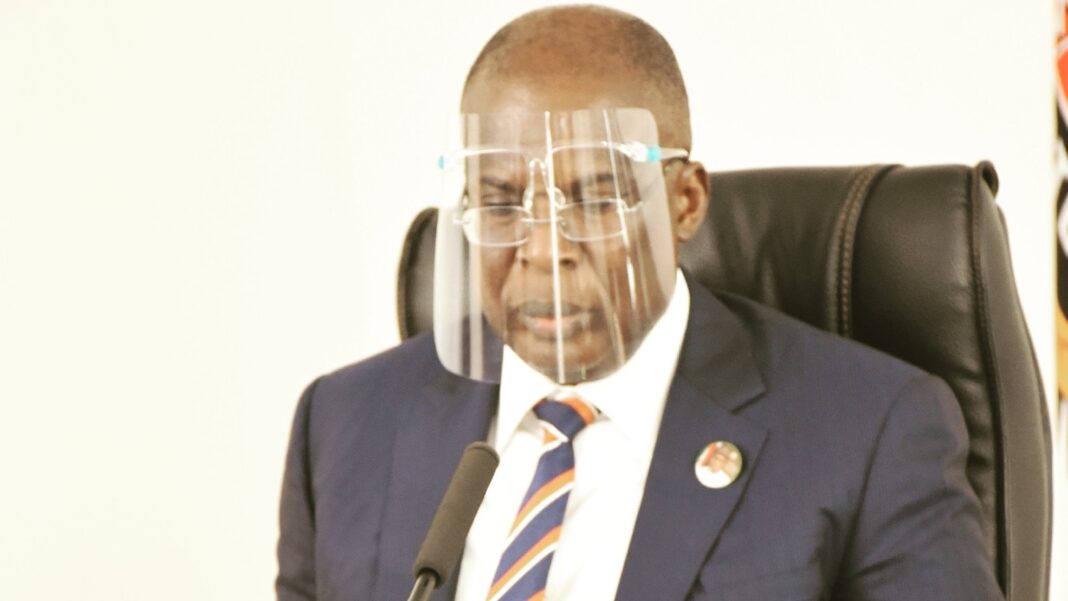

Minister of State for Petroleum, Timipre Sylva, has said that the country accidentally discovered 206 trillion cubic feet of gas reserves while in search of crude oil.
Mr Sylva, who disclosed this in Abuja at a News Agency of Nigeria forum, said that the country could discover an additional 600 trillion cubic feet reserve to enable it achieve the desired development required of a gas nation.
“We have a lot of gas in this country. We have 206 trillion cubic feet of gas reserves.
“This number is already discovered in gas reserves and this 206 trillion cubic feet reserve was found while looking for oil, so it was accidentally discovered.
“We were actually going to look for crude oil and we found gas, and in that process of accidentally finding gas, we have found up to 206 tcf.
“So, the belief is that if we really aim to look for gas dedicatedly, we will find up to 600 trillion cubic meters of gas,” he said.
According to the minister, the country’s transition from gas to renewable fuel will be gradual when it has fully utilised the benefits associated with gas.
“We are also transiting and that is why we are talking about gas. We are seeing gas as a bridge to renewable fuels.
“We came from coal which is solid, to crude oil; now we are moving to gaseous gas and then to renewables.
“The belief in the industry is that if we have this kind of vast resource and we have not tapped it, why should we abandon it and move to renewables.
“We have not used gas to drive our cars and few people use it to cook; we have not used gas to generate electricity or used it to fire our fertiliser blending plants, then why should we abandon it and move to renewables?
“What we are saying is that the western countries are in a position to move to renewables after using coal and crude oil to stabilise the electricity in their areas and everybody there enjoys it.
“But we have a situation in Nigeria where a lot of people do not have access to electricity yet.
“So, what we are saying is that we agree to transit but let us use our gas first to develop our country and get the benefits of development, that point where everybody has electricity, then we can transit to renewable fuel,” he added.
Mr Sylva explained that so far gas was being used as a transition fuel, as Nigeria and Africa as a continent does not contribute more than one percent of global warming as carbon emission.