
News
HURILAWS, Stakeholders Push For Criminal Justice Reforms In C/River

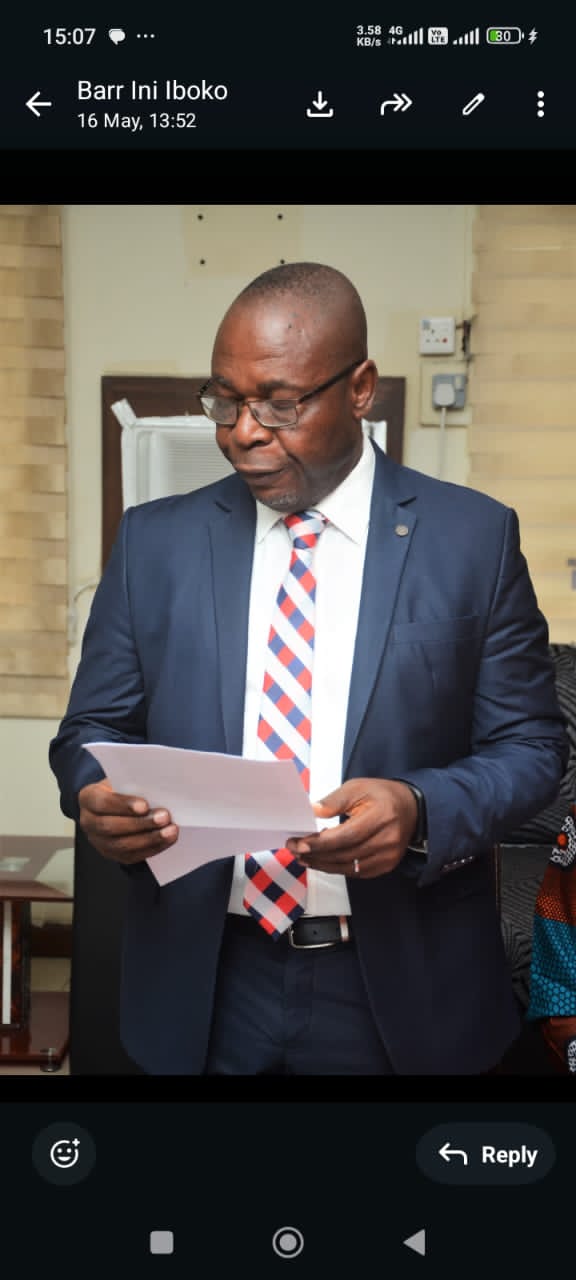
By Ogenyi Ogenyi
Stakeholders in the justice sector in Cross River State have called for stronger collaboration, improved funding, police reforms and full implementation of the Administration of Criminal Justice Law (ACJL) to ensure speedy and fair dispensation of justice in Nigeria.
The call was made during a series of advocacy engagements organised by the Human Rights Law Service, (HURILAWS) in partnership with its local partners held in Calabar recently, involving Civil Society Organisations (CSOs), the Nigerian Police Force, the Nigerian Bar Association (NBA), Ministry of Justice officials, the Administration of Criminal Justice Monitoring Committee (ACJMC) and the Legal Aid Council.
According to the statement issued by the Project Lead, Dr. Innih Archibong and made available to newsmen on Tuesday, the meetings, held in phases, were aimed at deepening awareness, strengthening capacity and fostering collaboration among critical stakeholders in the criminal justice system to enhance the implementation of the Administration of Criminal Justice Law in Cross River State and beyond.
Speaking during the engagements, the Project Lead, Dr. Innih Archibong, who is also the Executive Director of Liberty Now, explained that the advocacy visits were designed to build synergy among stakeholders and improve understanding of the law for effective justice delivery.
According to him, Cross River State was one of the first states in Nigeria to domesticate the Administration of Criminal Justice Law, stressing that those charged with implementing the law, especially the Police, Judiciary and Correctional Services, must fully understand its provisions to prevent abuse and injustice.
Dr. Archibong lamented that despite efforts made by HURILAWS and other partners in supporting the passage and implementation of the law through research, media advocacy, workshops and publications, many suspects were still being detained without adequate opportunity to defend themselves.
He also decried poor funding and lack of modern facilities within the Police Force, warning that unresolved injustice could pose serious dangers to the society.
“Justice must not only be done, but must be seen to have been done. Injustice, if left unchecked, can lead to doom in the society,” he stated.
During a meeting with the Cross River State Commissioner of Police, Mr. Rashid Afegbua, the HURILAWS team advocated for continuous reforms, training and improved welfare for police personnel.
Responding, CP Afegbua appreciated the advocacy group for the visit and acknowledged the challenges confronting the Police Force.
He noted that the current security realities and provisions of the Police Act require periodic review and called for sustained training and retraining of officers, particularly junior personnel, to improve professionalism and policing standards.
The Commissioner expressed optimism that continued collaboration with HURILAWS and other stakeholders would strengthen justice administration in the state.
Calabar branch Chairman of NBA, Barrister Enome Amatey, described the pursuit of justice as a collective responsibility, adding that the NBA had continued to champion advocacy and institutional partnerships to strengthen the justice system.
He, however, identified poor funding and inadequate facilities as major obstacles affecting effective justice administration.
Corroborating the concerns, the Vice Chairman of the NBA, Mr. Triumph Paul, argued that beyond funding and logistics, the “human factor” within the Police Force remained a major challenge.
He stressed the need for proper orientation, discipline and continuous training for officers to enhance public confidence in policing.
Similarly, the NBA Secretary, Mr. Joseph Akpajo, called on the Police Service Commission to intensify orientation programmes and ensure only qualified personnel are recruited into the Force.
The advocacy team also visited the Cross River State Ministry of Justice, the ACJMC and the Judiciary where the Chief Registrar, Deputy Registrar, representatives of the Human Rights Commission, Child Protection Network and civil society groups participated in discussions on reforms within the justice sector.
Speaking during the meeting, Dr. Archibong urged investigators to devote more time to building strong cases before arraigning suspects in court, while condemning prolonged detention and indiscriminate pre-trial detentions.
He further advocated for the democratization of the law to ensure speedy dispensation of justice and protection of the rights of suspects.
The Secretary of ACJMC, Barrister James Ibor, commended HURILAWS for its consistency in supporting the justice sector over the years, particularly in strengthening the committee’s secretariat despite funding limitations.
He noted that while pre-trial detentions had helped magistrates conduct proper investigations in some cases, there had also been significant improvements in handling confessional statements under the current law.
Barrister Ibor also advocated for improved forensic investigation tools, including fingerprint machines across communities, as well as increased funding for the Police and justice institutions.
The Chief Registrar, in her remarks, emphasized that the advocacy was not only for actors within the justice sector but for society at large.
According to her, many inmates in Correctional facilities were innocent or had accepted offences they never committed due to lack of legal representation and proper investigation.
She described inadequate funding as a major challenge and promised to brief the State Chief Judge on the need to strengthen the justice system.
The advocacy visits also extended to the Legal Aid Council, Cross River State, where the State Coordinator, Mrs. Rose Okoi, acknowledged the innovations introduced by the Administration of Criminal Justice Law.
Mrs. Okoi noted that increased collaboration, adequate funding and improved logistics for Custodial centres would greatly enhance speedy justice delivery.
The advocacy engagement ended with a book presentation performed by Mrs. Maria Ukpayang of the Radiant Women Association, as stakeholders renewed calls for collective action towards building a more efficient and people-oriented justice system.
Earlier, Mr Yemi Ofem had introduced HURILAWS as a non-profit organisation based in Lagos, which works at intersection of human rights and justice system reforms.
HURILAWS, is funded by a German grant maker, MISEREOR E. U to deepen the project’s awareness on justice system in Nigeria and beyond.

By Abigail David
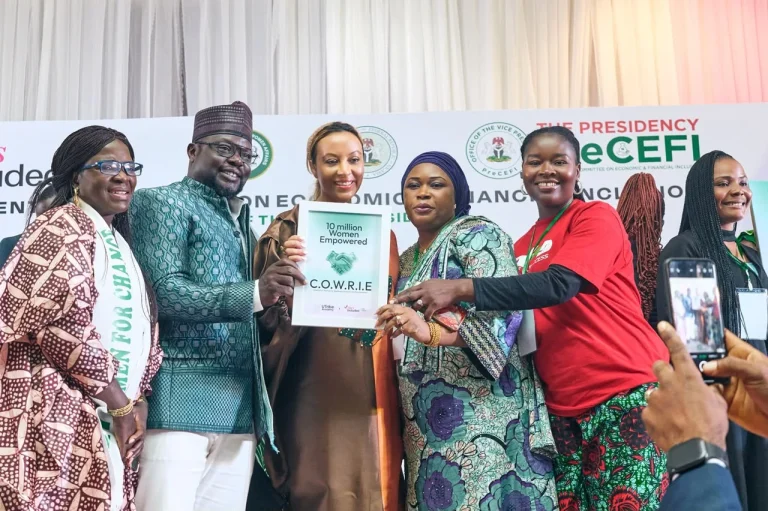
The Minister of Women Affairs and Social Development, Imaan Sulaiman-Ibrahim, has called for a new approach to women’s economic empowerment, urging women to move beyond being beneficiaries of interventions and become active contributors to Nigeria’s economic growth.
Sulaiman-Ibrahim made the call at the SheIsIncluded 2026 Summit, where the Federal Government announced plans to expand economic opportunities to 10 million Nigerian women through skills development, recognised credentials, employment and entrepreneurship.
The minister said women should be equipped with the tools and opportunities needed to create wealth and contribute meaningfully to the economy.
Under the SheIsIncluded initiative, women will have access to free, mobile-based learning in local languages using phones they already own. Participants will also receive verifiable credentials designed to be recognised by employers and financial institutions.
The programme is supported by Ubuntu Tribe, its implementation and technology partner, through Ubuntu Tribe Academy.
Ubuntu Tribe founder, Mamadou Kwidjim Toure, said technology could help remove barriers to skills development by making learning accessible regardless of income or location.
Technical Adviser to the President on Economic and Financial Inclusion, Nurudeen Zauro, described the summit as a shift from policy discussions to practical implementation.
The initiative is part of the government’s broader economic development agenda and its ambition to build a $1 trillion economy by 2030.
By Abigail David
The West African Examinations Council has announced that the 2026 West African Senior School Certificate Examination for School Candidates certificates are now available on its Digital Certificate Platform.
WAEC made this known in a post on its official X handle on Friday, urging candidates to access their certificates through the platform.
“The 2026 WASSCE for School candidate Certificate is now available for access on the WAEC Digital Certificate Platform,” the examination body said.
Candidates can access, download and share their certificates through the platform by visiting the official WAEC website or using the WAEC Digital Certificate mobile application.
The digital certificate platform provides two categories of access: Certificate Access, for individuals who want to view, download or share their certificates, and Certificate Confirmation, for institutions and organisations seeking to verify candidates’ certificates.
How to access WAEC certificate online
To access the 2026 WASSCE certificate online, candidates should:
- Visit the official WAEC website and access the Digital Certificate Platform.
- Select Certificate Access.
- Provide the required examination details and identification information.
- Complete the verification process, including any OTP authentication where required.
- View and download the digital certificate.
- Save the certificate securely or share it with institutions that require it.
WAEC also advised candidates to use its official digital certificate application, available on the Google Play Store, to access their certificates.
The certificate platform is separate from the WAEC result-checking portal, which candidates use to check their examination results.
The development comes after WAEC released the results of the 2026 WASSCE for School Candidates. WAEC said 1,950,726 candidates sat for the examination, with 1,200,514 candidates, representing 61.54 per cent, obtaining credits and above in at least five subjects, including English Language and Mathematics.
The 2026 examination was conducted between April 21 and June 19, 2026, with candidates across more than 24,200 secondary schools participating.

By Achadu Gabriel, Kaduna
Armed bandits, in large numbers, have again reportedly launched an attack, killing a local vigilante, Mustapha Baba, and abducting a woman and her son at Kyauta, Millennium City, in Kaduna State.
The brother of the deceased, Yusuf Baba, who confirmed the incident on his social media handle, said Mustapha Baba was shot by the bandits during the attack and rushed to Barau Dikko Specialist Hospital, Kaduna, where he later died on Wednesday night.
The terrorist group reportedly attacked a house located near the popular Mai-Rago Friday Mosque in the area.
According to a family source, the attackers demanded to see the owner of the house but later abducted his wife and son when they could not find the main target.
Series of attacks
It was gathered that the incident is the latest in a series of attacks targeting Kyauta and other communities within Millennium City.
A previous attack was reported at the Police Estate in Baban Saura, where five residents were reportedly abducted.
During a recent security meeting, residents of Millennium City appealed to the Kaduna State Government and security agencies to improve road access to some parts of the community as part of efforts to address insecurity.
Stakeholders demand action
The Chairman of the Millennium City Security, Development and Enhancement Forum and Chairman of Katukan Danhonu Community, Alhaji Abu Mohammed, said stakeholders had identified the completion of the Eastern Bypass road project as a top priority, describing the abandoned road and bridge construction as a major challenge to effective security operations in the area.
The stakeholders urged the Federal Government to expedite work on the Eastern Bypass and complete the bridge to improve accessibility for security agencies, facilitate the movement of heavy-duty vehicles and ensure prompt emergency response to security threats.
They also called for the deployment of additional police and military personnel, as well as more sophisticated security equipment, to strengthen the capacity of security agencies to combat banditry and protect communities in the area.
Police yet to comment
The police had yet to issue any official statement regarding the attack as at the time of filing this report on Thursday.


Women Must Become Co-Creators of Prosperity, Minister Says

Bella Okagbue Breaks Silence on Sheggz Breakup, Addresses Marriage and Engagement Plans

Bitcoin Surges Above $77,000 on US Crypto Policy Optimism

-

 News23 hours ago
Hon. Jafaru Yakubu Commends President Tinubu’s Approval of Mutum Biyu–Garba Chede Road Reconstruction
-
 News20 hours ago
7th China-Africa Media Cooperation Forum Opens in Beijing
-
News21 hours ago
ASUU Commends Kaduna Govt Over KASU Funding Amid Face-Off
-

 News24 hours ago
Kaduna varsity lecturers ready for talks with govt to avert strike
-

 Politics22 hours ago
Kwankwaso explains decision to run with Obi in 2027
-
News17 hours ago
Gov Sule Commends DSS, Other Security Agencies Over Rescue of Kidnapped Victims in Nasarawa State
-

 Sports22 hours ago
Premier League to crack down on set-piece grappling
-

 Business and Economy23 hours ago
NUPENG urges Tinubu to end casualisation in oil sector
You must be logged in to post a comment Login