
News
Lessons in School Management from Zhejiang Normal University, China

By Dr. Austin Maho
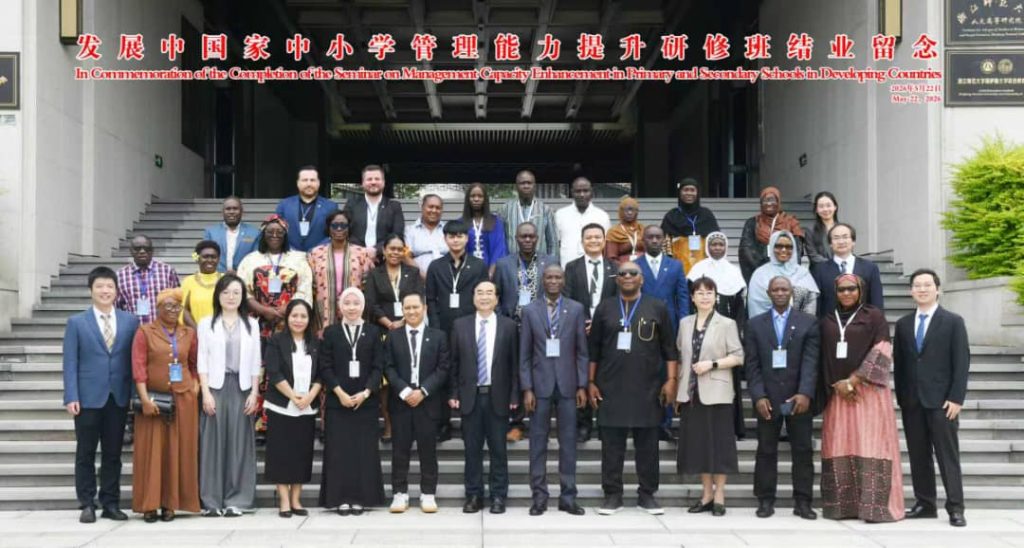
I landed in Jinhua on May 9, 2026, carrying more than a suitcase—I carried the weight of 139,772 empty teacher posts back home, and the hope that somewhere in China’s classrooms, I’d find answers we could adapt for Nigeria. For the next 14 days, from May 9 to May 22, I joined 28 other delegates from 7 developing countries for an intensive brain storming session on Management Capacity Enhancement in Primary and Secondary Schools in Developing Countries at Zhejiang Normal University [ZJNU] in Zhejiang Province, China.
What unfolded was not just a programme of lectures, tours and school visits. It was early mornings and afternoons in lecture halls listening to renowed professors deliver indepth lectures on data-driven school management and leadership, walks in the corridors of model schools where principals and teachers are highly motivated, and tour visits to the quiet and peaceful West Lake in Hangzhou and the energy of Shanghai’s Bund Architecture, among others. The sighta and sounds made me reflect: if China can align policy, people, and practice at this scale, what’s stopping us from doing the same, school by school, back home?
Founded in 1956, ZJNU is a public research university ranked among China’s top 100 institutions and a key provincial university designated to host Chinese Government Scholarship students. Its College of Teacher Education is ranked 47th in China for Education Majors, making it a fitting host for a programme focused on school leadership and teacher development. Over 14 days, we engaged with ZJNU faculty, visited model schools, and observed how policy, leadership, and data are aligned to improve learning outcomes.
Walking into the Programme
The tour began with a warm welcome at ZJNU’s campus in Jinhua. The opening ceremony set the tone: respectful, practical, and forward-looking. The Nigeria n delegates were paired with delegates from other developing countries which included, Guinea-Bissau, North Macedonia, the Gambia, Solomon Islands Sierra leone and Indonisia.
The academic component was rigorous. We had sessions on, “Beyond Macro Constructs: Multi- diamentional efforts for increased efficiency: Reform and Reflections on County level Teacher Professional Development Training Credit System”, “Transformation of campus sport”, “Gender Equality in China’s Basic Education”, “Teacher Education System”, “National Policy for Common Prosperity” among others.
What stood out was the dual methodology: theory in the morning, practice in the afternoon. We didn’t just hear about data-driven management; we visited a primary school affiliated to Zhejiang Normal University in Jinhua and saw how schools management aligns with national policy.
Learning Beyond the Classroom
The programme made space for China’s living culture, and those moments shaped my understanding as much as the lectures did. For instance we took a day trip to Hangzhou and spent hours walking around West Lake, a UNESCO World Heritage Site since 2011. The lake is framed by hills on three sides and the city on the fourth, with causeways, pagodas, and gardens layered into the landscape over a thousand years. What struck me was how intentional the design was—every bench, every path, every view seemed placed to encourage reflection and community. Our guide explained how Hangzhou now uses smart sensors and AI to monitor water quality and visitor flow, balancing heritage with modern management. Standing by the lake, I thought about how Nigerian schools could similarly use low-cost data and community spaces to create environments where children feel safe and inspired to learn.
The Bund, Shanghai
One evening we travelled to Shanghai and walked the Bund. It tells the story of Shanghai’s role in global trade. On the other, the futuristic skyline of Pudong rises with the Oriental Pearl Tower and Shanghai Tower. Our guide framed it as a metaphor: China’s education system also holds tradition and innovation in tension. We can’t discard cultural context when borrowing reforms. For Nigeria, that meant adapting China’s structured teacher development to fit our federal system and community realities.
Village and Intangible Cultural Experience
Midway through the tour, we visited a village in Suoyuan County as a case study of Education for Common Prosperity. China presents a living example of holistic education—academics linked to community life. intangible cultural heritage being passed down from generation to generation. For me, it reinforced that schools don’t operate in isolation. When communities own education, children stay engaged.
Core Takeaways
- Policy Coherence: Long-Term Planning Over Political Cycles.
China’s basic education system operates within a clear national strategy that remains consistent across administrative changes. The Ministry of Education’s Action Plan to Improve Basic Education in the New Era, released jointly with the National Development and Reform Commission and Ministry of Finance, sets targets for 2027 and 2030 to expand quality education resources and align enrolment with urbanization and demographic changes.
In Nigeria, basic education is decentralized across 36 states and the FCT. While the Federal Government sets policy, implementation varies, and leadership changes often disrupt ongoing reforms. For example, Nigeria still faces a deficit of 139,772 teachers in primary schools and 2,446 in junior secondary schools, and management challenges such as irregular career progression and inadequate supervision undermine teacher development.
Lesson for Nigeria: States should adopt multi-year education sector plans with measurable targets that survive political transitions. This gives schools stability to plan, budget, and deliver results without starting over every four years.
- Professional School Leadership: Training Principals as Instructional Leaders.
In China, principals are trained as both instructional leaders and managers. They are held accountable for student outcomes, teacher development, and school finances. This contrasts with Nigeria, where many principals are promoted by seniority with limited formal management training.
The Nigerian delegation observed how ZJNU’s programmes integrate school management theory with practical case studies from Chinese schools. ZJNU itself runs workshops on.The System of Chinese Higher Education and Practical Cases, exposing participants to university management models that can be adapted to basic education.
Lesson for Nigeria: Establish a mandatory School Leadership Certification Programme for principals. The curriculum should cover instructional leadership, data use, budgeting, and staff management, and be linked to promotion and posting. This requires focused training, not new infrastructure.
- Structured Teacher Professional Development: Credit Systems That Work.
China uses a county-level credit system where teachers earn credits for workshops, peer learning, and action research. Credits affect promotion and salary, creating incentives for continuous learning. In contrast, Nigeria’s in-service training is often project-based, irregular, and donor-driven.
However, Nigeria is already piloting solutions. UNICEF’s School-Based Teacher Professional Development Learning Lab model focuses on collaborative, school-based learning environments. The Teachers Registration Council of Nigeria, with GMind AI, launched and Naija Teacher AI also launched in August 2025 hopefully will equip 1.5 million licensed teachers with AI-powered tools and digital training. The National Commission for Colleges of Education is also revising curricula to include digital literacy, AI, entrepreneurship, and inclusive education.
Lesson for Nigeria: Pilot a Teacher Professional Development Credit System in a few states using SUBEB, NTI, and school-based peer learning circles. Link credits to career progression so teachers see direct benefit.
- Holistic Education and Data-Driven Management.
Chinese schools balance academics with sports, arts, moral education, and civic responsibility, often using community resources. Schools regularly review data to guide decisions. The Ministry of Education’s guidelines on strengthening science and technology education aim to establish a foundational system by 2030, with integrated evaluation and support mechanisms.
In Nigeria, the curriculum remains academically focused, and school-level data rarely drives action. However, the principle does not require large ICT investments. Every head teacher can track five indicators; attendance, test scores, teacher presence, textbook use, and dropout on paper or Excel, and review them monthly with staff. Schools can also use community elders, local markets, and fields to deliver practical, engaging lessons.
- Understanding the Chinese Context,
Beyond technical lessons, the tour deepened our understanding of the concepts shaping China’s education reforms: Reform and Opening Up, Socialism with Chinese Characteristics, New Era under Xi Jinping, Chinese Modernization, Common Prosperity, and the Global Development, Security, Civilisation, and Governance Initiatives. These ideas underpin the policy coherence and long-term orientation we observed.
On behalf of the Nigerian delegation, I thank Zhejiang Normal University for the excellent programme and warm hospitality, and the Government of the People’s Republic of China for facilitating this South-South exchange. We return to Nigeria with practical knowledge and renewed resolve.
What I’ll remember most isn’t just the slides or statistics. It’s that Education in China works because it’s tied to people, place, and purpose.
My commitment is to share these lessons in our ministries and institutions, advocate for pilot relevant practices, and engage policymakers to improve management capacity in basic education. The goal is not to copy China, but to adapt what works for Nigeria. If we focus on training principals, making teacher development continuous, using data at the school level, and strengthening holistic education, we can shift the system school by school.
Nigeria’s teacher education sector is already undergoing bold reforms. In March 2026, the NCCE introduced a two-year Bachelor of Education degree to restore confidence in Colleges of Education and align curricula with global realities. The challenge now is to connect these reforms to school-level management.
May this partnership with ZJNU continue to grow, and may the lessons learned translate into better learning outcomes for Nigerian children.


By Aga Samuel Imoter, Jalingo
Taraba State Governor Agbu Kefas has urged Christian leaders to defend truth, speak to political authorities when necessary and promote peace and moral values amid the social, economic and security challenges facing the country. Kefas made the call on Wednesday, August 19, 2026, while addressing participants at the Ministers’ Conference organised by the Christian Association of Nigeria (CAN), Taraba State Chapter, in Jalingo.
The conference, themed “The Church and the State: Partners in God’s Plan in a Changing World,” brought together Christian ministers and leaders to discuss the role of the Church in nation-building, peacebuilding and good governance. The governor said government and the Church have distinct constitutional and spiritual responsibilities but could collaborate in areas that promote peace, development and social stability.
He urged Christian leaders to uphold truth, compassion, justice and moral discipline while advising political authorities without allowing partisan interests to compromise the Church’s independence. “The Church must not become an extension of any political party,” Kefas said, urging ministers to provide constructive guidance and resist divisions based on politics, ethnicity or personal interests.
Kefas also called on religious leaders to use their platforms to discourage corruption, drug abuse, violence, hatred and injustice, while encouraging young people to pursue legitimate opportunities. He assured residents that his administration would continue to promote fairness, justice and peaceful coexistence while protecting citizens’ rights and freedom of worship.
The governor also expressed readiness to deepen collaboration with religious institutions in education, peacebuilding, community development and efforts to address drug abuse. He appealed to citizens and religious leaders to embrace unity and forgiveness, saying the development of Taraba required collective responsibility.
By Achadu Gabriel, Kaduna
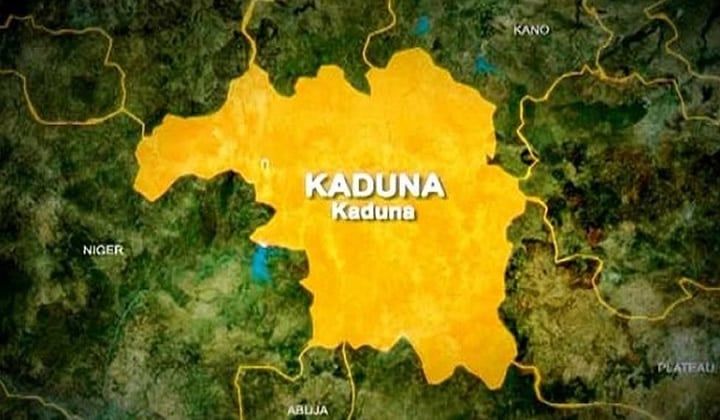
The Kaduna State Police Command will hold a three-day Police–Youth Engagement Programme from Thursday, August 20, to Saturday, August 22, 2026, as part of activities to mark International Youth Day and strengthen community efforts to prevent crime and promote peace.
The programme, themed “Different Contexts, Common Aspirations,” will bring together police officers, youths, community leaders, youth organisations and other stakeholders.In a statement issued on Wednesday, the Police Public Relations Officer, DSP Mansir Hassan, said the initiative was in line with a directive by the Inspector-General of Police, IGP Olatunji Rilwan Disu, to deepen engagement between the police and young people.
According to the Command, activities will include a Walkathon/Peace Walk aimed at promoting unity, healthy living and responsible citizenship. A medical outreach will also provide basic healthcare services and health awareness to young people and community members.
The programme will conclude with a lecture and interactive session addressing crime prevention, cultism, drug abuse, political and digital thuggery, responsible social media use, youth participation in community policing and emerging security challenges.
The Commissioner of Police, Kaduna State Command, CP Rabiu Muhammad, urged youths, community leaders and other stakeholders to participate actively in the programme. He called on participants to support efforts to promote peace, unity, responsible citizenship and a safer Kaduna State.

From Noah Ocheni, Lokoja
The Federal University Lokoja (FUL) has matriculated 900 postgraduate students for the 2025/2026 academic session, with the Vice-Chancellor, Prof. Ggenga Solomon Ibileye, reaffirming the institution’s commitment to expanding postgraduate opportunities and strengthening its research culture. Ibileye made the commitment during the postgraduate matriculation ceremony held at the university’s permanent site in Lokoja.
The Vice-Chancellor said research remained central to the value of postgraduate education and stressed the university’s commitment to maintaining and improving its academic standards.
He said postgraduate students would undergo prescribed coursework and examinations, while their projects, theses and dissertations would be subjected to originality and similarity checks. According to him, students would also be required to defend research proposals, participate in internal seminars and submit their work to external examiners.
“These processes ensure that the certificate eventually conferred by the university is worth the years a candidate will spend earning it,” he said. Ibileye said the university currently offers postgraduate programmes at the Postgraduate Diploma, Master’s and Doctor of Philosophy levels, covering both professional and academic disciplines.
He commended the Provost of the postgraduate college, Prof. Matthew Ola-Rotimi Ajayi, for his leadership and expressed confidence that the institution’s academic standards would continue to improve. The Vice-Chancellor congratulated the new students and welcomed them to the postgraduate scholarly community of the university.


ADP Presidential Candidate Aliyu Bin Abbas Signs National Peace Accord

Kefas Urges Church Leaders to Defend Truth and Promote Peace in Taraba

Kaduna Police to Hold Three-Day Youth Engagement Programme on Crime and Drug Abuse
-

 News22 hours ago
BUDGET OFFICE OF THE FEDERATIONRESPONSE TO THE 2026 U.S. DEPARTMENT OF STATE FISCAL TRANSPARENCY REPORT ON NIGERIA
-
 News24 hours ago
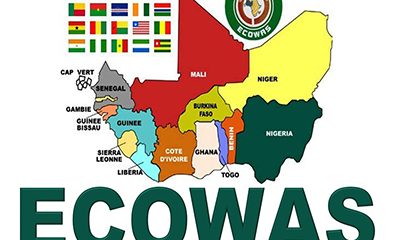
Beyond the ECOWAS–AES Divide: Rethinking Regional Cooperation, Peace and Security in West Africa
-
 Crime20 hours ago
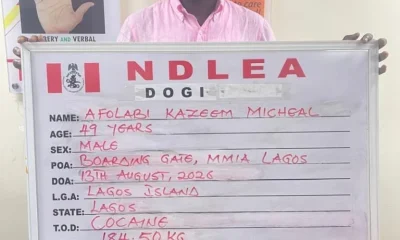
NDLEA Arrests Alleged Cocaine Trafficking Kingpin at Lagos Airport
-
News14 hours ago
24 Bandits Killed As Army, DSS, Vigilantes Foil Mass Kidnap in Katsina Community, Rescue Victims
-
News14 hours ago
KADSG Faults ADC Guber Candidate’s Criticism, Defends Sani’s Education Funding Records
-

 Politics21 hours ago
APC Sets August 22 for Legislative Primary Elections
-

 News7 hours ago
Middle Belt Forum Says 2031 Presidency Should Return to Region
-
 News7 hours ago
Kefas Urges Church Leaders to Defend Truth and Promote Peace in Taraba
You must be logged in to post a comment Login