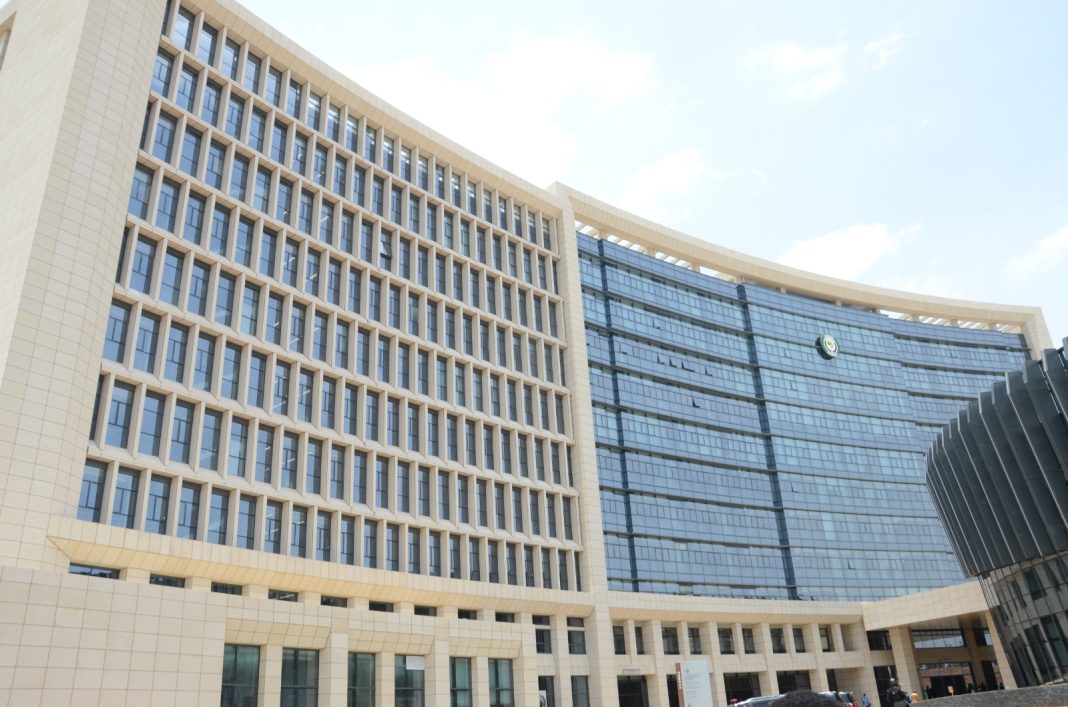

The recent handover of a new headquarters complex to the Economic Community of West African States (ECOWAS) in Abuja on April 28, 2026, is more than a ceremonial event, it is a powerful symbol of how China–Africa relations continue to translate diplomatic goodwill into concrete development outcomes.
Valued at $56.5 million and fully funded by the government of People’s Republic of China, the state-of-the-art complex, popularly known as the “Eye of West Africa stands as a modern institutional hub designed to strengthen regional integration and administrative efficiency in West Africa. But beyond its architectural elegance, the project reflects a broader trajectory: decades of strategic cooperation between China and Africa, driven by pragmatic engagement and mutual development goals.
China–Africa relations did not emerge overnight. Their roots can be traced to the Bandung Conference, where newly independent and emerging nations forged a shared vision around sovereignty, anti-colonialism, and South-South cooperation. Over time, this solidarity evolved into structured engagement, culminating in the establishment of the Forum on China–Africa Cooperation in 2000.
FOCAC has since become the cornerstone of China–Africa relations, providing a platform for policy coordination, financing, and project implementation. Through successive summits, the landmark 2024 Beijing Summit-China has committed tens of billions of dollars in support of African development, focusing on infrastructure, industrialization, agriculture, and digital innovation.
Complementing FOCAC is the Belt and Road Initiative (BRI), through which China has extended its connectivity vision to Africa. Under the BRI framework, the continent has witnessed transformative investments in railways, ports, highways, and energy systems, critical enablers of economic growth.
Projects such as the Lekki Deep Seaport, Nigeria’s Abuja–Kaduna and Lagos–Ibadan railways, the Addis Ababa–Djibouti railway in Ethiopia, and Kenya’s Mombasa–Nairobi Standard Gauge Railway underscore the scale and impact of this engagement. These are not abstract commitments; they are physical infrastructures that move people, goods, and economies.
Perhaps the most iconic symbol of China’s support for African institutions is the African Union headquarters in Addis Ababa. Funded and built by China, the AU complex has become the diplomatic nerve center of the continent, hosting high-level summits and shaping continental policy direction.
That project set an important precedent: China’s willingness not only to invest in economic infrastructure but also to strengthen Africa’s institutional architecture. The ECOWAS headquarters in Abuja now follows in that tradition, extending similar support to regional governance structures.
The new ECOWAS complex is a carefully designed, multifunctional facility that integrates administrative, conference, and support services into one cohesive structure. Situated along Airport Road in Abuja, it spans over 70,000 square meters and includes an 11-storey office tower, a 720-seat conference center, and a range of modern amenities, from data centers and training rooms to medical and childcare facilities.
Its design is both symbolic and functional. The sweeping curves of the structure evoke the “Eye of West Africa,” reflecting ECOWAS’s central role in regional integration, while architectural elements draw inspiration from the Niger River and the region’s mangrove ecosystems. This blend of cultural identity and modern engineering reinforces the idea that development need not come at the expense of local context.
Importantly, the project also incorporated local participation through employment and skills training, contributing to human capacity development alongside physical construction. Environmental sustainability was equally prioritized, with solar energy systems and smart building technologies enhancing efficiency and safety.
Beyond aesthetics, the real value of the new headquarters lies in its functional impact. For decades, ECOWAS operations have been spread across multiple locations, limiting coordination and efficiency. The new complex consolidates these functions, providing a centralized platform for policy formulation, implementation, and regional engagement.
With modern conference facilities, ECOWAS can now host high-level diplomatic meetings and international engagements more effectively. Advanced data and communication systems will improve information sharing among member states, while dedicated training and research spaces will support capacity building.
In a region grappling with security challenges, economic pressures, and political transitions, such institutional strengthening is critical. The new headquarters enhances ECOWAS’s ability to respond swiftly and cohesively to emerging issues, whether in peacekeeping, economic integration, or governance.
As noted by ECOWAS Commission President Omar Alieu Touray, the building represents not just a physical structure but a long-term investment in the organization’s future. Similarly, Chinese Ambassador Yu Dunhai emphasized its role in advancing peace, development, and cooperation across the region.
Critics of China–Africa relations often frame the partnership in abstract or geopolitical terms. Yet projects like the ECOWAS headquarters and before it, the AU complex offer a different narrative: one of tangible outcomes that directly support Africa’s development priorities.
From railways and ports to institutional buildings and vocational training, China’s engagement has consistently emphasized deliverables. Under FOCAC alone, thousands of kilometers of roads and railways have been built, while tens of thousands of Africans have received technical training.
Of course, the partnership is not without its complexities. Questions around debt sustainability, local content, and long-term economic impact remain valid and require careful management by African governments. However, the ECOWAS project demonstrates that when aligned with regional needs, such cooperation can yield lasting benefits.
The “Eye of West Africa” stands as both a landmark and a lens, offering a glimpse into the evolving dynamics of China–Africa relations. It reflects a partnership that has moved beyond rhetoric to results, grounded in infrastructure, institutions, and shared aspirations for development.
As Africa continues its journey toward deeper integration and economic transformation, the role of strategic partners will remain crucial. In this context, the new ECOWAS headquarters is not just a building in Abuja; it is a testament to what sustained cooperation can achieve and a reminder that the future of Africa’s development will be shaped as much by partnerships as by policy.
Ultimately, the significance of this project lies not only in what it is, but in what it enables: a stronger, more coordinated ECOWAS, better equipped to serve the people of West Africa.
Michael Onjewu is an Abuja-based journalist