
Nigeria and China have begun work on a joint film production slate expected to strengthen creative collaboration between the two countries, the Federal Government has said.
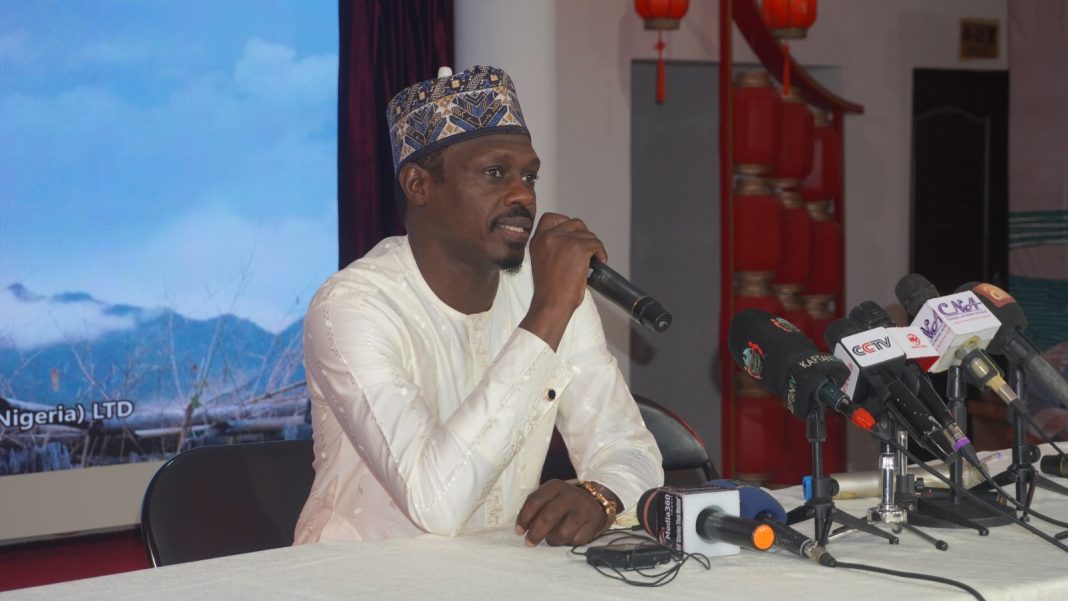
The Managing Director of the Nigerian Film Corporation (NFC), Ali Nuhu, revealed this during the screening of the Chinese documentary “Rooting” at the Zuma International Film Festival in Abuja. According to him, both nations have moved from preliminary discussions to concrete action in developing co-produced films.
Nuhu explained that the ongoing cultural exchanges at the festival, including a masterclass led by the film’s director, Chai Hongfang, and editor, Zhou Hongxia, are equipping Nigerian filmmakers with valuable skills in documentary storytelling and production.
He said the interaction is already opening doors for deeper collaboration.
“From this masterclass, our directors and editors now understand the creative process behind the documentary. The Chinese filmmakers have also indicated that they are open to working with any Nigerian filmmaker willing to partner with them,” he noted.
The NFC boss disclosed that the Federal Ministry of Arts, Culture, Tourism and Creative Economy is already facilitating a broader partnership framework with Chinese industry players.
“A Chinese delegation was in Nigeria last month, and we visited a number of film sets together. The plan is to develop a slate of about ten films. Each project will involve Nigerian production companies, and the casts will include both Nigerian and Chinese talent,” he said.
Speaking on the relevance of the Zuma International Film Festival, Nuhu described it as the government’s official avenue for cross-cultural engagement in filmmaking.
“Zuma Film Festival is organised by the Nigerian Film Corporation, so it is the Federal Government’s own film festival. It brings together filmmakers from Nigeria, Africa and other parts of the world to network, collaborate and study one another’s creative approaches. This is where we exchange ideas and learn new technologies, including the growing influence of artificial intelligence in filmmaking,” he added.
Yang Jianxing, Cultural Counsellor at the Chinese Embassy and Director of the China Cultural Centre, reaffirmed China’s commitment to strengthening cultural and cinematic ties with Nigeria.
He noted that Nollywood produces roughly 2,500 films annually, making it the world’s second-largest film industry, while China’s cinema ecosystem continues to expand, with more than 90,000 screens and a 2024 box office revenue exceeding $6 billion.
He described the screening of “Rooting” and the accompanying masterclass as symbols of growing cultural dialogue and friendship.
“With 2026 designated as the China–Africa Year of People-to-People Exchanges, we expect even stronger cooperation between our film industries to promote mutual understanding and development,” Yang said.
“Rooting”, which took four years to produce, documents the lives of the Nu people in Yunnan Province and their transformation through China’s poverty alleviation initiatives.
This year’s Zuma Film Festival, organised by the Nigerian Film Corporation, will also showcase Shenzhou 13, a Chinese documentary filmed aboard China’s space station.