
By Israel Adamu, Jos
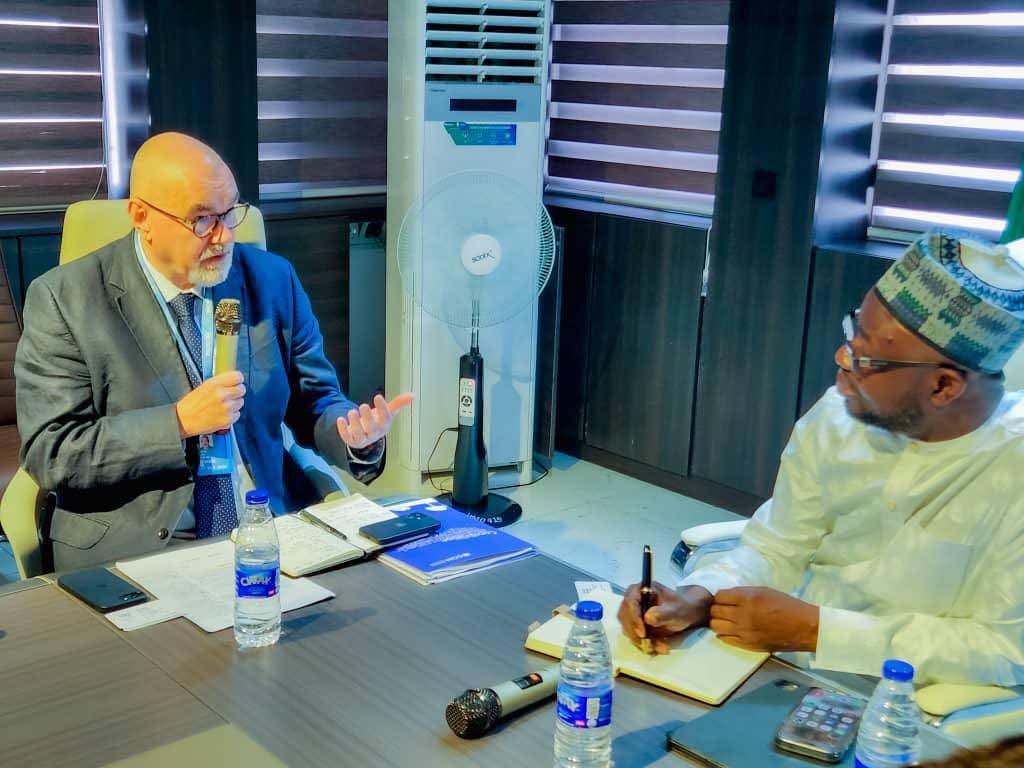
Nigeria and the United Nations Office for the Coordination of Humanitarian Affairs (UN OCHA) have agreed to strengthen their partnership as the country advances toward a more locally led, efficient and sustainable humanitarian system. The new humanitarian partnership model was discussed during a courtesy and technical meeting between the Minister of Humanitarian Affairs and Poverty Reduction, Dr. Bernard Mohammed Doro, and OCHA’s Head of Office, Mr. Trond Jensen, n Abuja.Jensen outlined OCHA’s global shift toward empowering national institutions and local organizations to take the lead in humanitarian response. He noted that Nigeria’s increasing capacity and strong commitment to reform place it in a strategic position to serve as a model for locally driven humanitarian coordination.According to him, new measures will direct more support to Nigerian partners, improve community-level delivery, and expand the use of cost-effective tools such as cash-based assistance and locally produced nutritional supplements, including the “Tom Brown” formula. These tools, he said, enable faster, more flexible and more relevant support to vulnerable communities.Jensen further disclosed that OCHA aims to gradually transfer full humanitarian coordination responsibilities to Nigerian institutions by 2028.
“We want to leave behind a lasting legacy—one fully led, implemented, and owned by Nigeria,” he said.In his remarks, Dr. Doro welcomed OCHA’s new direction, stating that it aligns with President Bola Ahmed Tinubu’s Renewed Hope Agenda, which seeks to strengthen subnational structures, deepen coordination and enhance transparency in humanitarian and poverty reduction programmes.He reaffirmed the Ministry’s commitment to establishing a unified national framework that enables federal and state governments, NGOs and development partners to collaborate seamlessly. He also announced plans to inaugurate the National Council on Humanitarian Affairs and Poverty Reduction, alongside initiatives to ensure measurable improvements in the Ministry’s interventions.The Minister praised OCHA for its long-standing support to Nigeria under Jensen’s leadership and expressed optimism that the renewed collaboration would build a stronger and more resilient humanitarian architecture.
“This is a call to step up, organize ourselves better and take full ownership,” Dr. Doro said. “We are ready for the heavy lifting.”Both parties agreed to hold additional sessions to jointly develop a transition roadmap and address operational challenges—including the entry of essential medical supplies—as Nigeria and UN OCHA work toward establishing a modernized, locally led humanitarian ecosystem.